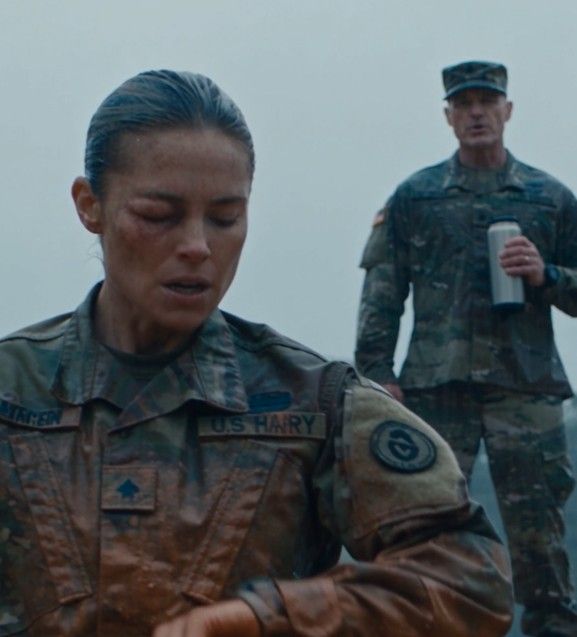
“I deserved that,” he said when I answered.
“Probably.”
“You don’t have to make me feel better.”
“Good.”
He laughed quietly.
Then his voice became serious.
“I heard you elected to return.”
“I did.”
“Why?”
I looked at the Hamilton watch on my wrist.
“Because I don’t want the worst decision I made in this course to be the last decision I make about it.”
He was silent for a moment.
“That’s a better answer than any I would’ve given.”
“I know.”
He laughed again.
Recovery took twelve weeks.
The first week was almost unbearable because everyone around me wanted to call the cabin a victory. Candidates I barely knew sent messages saying I had proven myself. One instructor called the shot legendary. A former teammate from Seattle told me I had finally beaten the ghost.
I hated every version of that story.
Vance was alive. That mattered. The fugitive had survived long enough to receive treatment. That mattered too. But turning the moment into proof that I was cured made me feel like I had to protect the story from anything messy.
So when the course review asked me to speak to the remaining candidates, I refused the first invitation.
The program director called again.
“I’m not asking you to talk about the shot,” he said.
“Then what?”
“The injury.”
That was the last subject I wanted.
Which was probably why I agreed.
I stood in front of five exhausted candidates with bruises on their arms and tape around their feet and told them exactly what I had done. I described the elbow strike during combat training, the blurred edge of my vision, the memorized eye chart, the hidden ibuprofen, and the decision to keep quiet because I believed removal would prove Vance right about me.
Nobody looked impressed.
Good.
“I could still perform,” I told them. “That is the excuse I used. Performance is not the same thing as being safe to continue.”
