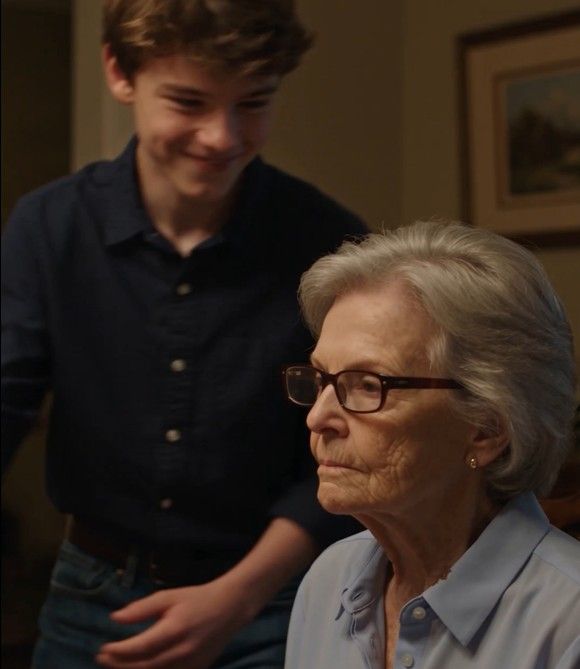
Lisa said financial pressure had made everything difficult. I told her I understood pressure. It did not give anyone the right to manufacture evidence against another person.
The lawyer kept the meeting from becoming a shouting match. We discussed a move-out agreement, return of keys, collection of belongings, and future communication. Questions involving the recordings and attempted financial pressure would go through the appropriate professional channels.
No one could declare me incompetent from an edited birthday video. Any legitimate concern would require an actual process and reliable evidence. That fact relieved me, but it did not erase what my family had attempted.
Mark admitted that he had wanted access to resources he considered temporarily unavailable. He said he had not intended permanent harm. I asked whether losing authority over my own life counted as temporary to him.
He could not answer.
For nearly two years I had allowed his business trouble to become the weather inside my house. Every day had required adjustment to conditions somebody else created. I finally understood that I had been waiting for the storm to apologize instead of finding shelter.
The hardest choice concerned Tyler. I loved him. I also felt a physical flinch when he moved too quickly near me. Both truths belonged in the room.
A counselor working with him helped his parents establish support outside the house. His school was informed as appropriate, and another trusted relative offered a place he could stay temporarily under arrangements made with the adults responsible for him. Decisions about his care were handled properly, not awarded to me because I had been hurt.
Tyler could visit me later under clear conditions. We would rebuild trust slowly, and we would not pretend an apology was enough. He agreed, though he sometimes looked wounded when I asked another adult to remain present.
“I told you the truth,” he said once.
“And I am glad you did,” I answered. “Telling the truth begins the repair. It doesn’t finish it.”
The counselor helped him understand that sentence. She also helped me stop interpreting every limit as proof I had become cruel.
Mark and Lisa moved into a rental before the agreed deadline. Relatives assisted with the practical work, so there was no last-night crisis requiring me to pay another deposit. Their business and marriage were their responsibility, and other adults could decide what help they were willing to offer.
On moving day Lisa took the vase from the dining room table and asked whether it belonged to her. I remembered the phone leaning against it and felt cold.
“It was George’s mother’s,” I said.
She put it down. For months I had answered questions like that vaguely because I did not want to seem possessive. Now I knew an accurate answer could be a form of care.
Mark returned his keys last. He asked whether I would ever forgive him.
“I don’t know,” I said. “I won’t make a promise to help you endure today.”
He nodded, looking older than he had at the birthday table. I did not mistake that expression for transformation. People could feel consequences before they understood harm.
After the house was surrendered, I arranged new locks. I removed the chair nobody liked except me from the spare bedroom and placed it beside the living room window. The first afternoon I sat there, sunlight warmed my hands, and I realized I had not enjoyed that spot for almost two years.
Quiet was difficult at first. Footsteps upstairs had once softened the loneliness after George’s death. Without them, grief returned in places I had covered with other people’s laundry and noise.
I joined a bereavement group and began seeing friends regularly. Some evenings I cooked too much and froze portions. Other evenings I ate toast and accepted that sadness did not mean the boundary was wrong.
My sister helped with paperwork but kept insisting I make decisions myself. If I asked what she would do, she answered, then asked what I wanted. It was such an unfamiliar rhythm that I sometimes grew irritated before realizing she was giving me my life back.
The reviews of the evidence took time. The relevant authorities and professionals assessed what the messages and recordings established, whether other actions had occurred, and what consequences were appropriate. I cooperated without pretending each investigation would end in a dramatic punishment.
What became clear was that no valid transfer or takeover had occurred. My accounts remained secured, my legal wishes were clarified, and any future attempt to present edited material would be met with preserved originals and documented facts.
That was not a cinematic victory. It was a safe foundation on which I could sleep.
Mark later sent an apology that avoided the word joke entirely. He described encouraging Tyler, allowing Lisa to record, and treating me as an obstacle to money he wanted. I read it with my counselor before responding.
I acknowledged that he had finally named his actions. I said contact would remain limited, that I would not discuss financial assistance, and that he needed to support Tyler’s accountability without blaming the boy for exposing the plan.
He agreed in writing. Whether he would keep agreeing through inconvenience would become clear only through time.
Tyler began visiting once every few weeks. At first he brought gifts he could barely afford, as though trust had a purchase price. I asked him to stop. Instead, he could arrive on time, ask before touching things, and listen when someone said no.
One afternoon he offered to repair a loose cabinet handle. He showed me the screwdriver and asked permission. Such a small request made my throat tighten.
“Yes,” I said. “I’ll stay here while you do it.”
He worked carefully. When the screwdriver slipped, he laughed at himself, then glanced at me. I realized how often he had learned to look for laughter at another person’s expense.
We began finding other things funny. My terrible attempt to use a new phone filter. His insistence that a song from my youth was ancient until he heard it in a film. Humor returned when it no longer required a victim.
Months later, he asked to revisit the birthday recording with the counselor present. I agreed only because I wanted him to understand the whole scene, including the people outside the camera’s narrow frame.
He watched me cleaning my glasses while Mark laughed. He watched his own face change when the apology failed. Then he paused the video.
“I thought saying sorry made me good again,” he said.
“No,” I answered. “Being sorry tells you what to do differently.”
He wrote that sentence down. I did not ask to keep the paper. The work belonged to him.
There were limits that stayed even as affection returned. Tyler did not enter my bedroom, borrow my keys, or use my computer without permission. If a visit became tense, we ended it calmly rather than waiting until someone raised a voice.
