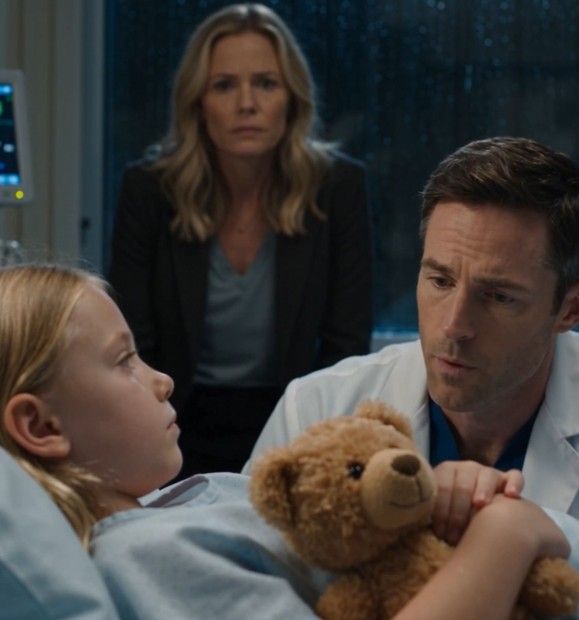
“We sent the genetic panel urgently. I want the immunology service to review everything from the beginning.”
Claire’s stomach clenched. “Were you wrong?”
“We may have been treating the wrong mechanism.”
“That means yes.”
“It means the evidence we had supported one diagnosis, but this older sample changes the weight of that evidence.”
“Daniel.”
He met her eyes.
“Yes. We may have been wrong.”
She wanted him to defend himself. She wanted him to say no reasonable doctor could have known. She wanted something she could fight.
Instead, he said, “I am sorry.”
Claire sat down.
For six months she had watched Emma endure infusions, blood draws, nausea, headaches, and days when walking to the bathroom felt like a marathon. Some of those treatments had helped temporarily. Some had done almost nothing.
“What did we do to her?”
Daniel’s voice stayed low. “The treatments she received are used for inflammatory disease and were medically reasonable based on what we knew. I do not see evidence they caused permanent harm. But if this new pathway is correct, they were not targeting the underlying problem.”
“Six months.”
“I know.”
“No, you don’t.”
He accepted that.
Emma woke while they were still talking.
She looked from one adult to another. “This is a serious-face meeting.”
Claire wiped her eyes quickly.
Daniel sat beside the bed.
“We found out the old blood really is yours.”
Emma frowned. “Old blood sounds gross.”
“It is a little gross.”
“How old?”
“From when you were three.”
Emma looked at Claire. “Did I know?”
“I’m trying to remember.”
“Did Arthur know?”
Claire looked at the bear.
“I suspect Arthur knows everything.”
That earned a tiny smile.
The genetic result returned that afternoon.
Daniel brought the immunologist, Dr. Lena Morris, with him. She spoke directly to Emma first, which Claire appreciated. She explained that Emma’s immune system carried a change that could make it turn inflammation on too easily, like a smoke alarm that screamed when someone made toast.
Emma glanced at Claire. “So I’m not allergic to hospitals?”
“No,” Dr. Morris said. “But I understand why you might be.”
The condition had a name, but Claire barely heard it the first time. What she heard was treatable. Targeted medication. Careful taper from the drugs Emma no longer needed. Monitoring. A plan built around the mechanism the old sample had exposed.
Then she heard something else.
“There was an alert on the original screening,” Dr. Morris said.
Claire went still.
“What alert?”
Dr. Shah had found the archived project report.
At age three, Emma’s sample had shown the same unusual protein pattern. The research program had flagged it for clinical follow-up. The notice was supposed to be sent to Lakeshore Children’s Clinic.
It never reached Emma’s chart.
“Why?” Claire asked.
Daniel placed a scanned form on the table.
The Rowan project had closed its Chicago operations during a software migration. Thousands of records were transferred. Emma’s alert was marked “sent,” but the routing field contained an obsolete clinic code.
The message had gone nowhere.
Claire stared at the page.
