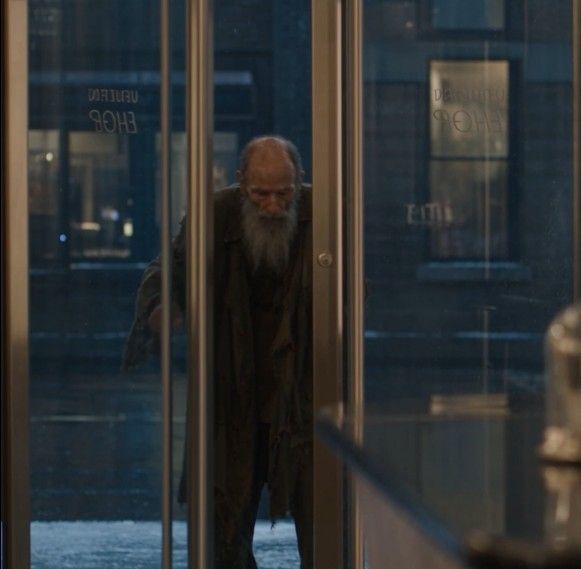
“My name is Kyle,” he said, as if Samuel did not already know from the appointment board. “I was the one who laughed.”
“Yes.”
“I don’t know why I did.”
Samuel looked at him for a moment. “You probably do.”
Kyle’s face reddened.
“I wanted Brittany to think I was on her side.”
“There. That is why.”
“I’m sorry.”
Samuel nodded. “Do better when no one important is watching.”
The phrase moved through the room. Mateo looked down at his scissors. Brittany stared at the crumpled dollar still in Samuel’s hand.
That night, Lena drove Samuel back to the shelter because the court had not yet released enough of his money to secure housing. Mateo offered his guest room. Samuel declined.
“I appreciate it,” he said, “but I have spent too much time being moved where other people think I should go.”
He returned to the shelter by choice and slept there three more nights until Lena found a small furnished apartment he could lease in his own name.
The first thing Samuel bought for it was a kettle.
The second was a secondhand frame for a photograph of Evelyn.
He did not buy new shoes until Mateo arrived with him at the shop and pointed out that one sole was almost completely detached.
“You are terrible at priorities,” Mateo said.
Samuel looked at the kettle. “Tea first.”
That friendship grew without anyone announcing it. Mateo cut Samuel’s hair every six weeks. Samuel taught Mateo how Evelyn used to calculate payroll by hand. Mateo taught Samuel how to use the scheduling app that had replaced the paper appointment book. Neither man was impressed by the other’s technology.
The court case took nearly a year.
Financial records showed Derek had used Samuel’s temporary incapacity to transfer voting rights through documents Samuel could not have understood at the time they were signed. He had also moved money from Samuel’s accounts into business projects without the approvals required by the partnership agreement.
Some transfers were unwound. Others became part of a restitution judgment. Prosecutors separately pursued allegations involving forged signatures and exploitation of a vulnerable adult. Derek ultimately pleaded guilty to financial offenses and lost his management role permanently.
Samuel recovered enough to rent a small apartment and live independently with support he chose.
He did not move into a mansion.
There was no mansion.
The business was valuable, but years of litigation and debt had left less wealth than people imagined when they heard the word owner.
That suited Samuel.
He was more interested in what happened to the salon.
Brittany was suspended for two weeks after staff complaints revealed the way she had treated other people who did not look wealthy enough for the room. When she returned, it was under a probationary plan that included customer-service training and clear authority for employees to overrule refusals in hardship cases.
Samuel did not demand she be fired.
