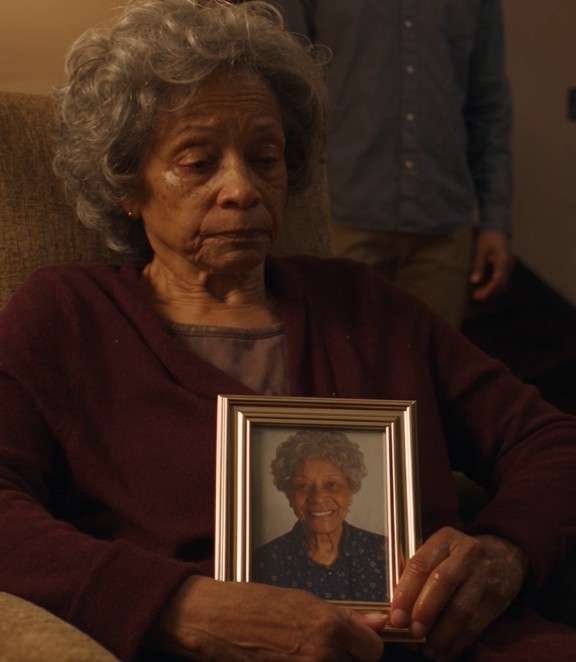
Betty looked past him at the mantel.
“Your father forgave you before you asked,” she said. “He was waiting for you to forgive yourself enough to come home.”
Jake’s face folded.
“But forgiveness didn’t erase what happened,” Betty added. “It only meant he didn’t want hatred to be the last thing between you.”
Jake nodded, wiping his eyes with the heel of his hand.
“I don’t know how to do this,” he said.
“Neither do I.”
It was the first time they had shared the same truth.
He left.
Betty remained by the door until she heard his car start.
The following spring, Martha began visiting once a month. She brought flowers and never entered a room without asking. Harold repaired the loose railing on the back steps and refused payment.
One afternoon, Martha stood in Frank’s old bedroom doorway.
“I used to think this room was proof that life had passed you by,” she said.
Betty looked at her. “What do you think now?”
“I think it is proof that someone loved someone long enough to leave a place full of evidence.”
Betty felt something loosen in her chest.
Martha turned to the photograph on the mantel. “Susan said you kept everything because you were afraid of being alone.”
“Was I?”
“Maybe.” Martha looked down. “But I think she was afraid of being forgotten.”
The insight did not excuse Susan. It did, however, make Betty understand why Susan had wanted the house so badly. She had not wanted a home. She had wanted possession of the one place where another person’s love was visible.
That evening, Betty opened Frank’s desk.
Behind the bottom drawer was a narrow wooden compartment she had never noticed. The wood panel lifted when she pressed the corner.
Inside lay a bundle of letters tied with faded blue ribbon.
Betty recognized Frank’s handwriting on the top envelope.
For Jake, when he is ready.
Her hands became cold.
She carried the letters to the kitchen table and opened the first one.
Jake,
Your mother says you are angry with us. I understand. Anger is sometimes the only way a young man knows how to say he is afraid.
The letter was dated two weeks before Frank died.
Betty read the next.
You think leaving will prove you can survive without us. Perhaps it will. But surviving is not the same as living, and independence is not the same as being alone.
There were twelve letters, one for each month of the year after Frank’s death. Frank had written them during the final months of his illness, when he knew his heart was failing but had refused to frighten anyone.
In the last letter, he wrote:
If you come home and your mother is angry, let her be angry. If she refuses to speak, sit nearby. If she tells you to leave, leave with dignity and come back when she is ready. Love does not require either of you to pretend the wound is smaller than it is.
Betty pressed the letter to her lips.
At the bottom, Frank had added one final line.
And if you ever feel that you have lost the way back, look for the blue ribbon.
She began to laugh through her tears.
That evening, she called Jake.
