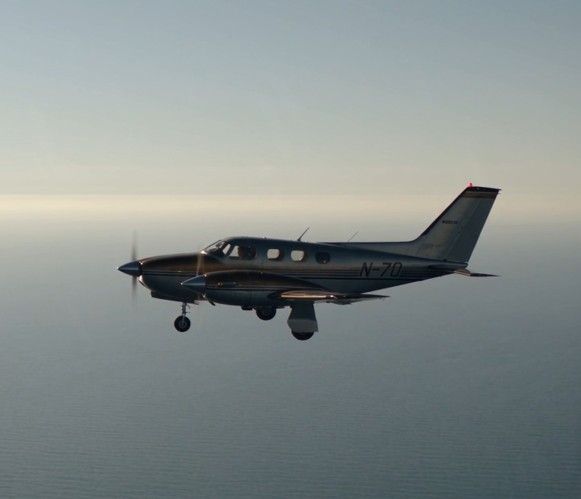
“Understood.”
He hesitated.
“Ma’am… were you aware this airspace was active?”
“No.”
Another pause.
“Your transponder was clean.”
“I know.”
That was the first clue that this was not only my problem.
My flight plan had been filed. My transponder had been broadcasting. Civilian air traffic control had never redirected me. The exclusion zone was real, but from my side of the cockpit there had been no public warning that made sense of what I was seeing.
Somebody had failed to connect two systems that were both doing what they believed they were supposed to do.
Twenty-five minutes later, the Raptors peeled away one at a time. I watched them climb into bright sky and disappear with astonishing speed.
I should have felt relief.
Instead I felt exposed.
The secure channel gave me a final vector toward a coastal military field. I acknowledged it, then switched back to civilian frequencies long enough to coordinate the approach. The ordinary language of altitude, runway, wind, and traffic felt almost absurdly comforting.
Wheels touched pavement harder than I intended.
I taxied where directed and shut down beside a hangar far from the main line.
The silence after the engines stopped was enormous.
For a moment I stayed in the seat.
Hands on my knees.
Looking at the dead instrument reflections in the windshield.
Then three vehicles approached.
Nobody ran at me. Nobody pointed a weapon. A small group waited until I opened the door and climbed down.
The man in front wore a uniform I recognized from another life. He had more gray hair than I remembered.
He looked at me for a long time.
“You are supposed to be dead.”
“I get that a lot.”
His mouth almost moved toward a smile.
It didn’t make it.
“Come inside.”
The debrief room had no windows.
