The correction took months.
Nothing about it was fast.
Ethan gave interviews under secure conditions. Old records were reconciled. The signature in the black folder became the anchor that other fragments could be connected to. Personnel images, travel orders, medical notes, and commendation drafts that had been isolated by compartment rules finally pointed back toward one coherent history.
His public record remained sparse.
His service record no longer pretended he had never existed.
The families received private briefings.
Some were angry.
Some were relieved.
One mother slapped the table and demanded to know why governments always seemed to find room for secrets but not apologies.
Nobody had a good answer.
So they stopped trying to manufacture one.
The commanding officer apologized for the institutional failure to correct the omissions sooner.
The program representative apologized for withholding the letter.
Ethan apologized to the families for interrupting the ceremony, though several told him not to.
Grief remained.
But it was no longer being asked to stand on top of a false record.
Ethan changed too, though more slowly than the paperwork.
For three years, he had avoided reunions because every gathering forced him to decide whether to lie, leave, or stand silently while people discussed a history that included him without naming him. Once the correction process began, two of the old families invited him to dinner.
He almost declined.
Then he went.
Nobody asked him for classified details. Nobody treated him like a missing chapter they were entitled to read. One father handed him a plate of food and asked whether his son had really hated instant coffee as much as he claimed.
Ethan laughed.
“Worse.”
The room relaxed.
That evening gave him something the official record never could: permission to remember the men as people instead of casualties and secrets. He told small stories. A ruined pair of boots. An argument about music. The teammate who could sleep anywhere except in a real bed.
The families answered with childhood stories Ethan had never heard.
Grief widened enough to hold humor.
On the drive home, Ethan realized he had spent years believing acknowledgment would arrive as a formal sentence from someone in authority. Instead, part of it came from being allowed to sit at a table and say a dead friend’s nickname without checking the room first.
That night he slept six hours without dreaming of fire.
The next morning he woke before dawn, waited for the familiar guilt to arrive, and found only quiet. It did not feel empty. It felt earned, temporary perhaps, but real enough that he made coffee and let the silence stay kind.
The memorial changed the following spring.
The five existing names remained untouched.
A new plaque was installed nearby rather than forcing classified history into a form it could not honestly support. It recognized an additional mission leader by name: Ethan Cole.
Below that was one simple line honoring a protected operator whose identity remained sealed by consent.
No invented biography.
No false name.
No empty space pretending nobody had been there.
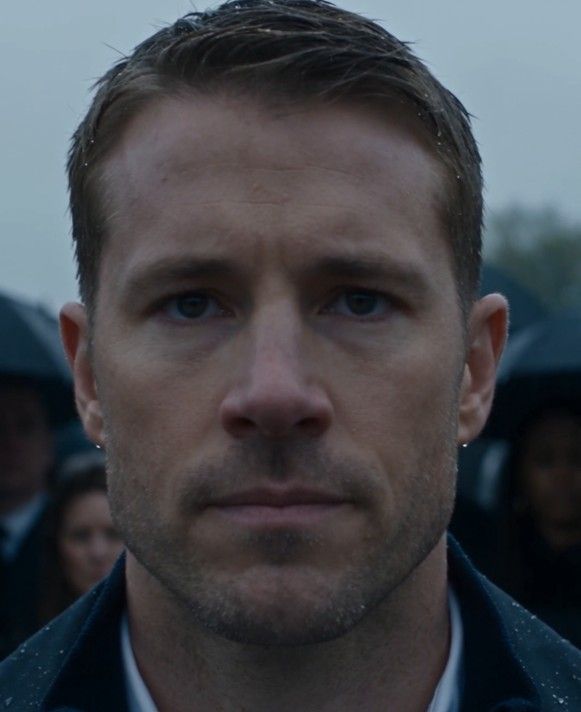
Ethan stood in front of it before the second ceremony began.
This time he wore the same dark civilian coat.
He did not put on a uniform he no longer held the right to wear.
He did not need one.
People looked at him now.
Some saluted.
He returned none of them formally. He simply placed a hand over his heart.
After the ceremony, the commanding officer approached with a small envelope.
“This came through the protected channel.”
Ethan knew before opening it.
Inside was a recent photograph with every identifying detail of the location cropped away.
A man sat on a wooden porch in sunlight.
Older.
