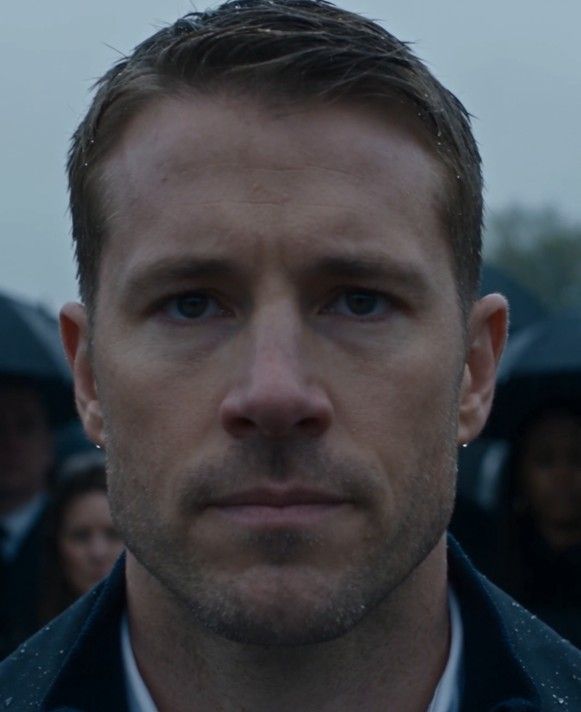
He sat in a hotel room across from the base with the rain tapping the window and imagined forcing everyone to say his name because they had no other choice.
Then he reread the letter.
Protect the life he has now.
The sixth man’s current life had not caused Ethan’s erasure.
Destroying it would not restore anything.
The next morning, Ethan returned to the legal office with conditions of his own.
He would cooperate with a controlled correction if the review formally acknowledged three things.
First, Ethan had served as mission leader.
Second, the operation involved six operators, even if one identity remained sealed.
Third, the families connected to the recognized team members would receive a truthful classified briefing explaining that prior records had omitted Ethan and an additional protected operator.
No invented story.
No vague language suggesting the missing people were clerical errors.
Truth within the limits that still had a legitimate purpose.
The legal officer listened.
The commanding officer backed him.
The suited man did too.
That surprised Ethan most.
“Why?” he asked afterward.
The man looked older than he had the day before.
“Because secrecy is supposed to protect missions and people. When it starts protecting itself, someone has to say so.”
The correction took months.
Nothing about it was fast.
Ethan gave interviews under secure conditions. Old records were reconciled. The signature in the black folder became the anchor that other fragments could be connected to. Personnel images, travel orders, medical notes, and commendation drafts that had been isolated by compartment rules finally pointed back toward one coherent history.
His public record remained sparse.
His service record no longer pretended he had never existed.
The families received private briefings.
Some were angry.
Some were relieved.
One mother slapped the table and demanded to know why governments always seemed to find room for secrets but not apologies.
Nobody had a good answer.
