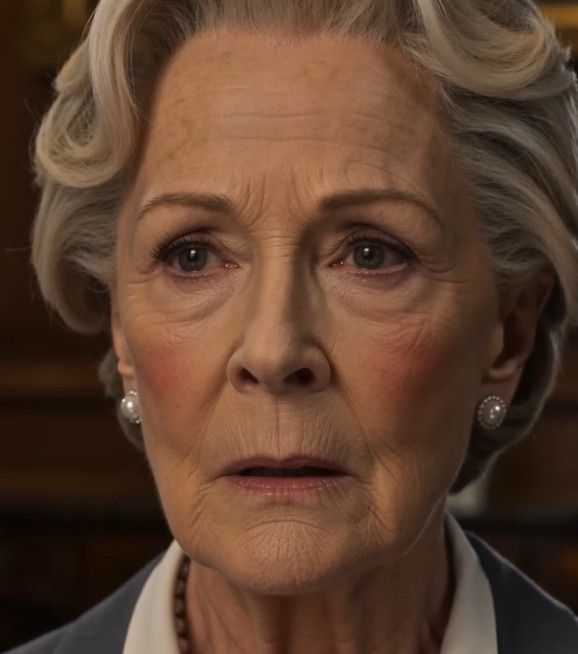
Rose arranged her finances independently, documented every shared expense, and chose living arrangements that did not depend on vague family promises. This time she did not volunteer to carry that discomfort for everyone else, a choice that mattered during healing as she considered five-thousand-dollar demand from a new angle 1-1.
There were awkward conversations after that. Some apologies arrived incomplete. Some needed time before they sounded like responsibility rather than an attempt to restore comfort. A factual answer mattered more than a polished explanation, and she waited until the two could be separated, a choice that mattered during healing as she considered five-thousand-dollar demand from a new angle 2-1.
Rose stopped measuring reconciliation by how quickly everyone could sit in the same room again. She measured it by whether her no remained a complete sentence and whether questions were answered without punishment. The longer the discussion continued, the clearer it became that certainty had been doing work that evidence should have done from the beginning, a choice that mattered during healing as she considered five-thousand-dollar demand from a new angle 3-1.
That slower standard made room for something healthier than the old peace. It allowed affection where affection was possible and distance where distance was still necessary. Rose did not need to prove anyone monstrous in order to prove that the arrangement was unacceptable, a choice that mattered during healing as she considered five-thousand-dollar demand from a new angle 4-1.
Months later, an earlier detail returned with a meaning Rose had not expected. It did not erase the confrontation; it placed her courage inside a longer story. That realization gave her room to be precise instead of cruel, a choice that mattered during beautiful twist as she considered five-thousand-dollar demand from a new angle 1-1.
An old transfer record among Rose’s papers showed that one of the earliest deposits that helped stabilize the household had actually come from Rose herself, quietly and without conditions. Even when the conversation became personal, she returned to dates, words, choices, and the boundaries that had actually been crossed, a choice that mattered during beautiful twist as she considered five-thousand-dollar demand from a new angle 2-1.
She held that discovery quietly. There was no need to use it as a weapon. Its value was private: proof that the part of her that resisted control had not appeared suddenly that night. The method frustrated people who wanted a faster emotional resolution, but it protected her from agreeing to something merely to end the scene, a choice that mattered during beautiful twist as she considered five-thousand-dollar demand from a new angle 3-1.
The realization softened something without weakening the boundary. She could remember what had been good, grieve what had been distorted, and still choose differently now. For once, silence belonged to her rather than to the person waiting for her surrender, a choice that mattered during beautiful twist as she considered five-thousand-dollar demand from a new angle 4-1.
By then, the practical dispute had been resolved. More importantly, Rose no longer needed another person’s agreement to recognize what had happened. Rose let the other person finish before responding, because interruption would have made it easier for the real question to disappear inside another argument, a choice that mattered during peace as she considered five-thousand-dollar demand from a new angle 1-1.
The relationships that survived did so with clearer edges. The ones that changed were allowed to change without being forced back into their old shape. Nothing about her restraint meant she was uncertain; it meant she had finally stopped confusing urgency with truth, a choice that mattered during peace as she considered five-thousand-dollar demand from a new angle 2-1.
Rose found herself noticing ordinary things again without using them to endure a confrontation: light on a floor, the sound of a kettle, a door opening because someone had chosen to open it. The difference between a request and a command became impossible to ignore once she asked what would happen if she simply said no, a choice that mattered during peace as she considered five-thousand-dollar demand from a new angle 3-1.
Weeks later, Rose closed a small ledger after writing the final balanced figure, then carried her coffee to a chair by the window where nothing was owed except the truth. Rose noticed how quickly old family habits tried to return, especially the expectation that discomfort should be solved by the person who had been hurt, a choice that mattered during peace as she considered five-thousand-dollar demand from a new angle 4-1.
The next part of Rose’s recovery on day 1 was deliberately ordinary. On day 1, she chose one practical task connected to the dispute and completed it without asking Lillian and Daniel to validate the choice. On that day 1, she checked what could be checked, wrote down what needed to be remembered, and left unanswered questions unanswered until reliable information existed. That day 1 mattered because their claim that she owed them money because she lived there had once been presented as an emergency. By moving carefully on day 1, she proved to herself that urgency did not own her decisions. On day 1, she could act with compassion without surrendering judgment, and she could leave a conversation unfinished rather than purchase temporary peace with a promise she did not mean. Each small decision on day 1 made the next one easier, not because the past vanished, but because her present choices finally belonged to her.
The next part of Rose’s recovery on day 2 was deliberately ordinary. On day 2, she chose one practical task connected to the dispute and completed it without asking Lillian and Daniel to validate the choice. On that day 2, she checked what could be checked, wrote down what needed to be remembered, and left unanswered questions unanswered until reliable information existed. That day 2 mattered because their claim that she owed them money because she lived there had once been presented as an emergency. By moving carefully on day 2, she proved to herself that urgency did not own her decisions. On day 2, she could act with compassion without surrendering judgment, and she could leave a conversation unfinished rather than purchase temporary peace with a promise she did not mean. Each small decision on day 2 made the next one easier, not because the past vanished, but because her present choices finally belonged to her.
The next part of Rose’s recovery on day 3 was deliberately ordinary. On day 3, she chose one practical task connected to the dispute and completed it without asking Lillian and Daniel to validate the choice. On that day 3, she checked what could be checked, wrote down what needed to be remembered, and left unanswered questions unanswered until reliable information existed. That day 3 mattered because their claim that she owed them money because she lived there had once been presented as an emergency. By moving carefully on day 3, she proved to herself that urgency did not own her decisions. On day 3, she could act with compassion without surrendering judgment, and she could leave a conversation unfinished rather than purchase temporary peace with a promise she did not mean. Each small decision on day 3 made the next one easier, not because the past vanished, but because her present choices finally belonged to her.
