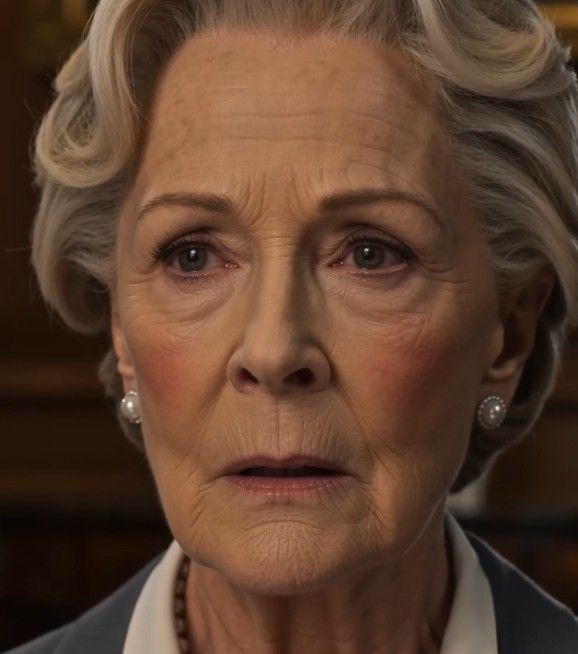
“You live here because of us—pay the five thousand!” The demand cut through Daniel and Lillian’s opulent living room with such certainty that Rose Mercer heard the low mechanical sigh of an elevator somewhere beyond the room before she heard anything else. She did not answer.
Across from her, Lillian and Daniel waited as though the next step were obvious: Rose would apologize, accept what they had said, and pay. Rose drew one slow breath through her nose.
Five thousand. The number was specific enough to feel heavier than an ordinary argument. But the first half of the sentence hurt more.
“You live here because of us.” Rose looked at Lillian. Then Daniel.
Neither softened the claim. Neither explained exactly what the five thousand represented or why they believed Rose owed it. They simply watched her with the confidence of people expecting a familiar pattern to repeat itself.
A quiet nod. A concession.
Another moment when Rose decided keeping the peace was easier than questioning what had just been placed in front of her. She gave them nothing.
The table between them looked almost painfully orderly. White linen lay smooth against polished wood.
Crystal caught the light. Papers rested in neat lines, while the numbers beneath the argument seemed to carry something far less tidy—years of work, sacrifice, and trust that could not be reduced so easily to a single demand. Rose let her gaze drift beyond them.
A narrow line of light crossed the floor. A metal edge gleamed.
A glass stood half full. One door remained open by only a few inches.
Ordinary details, but Rose noticed each one with unusual clarity. Sometimes the body remembered a room before the mind decided what to do inside it. The elevator machinery faded into silence.
Lillian did not repeat herself. She did not need to.
“Pay the five thousand.” Rose heard the demand again. She refused to decide what it meant before they explained it.
Was the money connected to the house? To something written on the papers?
To another expense Daniel and Lillian believed Rose should cover? Nothing they had actually said answered those questions.
That distinction mattered. Rose felt the first rush of humiliation cooling into something steadier.
Clarity. Lillian and Daniel had given her two conclusions.
That Rose lived there because of them. And that she owed five thousand dollars.
They had not yet shown how either conclusion had been reached. Rose lowered her eyes briefly toward the papers but did not touch them. There had been other moments when surrendering the argument seemed easier.
Money could make conversations ugly quickly. Family could make them worse.
A quiet payment might end the tension tonight. But payment would not answer the question underneath it.
And silence could become dangerous when other people were allowed to decide what it meant. Generosity could be remembered as obligation.
Dependence could be claimed where none had been established. An amount repeated firmly enough could begin to sound like a debt even before anyone explained why it was owed. Rose’s hands were steady now.
She looked back at Daniel. Then Lillian.
At first, they had seemed perfectly comfortable inside the silence. Rose’s lack of response probably looked like hesitation.
Then several more seconds passed. She did not apologize.
She did not reach for anything. She did not agree that she lived there because of them.
The living room remained immaculate. The crystal still reflected the light.
The half-full glass had not moved. Only the balance of the conversation had changed.
Rose drew in one measured breath. “If you believe I owe you five thousand dollars,” she said quietly, “tell me exactly what I’m paying for.” Daniel’s eyes shifted toward the papers. Lillian’s expression changed.
Rose stayed where she was. Because before she gave them a dollar, she wanted to hear the explanation neither of them had offered yet 👇
Rose did not fill the silence for Lillian and Daniel. The pause in the opulent living room became useful because it forced the demand to stand on its own, without the momentum that had made it sound inevitable. Rose let the other person finish before responding, because interruption would have made it easier for the real question to disappear inside another argument, a choice that mattered during immediate aftermath as she considered five-thousand-dollar demand from a new angle 1-1.
Instead of defending every hurt at once, Rose narrowed the argument to one fact: their claim that she owed them money because she lived there. That choice changed the temperature of the room; a command could be repeated, but repetition could not supply missing reasons. Nothing about her restraint meant she was uncertain; it meant she had finally stopped confusing urgency with truth, a choice that mattered during immediate aftermath as she considered five-thousand-dollar demand from a new angle 2-1.
She kept her hands still and asked for specifics. The ordinary details around five-thousand-dollar demand stopped feeling decorative and became anchors, reminders that she could observe before she agreed to anything. The difference between a request and a command became impossible to ignore once she asked what would happen if she simply said no, a choice that mattered during immediate aftermath as she considered five-thousand-dollar demand from a new angle 3-1.
Lillian and Daniel tried to recover the earlier certainty, yet Rose no longer answered tone with tone. She answered only claims that could be explained, checked, or supported. Rose noticed how quickly old family habits tried to return, especially the expectation that discomfort should be solved by the person who had been hurt, a choice that mattered during immediate aftermath as she considered five-thousand-dollar demand from a new angle 4-1.
The first explanation arrived in fragments rather than a clean confession. Each fragment exposed another assumption that had been treated as settled even though Rose had never accepted it. This time she did not volunteer to carry that discomfort for everyone else, a choice that mattered during rising tension as she considered five-thousand-dollar demand from a new angle 1-1.
When the conversation threatened to slide toward old grievances, Rose brought it back to the present question. She would discuss history later; first she wanted the concrete basis for their claim that she owed them money because she lived there. A factual answer mattered more than a polished explanation, and she waited until the two could be separated, a choice that mattered during rising tension as she considered five-thousand-dollar demand from a new angle 2-1.
That discipline was uncomfortable for Lillian and Daniel. Emotion had once moved the argument quickly, but careful questions slowed it down enough for contradictions to become visible. The longer the discussion continued, the clearer it became that certainty had been doing work that evidence should have done from the beginning, a choice that mattered during rising tension as she considered five-thousand-dollar demand from a new angle 3-1.
A second attempt at pressure followed, softer in volume but sharper in implication. Rose recognized the tactic and refused to reward it with a rushed decision. Rose did not need to prove anyone monstrous in order to prove that the arrangement was unacceptable, a choice that mattered during rising tension as she considered five-thousand-dollar demand from a new angle 4-1.
Walking away immediately would have protected Rose from another cruel exchange, but it also would have left the central claim unanswered. Staying carried its own cost. She chose to remain only long enough to establish the facts. That realization gave her room to be precise instead of cruel, a choice that mattered during difficult choice as she considered five-thousand-dollar demand from a new angle 1-1.
She set a boundary before the next question: no touching her belongings, no speaking for her, and no decision made in her name while the dispute remained unresolved. Even when the conversation became personal, she returned to dates, words, choices, and the boundaries that had actually been crossed, a choice that mattered during difficult choice as she considered five-thousand-dollar demand from a new angle 2-1.
The boundary was not dramatic. That was precisely why it mattered. Rose was not asking permission to be angry; she was defining what would happen next. The method frustrated people who wanted a faster emotional resolution, but it protected her from agreeing to something merely to end the scene, a choice that mattered during difficult choice as she considered five-thousand-dollar demand from a new angle 3-1.
For a moment, the old instinct to smooth everything over returned. She let it pass without obeying it, then asked to see the records connected to five-thousand-dollar demand. For once, silence belonged to her rather than to the person waiting for her surrender, a choice that mattered during difficult choice as she considered five-thousand-dollar demand from a new angle 4-1.
The records did not produce a theatrical secret. They produced something more damaging to the original demand: a sequence of ordinary facts that could be checked. Rose let the other person finish before responding, because interruption would have made it easier for the real question to disappear inside another argument, a choice that mattered during revelation as she considered five-thousand-dollar demand from a new angle 1-1.
The papers showed the five thousand was a bundled household charge they had created without Rose’s agreement, mixing ordinary expenses with costs she had never authorized. Nothing about her restraint meant she was uncertain; it meant she had finally stopped confusing urgency with truth, a choice that mattered during revelation as she considered five-thousand-dollar demand from a new angle 2-1.
Rose read the relevant lines twice, not because they were confusing, but because she wanted to be certain she was not replacing one assumption with another. The difference between a request and a command became impossible to ignore once she asked what would happen if she simply said no, a choice that mattered during revelation as she considered five-thousand-dollar demand from a new angle 3-1.
When she looked up, she did not announce victory. She asked Lillian and Daniel to explain the gap between the documents and the certainty used against her minutes earlier. Rose noticed how quickly old family habits tried to return, especially the expectation that discomfort should be solved by the person who had been hurt, a choice that mattered during revelation as she considered five-thousand-dollar demand from a new angle 4-1.
The answer came defensively. Parts of it were explanation; parts were justification. Rose listened long enough to separate the two. This time she did not volunteer to carry that discomfort for everyone else, a choice that mattered during confrontation as she considered five-thousand-dollar demand from a new angle 1-1.
She refused the invitation to argue about whether anyone had meant well. Intention could be discussed, she said, but it did not change what had been demanded or how little choice she had been given. A factual answer mattered more than a polished explanation, and she waited until the two could be separated, a choice that mattered during confrontation as she considered five-thousand-dollar demand from a new angle 2-1.
