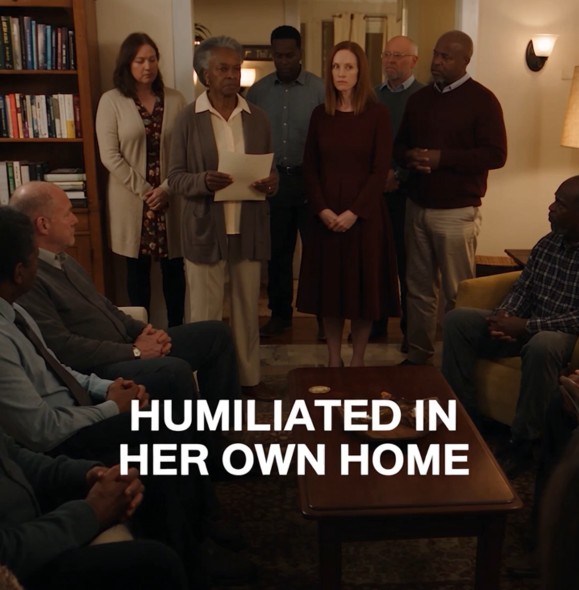
“You’ll have to understand it more than once.”
He stayed twenty minutes. When his alarm vibrated, he rose without bargaining.
At the steps, he turned.
“Thank you for the tea.”
Ruth nodded.
After he left, she found that she was tired, but not afraid.
Over the next year, trust returned in pieces too small for anyone outside the family to notice. Robert kept appointments. He paid what he owed. He accepted a refusal without turning it into a test of love.
Ruth never gave him another key.
Eventually, she no longer felt the need to explain why.
One Thursday, Elaine arrived carrying a dented biscuit tin.
“I should have brought this years ago.”
Inside were canceled checks, folded receipts, and a photograph of Megan as a little girl on a front step.
Beneath them lay a narrow yellow ledger.
Ruth recognized her own handwriting on the first page.
For Elaine. No interest. Pay forward when able.
“I forgot I wrote that.”
“I didn’t,” Elaine said.
She turned the pages.
There were names Ruth did not know, amounts, dates, and brief notes. A heating bill. School shoes. A deposit for a woman leaving a bad marriage. Each entry recorded money Elaine had given when she could finally afford to help someone else.
“I thought I was supposed to pay you back,” Elaine said. “You told me to find somebody who needed it more.”
Ruth touched a page crowded with small figures.
“You did all this?”
“Not just me.”
From the bottom of the tin, Elaine lifted several envelopes.
One contained a photograph of a young woman outside a nursing school. Another held a note from a grandfather whose electricity had stayed on through a winter storm.
The recipients had helped other people in turn. Elaine had kept whatever news reached her, never imagining the ledger would be needed as anything but a private reminder.
Ruth sat very still.
For months, she had remembered the mortgage as the kindness that led, somehow, to Megan standing in her living room with contempt in her voice.
Now there were other rooms. Other children asleep under roofs. A woman studying beneath a lamp that stayed on.
Megan had not been the ending of that act.
“I wanted you to know,” Elaine said, “that it didn’t go nowhere.”
Ruth laughed through tears at the familiar phrasing.
“No,” she whispered. “It didn’t.”
That autumn, Ruth reopened her sewing room.
She put a notice at the neighborhood center offering a small Saturday class. Four people came the first week, including a teenager who wanted to repair his grandmother’s coat.
Elaine brought biscuits.
Robert delivered a secondhand worktable Ruth had chosen and paid for. He asked where she wanted it, assembled it, and left the receipt beside her machine.
One student mistook him for the owner.
“My mother owns the house,” he said. “I’m helping with the table.”
Ruth heard him from the hallway.
