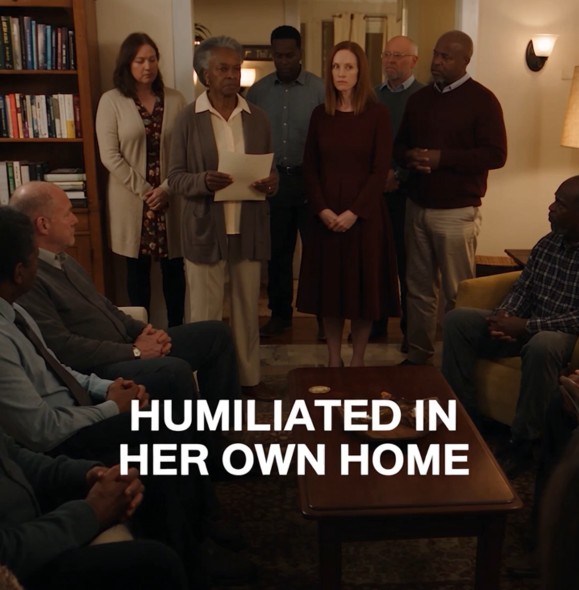
Robert lifted his head.
“No.”
Megan turned.
“You don’t get to say that to her.”
“You said she would forgive you.”
“I hoped she would. That’s different.”
Megan opened her bag and took out another paper.
“Then explain this.”
It was an email from the proposed lender, asking for clarification about a statement in the application. Ms. Carter read it, then passed it to Ruth.
The statement described Ruth as unable to manage her affairs.
For several seconds, the words made no sense.
Then Ruth saw the attached message, written by Megan, describing supposed confusion, missed payments, and a family arrangement to relocate her.
Every example was false.
“Did you know about this?” Ruth asked Robert.
His face had gone gray.
“Not that part.”
Megan spoke quickly. “They needed an explanation for why we were handling things.”
“So you gave them one,” Ruth said.
“It was paperwork.”
Ruth looked at the woman she had welcomed at birthdays, fed at holidays, and trusted to stand beside her son.
She had been prepared to argue about money. She had not prepared for someone inventing the loss of her own mind.
“You were going to make my word worth less than yours.”
Megan’s lips parted.
No answer came.
Ruth turned to Ms. Carter.
“Make the report. All of it.”
Robert shut his eyes.
Megan stood so abruptly that her chair scraped the floor.
“You’ll regret this.”
Ruth’s voice was exhausted.
“I already regret what made it necessary.”
The months that followed did not move like the confrontation. They moved through appointments, signed statements, and afternoons when Ruth could not bear another envelope.
The evidence did not depend on anyone’s version of the party. There were messages, submitted documents, and Robert’s admission. Megan had made copies to pressure him, and those copies established her own part.
The proposed loan was refused. Their business closed when they could not meet its existing debts. Their plan to save it with Ruth’s house became part of the evidence against them.
Both eventually entered guilty pleas to charges arising from the attempted fraud. Their sentences included probation, community service, and repayment of Ruth’s legal expenses. Court orders prohibited further interference with her property.
Ruth attended the sentencing.
Robert accepted responsibility without asking her to speak for him.
Megan’s statement began with financial pressure and ended with how much she had lost. Ruth listened from the second row and understood that an apology might never come.
She stopped waiting for one.
Outside, Robert approached only after Ruth nodded.
