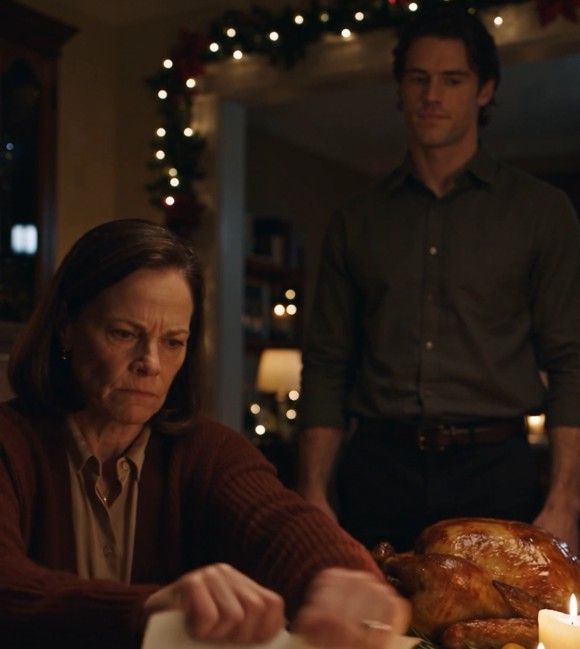
Nathan remained in the foyer.
He looked at the Christmas tree, the cold roast, and the paper he had torn in half.
“Do you want me to go too?” he asked.
I looked at my only child.
“Yes,” I said. “But not forever.”
He nodded, crying silently now.
“I understand.”
“No,” I said. “You understand the consequence. Understanding will take longer.”
He placed his keys on the entry table.
Then he walked out into the snow.
CHAPTER 4 – The Empty Rooms
The house became quiet so suddenly that my ears rang.
Helen helped me clear the plates. Miriam locked the office and took the documents for safekeeping. By dawn, the Christmas lights were still blinking, but the rooms looked unfamiliar without the noise of children and the constant movement of people who had treated my home like a hotel.
I stood in the kitchen with my hands resting on the counter.
The torn invoice lay beside the sink.
Helen picked it up and dropped it into the trash.
“You don’t have to keep proof of what they did,” she said.
“I know.”
I watched the paper disappear beneath a pile of napkins.
“I keep thinking I should have seen it sooner.”
“You saw it.”
“I ignored it.”
“That is different.”
“Is it?”
Helen turned off the faucet.
“You gave your son room to be better. He used that room to hide.”
I leaned against the cabinet.
“I raised him better than this.”
“Yes,” she said. “That is why it hurts.”
Nathan stayed with a friend for two nights. On the third morning, he came to the house alone. He stood on the porch holding a cardboard box.
I opened the door but did not invite him in.
He noticed.
“That’s fair,” he said.
“What is in the box?”
“Your things.”
He held it out.
Inside were my jewelry case, several photographs, Richard’s old watch, and a bundle of letters tied with blue thread. I had thought they were missing for months.
“Vanessa took them from the office,” Nathan said. “She said the room needed to be cleared.”
I touched the top photograph. It showed Richard kneeling beside a small boy with a scraped knee. Nathan was six. Richard’s hands were covered in grass stains.
“Why did you bring them?”
“Because they were never ours.”
The words were simple, but his shoulders bent beneath them.
I stepped aside.
He entered carefully, as though the floor might reject him.
We sat in the living room, with a full armchair between us.
“I need to tell you what happened,” he said.
“You already told Miriam.”
“Not all of it.”
I waited.
Nathan looked at his hands.
“When my company downsized, I was embarrassed. I told you we needed three months because I thought I could fix everything quickly. Then Vanessa found out she was pregnant, and the medical bills started. I took a contract job, but it paid less. She said we needed to act like we were still successful because people treated us differently when they knew we were struggling.”
“You were struggling,” I said.
“I know that now.”
“You could have told me.”
“I was afraid you would see me as a failure.”
“I saw you as my son.”
“I know that now too.”
He swallowed.
“When Vanessa started talking about the house, I told myself she was only being practical. She said you had promised it to me. You never did, but I let her say it because I wanted it to be true. I wanted one thing in my life that felt secure.”
“You had me.”
