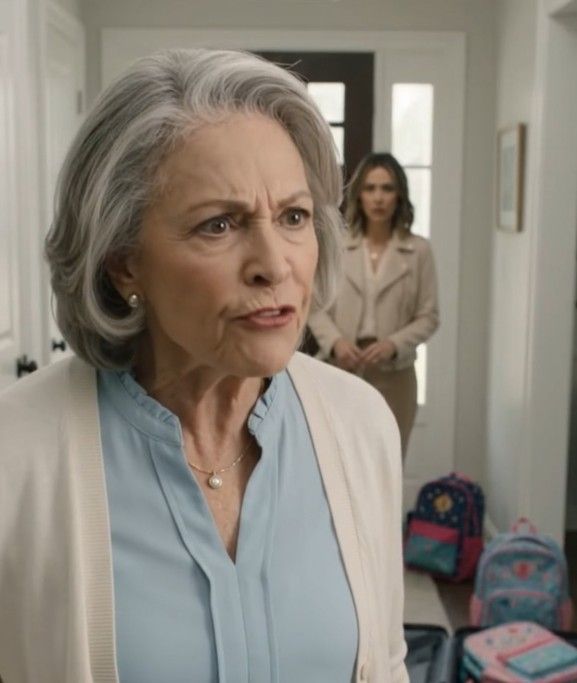
“Take the children. Your vacation is canceled!” Tori shouted, shoving four backpacks across my front hall.
One burst open, spilling crayons and a stuffed animal onto my suitcase, and my son Caleb refused to help when I bent to collect them.
A boarding pass for my flight to Lisbon lay underneath the toys.
“I’m leaving for Portugal today,” I said.
“Then rebook,” Tori answered.
Caleb added, “Mom, it’s only two weeks.”
I had spent thirty years arranging my life around everyone else’s emergencies.
After retiring from the school district, I saved for a trip I’d promised myself long ago: to see Lisbon and walk along the coast where my grandparents had lived.
I paid for the ticket eight months earlier.
Caleb and Tori knew about it.
I’d shown them the itinerary over dinner, and Tori had smiled and called it a wonderful adventure.
Now she stood in my doorway in an expensive travel jacket, announcing they were flying to Japan.
The children, ages four to eleven, waited silently while their parents argued over who had sent me the message.
No message existed.
Tori had simply assumed I’d stay home rather than let the children down.
I had backup phone numbers for the children’s pediatrician and knew their food allergies by heart. That was exactly why I refused to improvise a two-week plan at the front door. Responsible childcare began with honest information and a willing caregiver, not surprise suitcases.
I loved those children more than I could explain.
But love didn’t make it reasonable to abandon them without a confirmed caregiver.
I told Caleb that neither parent would be leaving until an alternative was arranged.
Tori said I was selfish.
Then she opened a red folder containing school schedules, allergies, and emergency contacts as though planning had turned her demand into permission.
Across the front someone had written GRANDMA’S RESPONSIBILITY.
I handed the folder back.
“Find someone who’s agreed,” I said.
Caleb looked exhausted.
He admitted that he’d told Tori my trip was nonrefundable but that she’d said I wouldn’t actually go.
Their oldest, Hannah, tugged my sleeve.
“Grandma, did you say no before?”
I nodded.
She looked at her father, waiting to see whether he would acknowledge that a refusal mattered.
