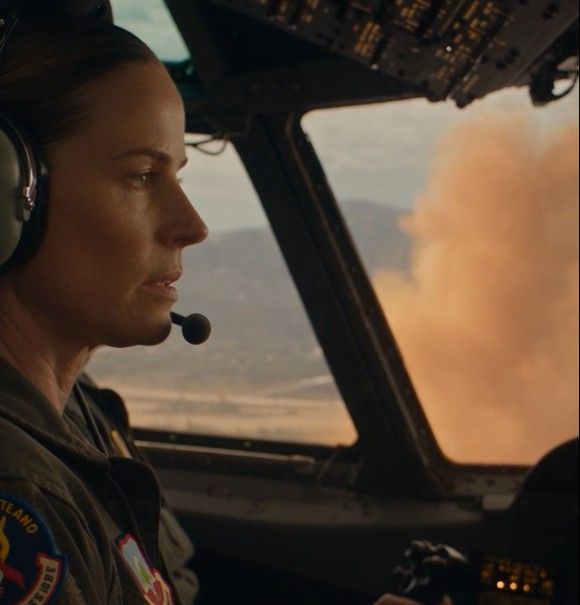
Grace looked at him.
That distinction mattered.
If the rescue became the reason he respected her, then her worth would still depend on proving the job through service to him.
“Thank you,” she said.
It was not forgiveness completed. It was the first honest place to put the apology.
They spent the night at different locations. Raymond stayed with Grace’s brother after discharge from the evacuation center. Grace slept six hours at temporary crew lodging and woke with the sensation that the radio was still in her ear.
The wildfire continued to move.
For two days nobody knew the condition of Raymond’s house.
Grace refused to ask for special access. Her crew had other families to support, and she would not convert personal fear into operational priority.
Raymond surprised her by not asking her to.
On the third day he called.
Not through her brother. Directly.
Grace stared at his name on the screen before answering.
“Hi.”
“They think the house is still standing,” he said. “Damage outside. Smoke inside. We can’t go back yet.”
Grace let out a breath.
“That’s good.”
“Yes.”
A silence.
“I found something in my coat,” Raymond said.
Grace’s body tightened automatically, bracing for another object that would force memory into the center of the conversation.
“What?”
“A grocery list your mother wrote. It’s from years ago. I must have put on an old coat.”
Grace laughed despite herself.
“What’s on it?”
“Coffee. Pears. The crackers you liked.”
Grace closed her eyes.
Her mother had bought those crackers long after Grace moved out because she always expected her daughter might stop by.
“Dad–”
“I’m not calling because it’s important. That’s the point. I kept saying her things were inside like every object in that house was sacred. Then I find this stupid grocery list and it hurts more than the jewelry box ever did.”
