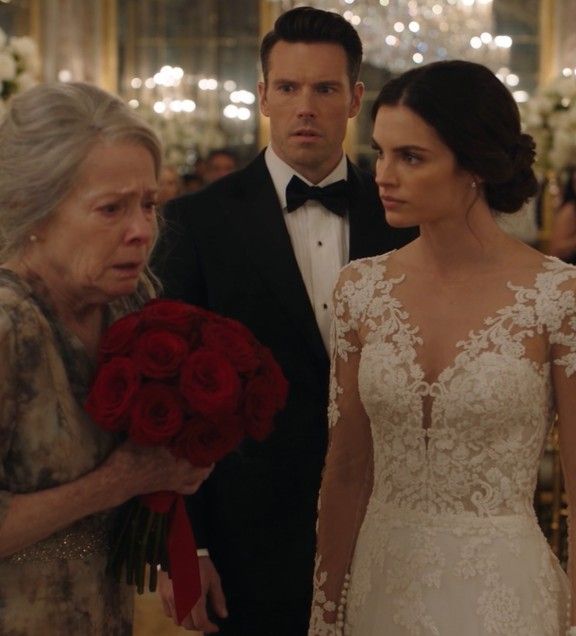
Adrian told Vanessa he would not resume the reception. He did not say the marriage had magically vanished because the music stopped. He understood that the legal status of their ceremony would need to be addressed properly. He said he would speak to an attorney and arrange a separation while they worked out their next steps. Vanessa demanded that he think about their families and the cost of the event. He replied that those were consequences they would have to handle, but that none required his mother to accept humiliation as the price of being included.
The coordinator entered after a quiet knock. Adrian asked her to inform the guests that the celebration was ending and that transportation and meals already arranged should be handled according to the venue’s policies. She explained that some vendors would have cancellation fees. Adrian listened and asked for written statements rather than bargaining in front of everyone. He also asked that staff preserve the request, the email confirmation, any relevant footage, and the record of what happened in the ballroom. The coordinator nodded. Her face showed relief that someone was finally discussing procedures instead of shouting.
Vanessa’s father arrived furious. He declared that the paper was an internal planning matter and threatened to withhold payments. The coordinator calmly explained that contractual responsibilities did not disappear because relatives were angry. Adrian did not argue about money with him. He told him the celebration was over and that all further logistics would be discussed in writing. Vanessa’s mother approached Rosa, patted her shoulder without asking, and begged her to convince Adrian to come back. Rosa shook her head. She had no wish to direct her son’s marriage, and no strength left to comfort people who treated her pain as an inconvenience.
A few guests had recorded parts of the incident. Adrian asked close friends not to circulate the images of Rosa’s face. He could not control what strangers did with their phones, but he could refuse to turn the slap into entertainment. He later provided a factual account to the venue and to the officer who took Rosa’s report. Witnesses had seen the contact, and the nurse could describe the injury she observed. No one promised an immediate charge or a particular judicial outcome. Adrian wanted the truth preserved; Rosa wanted the room to stop spinning whenever she remembered the sound.
That evening Adrian drove his mother home. The red roses lay on the back seat, the blue ribbon still tied. Rosa lived in a narrow house with flowerbeds pressed against the front path. Her husband had died years earlier, and she had kept the small garden he planted in their first summer together. Adrian had offered many times to hire a gardener. Rosa always refused because tending the flowers was one of the few activities that made the house feel as if both of them still lived there. The familiar smell of damp earth steadied him as he helped her inside.
He made tea while Rosa changed from her wedding dress into a cotton blouse. When she returned, he noticed a faint bruise developing beneath the redness on her cheek. She saw him looking and tried to joke that flowers had given her worse injuries over the years. He did not laugh. “I’m sorry I didn’t come to get you when the ceremony ended,” he said. “I’m sorry I thought there was probably an innocent explanation when the coordinator first sent the instructions.” Rosa touched his hand. “You wanted your day to be happy,” she answered. “That isn’t a crime.”
Adrian told her that wanting a happy day had also made him ignore smaller warning signs. Vanessa had complained about Rosa’s modest home, asked whether she needed to attend the rehearsal dinner, and suggested that professional photographs would look cleaner without older relatives in bright colors. He had corrected some remarks and dismissed others. Rosa said she had felt the distance growing, but she did not want to burden him before the wedding. They sat with the painful truth that both had tried to spare the other trouble by swallowing words they should have said aloud.
The next morning the bouquet began to open. The roses were deep red, their outer petals a little bruised from being clutched tightly. Rosa trimmed the stems and placed them in an old glass jug. Adrian recognized the blue ribbon. His father had once used that color to mark rosebushes that required special care. As a boy, Adrian had followed his parents between garden beds, carrying scissors too large for his hands and listening to their arguments about sunlight. Red roses had never been simply a fancy gift in that family. They meant someone had grown something, patiently, for somebody they loved.
Vanessa sent Adrian a long message apologizing for the slap but saying the note had been necessary because Rosa had refused to follow the wedding’s visual plan. She also repeated that she had not known the woman at the ballroom was his mother. Adrian read the message twice. Her apology contained a factual acknowledgment, but it still described his mother’s dignity as an obstacle. He replied that he needed distance and that he would communicate about practical matters in writing. He did not invite Rosa to judge whether that was enough. It was his decision to make.
A legal consultation confirmed that a wedding ring in a pocket did not dissolve a marriage. The lawyer explained which formal procedures might apply to the recorded ceremony and what documentation would be necessary. Adrian asked about finances, jointly ordered services, and the belongings left in the home he had planned to share. He followed the steps recommended rather than promising himself a spectacular overnight solution. The separation was distressing. He missed the good moments with Vanessa and felt ashamed for missing them. His counselor reminded him that grief for a relationship was compatible with recognizing behavior he could not accept.
Rosa had her own difficult days. People who hadn’t spoken to her in years telephoned for details. A neighbor asked whether she was enjoying being the center of attention. She declined to discuss it. At the flower stall, customers offered sympathy as if she had become a story rather than a person. She found herself checking the entrance whenever someone in an expensive dress walked past. Her friend Pilar offered to accompany her to appointments until the bruising faded. Rosa accepted, learning that receiving care did not make her weak any more than carrying roses had made her foolish.
Rosa had brought the bouquet to a local florist’s counter before the wedding, asking whether the stems were cut properly and whether the flowers would last the day. The florist, who had known her for years, later stopped by with a small jar of plant food and told her that the bouquet had been beautiful. Rosa wept unexpectedly. She had spent the last month wondering whether her simple gift really had been inappropriate for such an elaborate room. Her friend reminded her that flowers weren’t insulting because they lacked a luxury label. Rosa had known that once. The conversation helped her recover an ordinary piece of confidence that the slap had stolen.
Several weeks later the venue sent the preserved correspondence. The coordinator had first questioned Vanessa’s request because it conflicted with Adrian’s explicit instruction that his mother be seated in the front row. Vanessa had replied that the groom was not to be bothered with small guest-management decisions. The coordinator had refused to authorize a false security report but forwarded the disputed instruction to Adrian the morning of the wedding. These details did not make the assault more or less real. They showed that staff had tried to prevent a problem and that Adrian had been given a chance to ask better questions before the ceremony.
Adrian spoke with the coordinator to thank her for raising the concern. She admitted she feared losing an expensive client if she challenged the bride. He told her the price of the event did not change her duty to treat guests fairly. Their conversation prompted a review of venue policy: requests to exclude named relatives would be checked against authorized guest lists, and employees would not be instructed to invent reasons for removing guests. These changes were modest. They would not heal Rosa’s cheek or undo the public insult. They might prevent another staff member from being cornered into participating in it.
Adrian also met Vanessa once with advisers present. She was calmer. She said she had grown up feeling that her family was always being judged, and that the wedding had become an attempt to prove she belonged in a world that admired wealth. Rosa’s simple dress and bouquet had frightened her because they did not fit the picture she had sold to herself. Adrian listened without agreeing that fear justified cruelty. He asked whether she would have treated the same woman differently if Rosa had arrived in a designer gown. Vanessa admitted that she probably would. The honesty was bleak and necessary.
He told Vanessa the marriage could not continue. She cried and asked whether people deserved second chances. Adrian said people did, but that a second chance was not something one person could demand from the person who had been hurt. He hoped she would seek help with her behavior and learn to recognize people’s worth without measuring their clothing. Then they finished discussing practical arrangements. No crowd watched. No ring was thrown. The ending of their marriage occurred in ordinary rooms, through paperwork and conversations that made the decision irreversible over time.
As the legal process moved forward, Rosa resumed tending the garden. Adrian came on Saturdays when he could. At first he arrived eager to repair anything he saw: a loose latch, a broken watering nozzle, a crooked shelf. Rosa let him help, then asked him to sit down and simply have lunch. She did not want their relationship to become another project. He learned to stay even when nothing needed fixing. They ate bread with tomatoes from the garden and spoke about work, neighbors, old movies, and sometimes the wedding. The painful story gradually became one among many things they could talk about.
One afternoon Adrian found a cardboard box of photographs in the hall closet. There were pictures of him at five holding an oversized bouquet, at twelve wearing a school uniform, and at eighteen beside his father in a hospital corridor. On the bottom was a photograph Adrian had never seen. His parents stood in front of the original flower stall on the day they opened it, both laughing, with a bucket of red roses between them. His father had written a message on the back: These are for every day we choose each other, not just the pretty ones. Adrian took the photograph to his mother.
Rosa ran a fingertip along the faded edge. She said her husband had been too poor to buy her jewelry in their early years, so he brought one red rose home at the end of every difficult week. Sometimes the flower was bent or spotted. Sometimes it was the most beautiful rose in the market. She had kept the habit after his death, placing a red rose on the table for every milestone their son reached. The bouquet she brought to the wedding was not intended to outshine white decorations. It was the latest in a language of love they had been speaking for decades.
Adrian understood then why his mother had refused to drop the flowers, even after she was struck. She had not been stubborn or concerned about wasting money. She was holding a promise from his father, carried forward in petals and a blue ribbon. He took her hands. “I wish I had known,” he said. Rosa smiled sadly. “You did know. You just didn’t know there was a story behind it.” The distinction stayed with him. He had spent his adult life noticing the price of gifts more quickly than the labor or meaning inside them.
Adrian began bringing friends to the garden, not to hear about the canceled wedding but because Rosa liked company. A neighbor brought homemade bread. A retired teacher arrived with questions about pruning. One sunny afternoon they all sat beneath the porch awning as rain swept across the flowerbeds. Nobody spoke about the price of a bouquet or the kind of clothing appropriate to a celebration. Adrian looked around at the mismatched chairs and the relaxed faces and understood that the hospitality he had wanted to create in a ballroom had been available to him here all along. It required attention, not perfection.
When the formal legal arrangements were concluded, Adrian did not celebrate the ending with a party or a public announcement. He took a day off work and helped Rosa prepare the flowerbeds for winter. They planted a new red rosebush near the gate, in a place where morning light reached it. Rosa said the plant would need protection in its first cold season. Adrian asked whether it would survive. “We give it the best chance we can,” she said. “Then we let it grow.” He realized she was talking about a rose and, perhaps, everything else.
That evening Rosa cut the last open flower from an older bush and placed it in the glass jug. Adrian stood by the table, looking at the old photograph of his parents. The wedding’s white roses, crystal chandeliers, and expensive photographs were already fading in his memory. He remembered the red petal falling to the ballroom floor and his mother bending to retrieve it. At the time he thought she was trying to keep her gift from being destroyed. Now he knew she had been trying to keep a tradition alive. He kissed her forehead and asked whether she would teach him how to tie the blue ribbon properly.
She showed him slowly, letting him make the knot twice before it held. When he left, a single red rose lay on the passenger seat, wrapped in plain paper. He did not know who would someday receive it. That was all right. For now, it reminded him that honor was not something a person promised once in a beautiful room. It was what remained when the room was empty, the guests had gone home, and someone vulnerable reached out with a gift. He drove away knowing exactly whose kindness had made him who he was.
