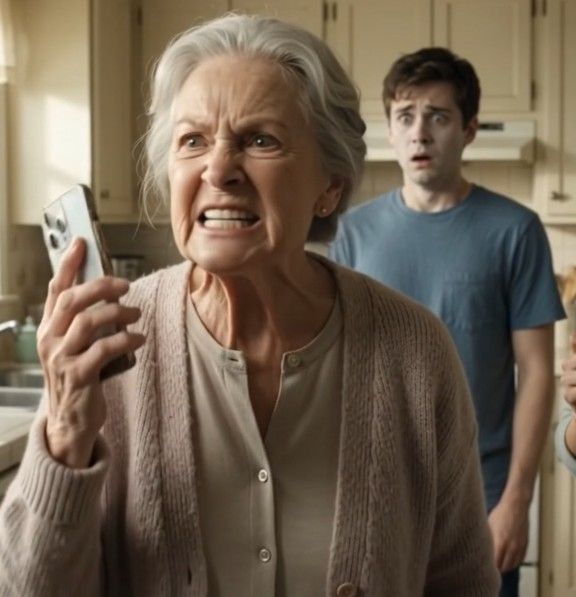
Over the following days, Daniel worked with the accountant to reconstruct the business records. Some client deposits had been moved into personal accounts, and some were spent on obligations unrelated to the jobs for which they were paid. Vanessa had signed several transfers herself. Daniel had approved others without understanding their destination. He did not excuse his negligence. He informed affected clients, arranged temporary protection for remaining funds, and sought professional advice about what he could realistically repay. The money would not simply reappear. Some projects might have to be sold or completed under new management. There was no way to make every harmed customer happy with an apology, and Daniel had to learn to remain present anyway.
The hardest moment came on Thursday when Leah Voss phoned me directly. She spoke politely and said she was calling to confirm a collection scheduled for the following week. According to her file, I had authorized transport for three children and agreed that the family would relocate permanently. I told her I had signed no such agreement. She went silent, then said, “There is a notarized consent attached.” My stomach clenched. I asked her to preserve the document and communicate through the attorney. Leah later supplied a copy. The notarial stamp belonged to a person whose commission had expired months earlier. The signature image matched an old holiday permission form Vanessa had photographed at my house.
Daniel stood beside my desk as we looked at the document. “I thought she only wanted us to start over,” he said. “You were going to let her take the children after leaving them here under a false arrangement,” I replied. He didn’t argue. I asked whether he had looked at the return flights. “I didn’t want to know,” he said. There it was: the cowardice beneath the chaos, not spectacular but dangerous. I told him that he needed to explain everything to Miriam and cooperate fully, including his own part. If he wanted me to trust him with the grandchildren’s safety, he could not stop telling the truth whenever it implicated him. He sat down and began making a list of the decisions he had avoided.
The children heard fragments despite our efforts. Ada asked me one night whether her parents were going to prison. I didn’t give her an answer I couldn’t know. Instead I told her adults had made serious choices and that trained people would decide what consequences were fair. “Did we do something wrong?” she asked. “No,” I said. “You did not cause any of this.” She considered that. “Then why did Mom say you didn’t want us?” I put down the dish towel. Vanessa had told them my trip proved I would rather be anywhere else. I sat beside Ada and explained, without insulting her mother, that I could love them deeply and still need their parents to arrange proper care. Ada nodded, but tears fell onto her hands.
We talked for nearly an hour. Ada missed her mother and was angry at her father. She felt guilty for wanting to visit friends while everyone seemed worried. I told her that children could have ordinary needs during frightening times. Ben wanted someone to watch his football match. Lucy wanted the same bedtime story every night. None of those things was selfish. Daniel came into the kitchen midway through our conversation and asked whether he could join us. Ada made him sit opposite her. “Don’t tell Grandma to fix it,” she said. He promised he wouldn’t. They spoke together until the clock went past ten, and I left them alone long enough for him to do the work of hearing his daughter’s fear.
The court eventually issued temporary arrangements that kept the children in their familiar home with Daniel while the parents’ separation and related disputes were reviewed. Vanessa was permitted contact under conditions shaped by professional advice and the children’s welfare. Separate investigations examined the false authorizations and financial records. I attended interviews as a witness, bringing the binder and my travel calendar showing I had been away when one signature was supposedly made. I spoke only to what I knew. Months later, Vanessa admitted submitting false consent documents and agreed to legal consequences and restitution terms connected to the financial wrongdoing. Her freedom to make school or travel decisions without oversight was restricted. The accounts she had used to hide transfers were closed under the formal settlement.
Daniel’s negligence was not erased by Vanessa’s misconduct. He lost control of the business he had hoped to build for the children and spent years working through repayment agreements. He met weekly with a counselor to understand why conflict had made him passive. When he wanted to complain about the expense of legal fees, I reminded him that the clients and children had paid a price too. He stopped asking me to excuse him. He began showing up for school meetings, taking Ben to practice, learning which nights Lucy needed her inhaler checked according to her doctor’s plan, and making sure Ada had room to be an eleven-year-old instead of a second parent. It was unglamorous work. It was exactly the work he owed them.
My Portugal departure approached while the household found a new rhythm. Ruth agreed to be an emergency contact only after Daniel asked her directly and gave her the full information she needed. I remained a secondary contact by choice, not default. Daniel arranged legitimate child care for two afternoons when his work schedule overlapped pickup. I checked the arrangements because I loved the children, but I did not manage them. At the dinner table one evening, Lucy looked at my suitcase by the door and began crying. “What if you don’t come back?” she whispered. I drew her close. I told her the date of my return, showed her the tickets, and promised we would mark days on a calendar together.
On the morning of my flight, Daniel drove me to the airport. He carried the suitcase he had helped me choose months earlier. We parked, and I watched him check his phone for school messages before pulling away from the curb. “You were right to say no,” he said. “I should have said it too.” I told him that saying no was only the beginning; he still had to keep his promises when it was inconvenient. He nodded. Then he held me for a long time. He smelled of coffee and the soap he had used as a teenager. I loved him fiercely, and I no longer confused that love with protecting him from the truth about himself.
Sofia waited at the arrivals hall in Lisbon holding a ridiculous paper sign with my name drawn in enormous purple letters. Her hair was white now, and her knees gave her trouble, but she laughed with the same reckless delight I remembered. We stood embracing while travelers flowed around us. She led me to a small apartment overlooking a courtyard of orange trees. For the first hour we barely stopped talking. Then we fell quiet and sat side by side while a church bell rang across the roofs. I had thought the trip would be a brief escape from family difficulties. Instead it reminded me that I had been a person with friends, ambitions, and adventures long before I became anyone’s grandmother.
We traveled slowly, choosing places where we could sit and watch rather than hurry. Sofia took me to a tiled station, a bookshop with narrow stairs, and a café where the owner remembered her usual order. Each morning I sent the children a photograph, never as proof I hadn’t abandoned them but as an invitation into my day. Ben wanted to know whether Portuguese football was faster. Ada asked about the history of the tiled buildings. Lucy asked if the ocean there tasted the same as ours. Daniel sent pictures of packed lunches, untidy homework, and a cake that rose crookedly in the oven. They were imperfect pictures of a father doing what he said he would do. I found I could enjoy them without checking for disaster.
One evening Sofia opened a box of postcards she had saved over thirteen years. Several were mine, written during times I had planned to visit but stayed home because someone needed help. “You always thought the next year would be simpler,” she said gently. I read my own familiar promises and felt embarrassed. She took my hand. “I never doubted you loved me. But I hoped you would remember that being needed isn’t the only reason to travel.” We sat without speaking. Outside, someone played a guitar below the window. I thought of the life I had narrowed around other people’s emergencies and of the children I hoped would grow up knowing their grandmother was brave enough to have a world of her own.
When I returned, three homemade signs hung across Daniel’s front room. Ben had drawn a football, Ada a map, and Lucy an airplane with wings too big for its body. They rushed me at the door, and for a moment I could hardly stand under their embraces. Daniel took my suitcase and brought out a plate of sliced fruit. There were no demands waiting beneath the celebration. He had already made dinner. Lucy asked whether the ocean had been blue every day. I told her some mornings it was gray and rough, and that had been beautiful too. She considered that answer as seriously as though it were an important lesson.
Later that night Ada handed me a small notebook. Its pages were filled with drawings the three children had made while I was gone. On the first page was a picture of me standing between them at the kitchen counter, the red binder drawn as a crooked square behind us. On the next page my airplane rose above the house. Under it Ada had written, “Grandma taught us that coming back means more when you were free to go.” I stared at those words. I had believed my refusal might become the memory that hurt them. Instead the oldest child had understood it as a promise about how love should work. I could barely speak when I thanked her.
There was one last drawing tucked into the back pocket. Lucy had made it the day before the terrible argument, when Vanessa told the children they would be staying with me. The paper showed our whole family around a table. Over my head floated a tiny airplane. In the corner Lucy had written, with Ada’s help, “Grandma goes to see her friend and we all cheer.” Before any adult had used guilt against me, the children had been capable of loving my joy. I pressed the drawing to my chest. Daniel watched my face and whispered, “I should’ve listened to them.” I smiled through tears. So should I, I thought. They had never asked me to disappear into their needs.
In the years that followed, our family grew steadier without pretending nothing had happened. Vanessa rebuilt a separate life under the terms of her legal obligations, and the children had support in understanding their complicated feelings toward her. Daniel made restitution where he could and stopped passing difficult conversations to me. Ruth came to Sunday meals, Sofia visited one summer, and the grandchildren learned to ask before making plans that involved someone else. On the wall beside my desk I hung Lucy’s picture of the airplane. It was not a reminder of the day I almost lost my freedom. It was proof that the people who truly loved me could make room for it.
One clear afternoon, as the children packed for a weekend at my house that we had planned together, Daniel stood at the door holding their medication bag and a written schedule. He asked whether the arrangements still suited me. I checked the calendar, looked at the three impatient faces waiting in the car, and said yes. I could see them relax because the answer was real. We drove toward my home with the windows down and music playing softly. At a red light Lucy asked where I wanted to travel next. “I’m not sure,” I said. “Somewhere with mountains, perhaps.” She grinned. “Bring us a picture.” I promised I would, and when the light turned green, we went home together.
