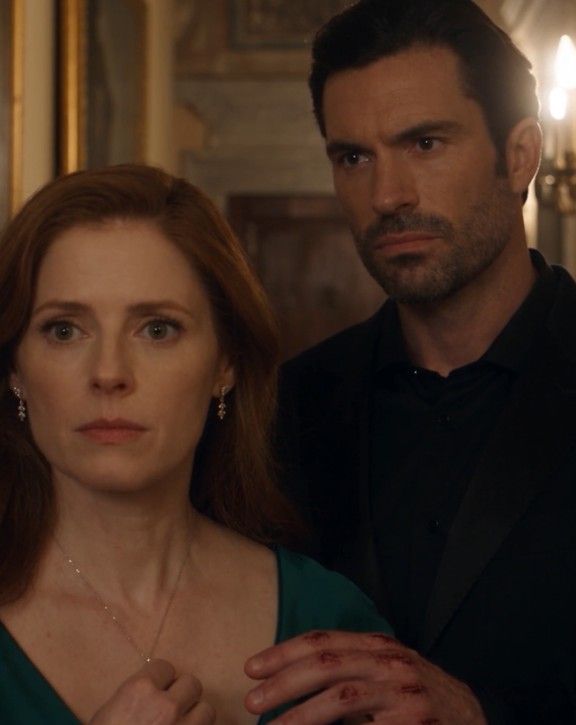
“Did you meet me because of the studio?”
“My back hurt. You know that.”
“Did you see the business as an opportunity?”
He rubbed his thumb against the cup handle.
“I thought we could build something. You always complained about the rent.”
“I talked about a problem. I did not ask you to become an owner.”
He said he had meant to put the money in as soon as the estate cleared. He had debts, but he believed the new studio would earn enough to help both of us.
“What debts?”
He did not answer in detail. I could not force him, and I no longer needed a complete confession to decide what risks belonged in my life.
I told him the relationship was over.
For a moment, he looked honestly devastated. Then he said I was choosing his brother’s version over his.
“I am choosing what I saw and what you signed your name to.”
He asked whether I had feelings for Victor. The question tried to move the conversation somewhere he could feel wronged.
“I barely know him. This is about you and me.”
I gave him the key he had left at my apartment. I had already changed the lock, but returning the old one completed something I needed completed. I took back my studio key from him.
He left the gift bag on the table. I called after him to take it. He hesitated, then came back for it without another speech.
Outside, my friend linked her arm through mine only after asking. We walked two blocks before I began crying. She matched my pace and let me cry without saying I had escaped a monster.
Adrien was a man who had offered real tenderness and concealed real risks. Remembering the tenderness did not require me to accept the risks. That was the hardest lesson because it allowed me to grieve him without returning.
Over the next month, I reviewed the studio’s finances. I met the landlord Adrien had mentioned, independently, and discovered the space was expensive but genuinely available. There was no need to make every detail a lie in order to reject the proposal.
I declined the lease. My present room had scuffed floors and a temperamental heater, but it was manageable. I asked my accountant to help me create a realistic plan for growth.
We added an evening class and replaced two worn mats. The changes looked small beside the grand future Adrien had described. They were funded by actual earnings, which made them beautiful to me.
Victor contacted me once through Elena to ask whether I would accept an apology in person. I said yes, in the studio lobby during business hours. I told my assistant the appointment was personal and asked her to remain nearby.
He arrived without flowers.
“I wanted to prevent a mistake,” he said. “I treated you as if you were already inside our family argument. You weren’t.”
“Your warning mattered. So did how you gave it.”
“I understand.”
He explained the scars only because I asked. Years earlier, he had worked with his hands restoring old furniture. An accident with damaged glass had left marks. They were neither proof of violence nor a clue to a glamorous secret life.
I felt embarrassed by the stories my fear had created. He did not tease me.
“Families are hard enough without making them mysterious,” he said.
I laughed for the first time in that conversation.
He told me the estate would be settled through the executor, and Adrien would receive whatever was properly his when administration ended. Victor was not trying to take his brother’s share. He was refusing to guarantee his debts.
“That is your decision,” I said. “I don’t need to supervise it.”
“Good.”
We parted as two people who had corrected a bad first meeting. There was no kiss, no promise, and no claim that I had loved the wrong man because a better one stood nearby.
My life did not become a contest between brothers. It returned to me.
I also changed how I handled suggestions from people who sounded confident. A client offered to help redesign the website, and for a moment I nearly accepted because refusing felt unfriendly. Then I asked about the price, the work, and the date of delivery.
She answered every question without taking offense. We agreed on a small job in writing. It was an ordinary exchange, but I went home feeling unexpectedly relieved. Clear terms did not ruin trust. They gave it somewhere to stand.
My assistant and I made a rule for the studio: no visitor could collect keys or discuss our accounts merely because they knew me personally. We wrote the rule into the office notebook and applied it to everyone. I did not tell her to suspect every man who brought tea. I wanted a useful system, not a life built around fear.
One afternoon, a student asked whether I planned to expand. I told her I was considering it carefully. Saying I did not know felt strange and then freeing. She did not lose respect for me. She asked when the next class would start.
I realized how much of my work had always rested on steadiness rather than grand promises. People returned because the room opened on time, because someone noticed an injury, because their questions were welcome. I had those things already. I did not need a borrowed necklace or a larger address to prove the place mattered.
