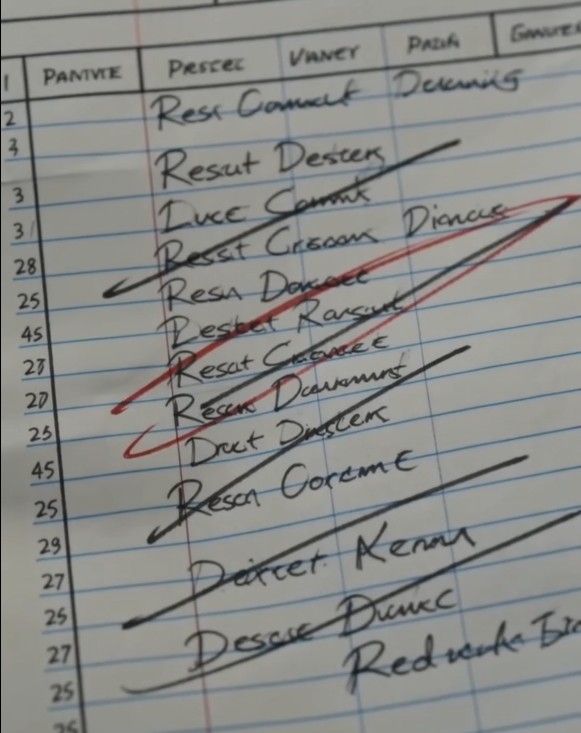
Hearing it stated plainly mattered. So did the reviewer recording that the original assignment list had been treated as a final account despite later contradictory information.
The correction took months. The county could not reconstruct every decision, but it amended the incident record with the documented transfer, the care-home evacuation, and the later recovery information.
Before I accepted the final wording, I asked for one change. The draft said the family had been notified of uncertainty surrounding Evan’s assignment; I supplied our letters, which showed that we had repeatedly requested clarification and received none.
The reviewer removed the sentence and attached our correspondence to the file. It was a modest correction, but I needed the record to acknowledge that my parents had kept asking, even when nobody knew how to answer.
I also asked what would happen to future inquiries. The office gave me a named contact and explained a revised process for linking volunteer lists with transport and recovery records; I understood that a written procedure was only a beginning.
Still, somebody now had responsibility for the space where our family had fallen through. I kept the explanation with the amended report, hoping another sister would never have to learn the importance of a truck number thirteen years too late.
The identification office eventually gave us the confirmation our family had never received. I asked the liaison to say Evan’s name again, and she did, patiently, before explaining the arrangements available to me.
I had imagined certainty as an end to pain. Instead, it changed the pain’s shape, giving it an edge I could touch and a place where I could finally lay flowers.
Our parents had died without that certainty. For several days I was furious with Daniel on their behalf and furious with myself for being alive to receive what they had needed.
My neighbor brought soup and sat while I read the corrected record aloud. She did not tell me to be grateful or insist that finding answers made everything worthwhile.
“You can be relieved and angry in the same room,” she said.
I began meeting with a grief counselor. We talked about the years I had spent guarding uncertainty as though accepting any ordinary happiness might mean abandoning Evan.
I returned to things I had postponed without remembering why: dinner with friends, a weekend by the water, buying curtains for the spare room instead of leaving it ready for an arrival I could not name.
None of it happened smoothly. The first time I laughed through an entire meal, I cried in the car afterward, and my friend stayed until I was ready to drive.
Gradually I learned that grief could come with me without choosing every destination. I put the search papers in a labeled box rather than on my bedside table, leaving Evan’s photograph where morning light could reach it.
One afternoon I carried his last note to our appointment. The small inner sleeve had been opened long ago, but I had never managed to read beyond the greeting.
With the counselor beside me, I unfolded it fully. Evan wrote about bad coffee, wet socks, and a stubborn cupboard door at the shelter; his familiar complaints brought him closer than any official account had.
He mentioned taking the family photograph from his wallet to show a frightened resident. He said she thought my crooked homemade stitching on his patch looked like a little road leading home.
I touched the faded patch on the table. Before he joined the volunteer team, I had repaired its loose border in a hurry while he stood in my kitchen eating toast.
I had forgotten that entirely. For years the patch had meant the work that took him away; now I remembered him teasing me about the uneven stitches before carefully putting it in his pocket.
His note ended with a request that I stop apologizing for missing his last visit. He had found the meal I left in the refrigerator and eaten it on the porch, enjoying the quiet.
I cried hardest at that. There had been no accusation waiting inside the envelope, only an ordinary kindness I had punished myself for being unable to read.
Laura invited me to visit when I felt ready. She no longer worked at the care home, but several residents’ families still gathered each spring to remember those lost in the flood.
I agreed to a small meeting first. Daniel came too, at my invitation, bringing his daughter and the notebook in an archival sleeve rather than loose inside his bag.
Before we entered, he offered me an apology without asking what it might earn. I told him I believed he regretted his silence and that regret did not return the years.
“I know,” he said.
I let him hold the door. It was a small kindness I could accept without pretending everything between us had healed.
Laura was waiting with a woman named Ruth, whose mother had survived the evacuation. They brought photographs, not speeches, and asked whether I wanted to see them before setting anything on the table.
One picture showed six people wrapped in donated blankets at the receiving shelter. Ruth identified her mother, then the driver, then a nurse whose name appeared in the records I had obtained.
The details matched. That steadiness meant more than any declaration that Evan had been a hero; it gave his final hours real people, real work, and a place in the world.
