That was one of the hardest truths of the entire year. Revelation did not restore time. It only made the lost time visible.
I read every letter anyway.
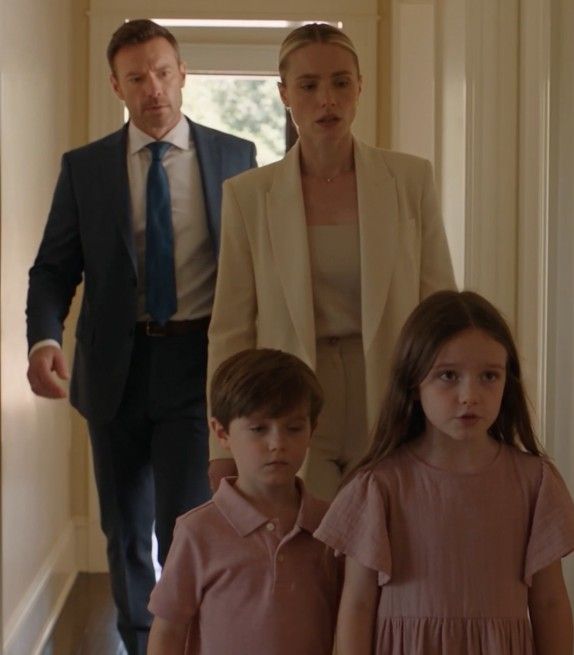
Two weeks later, I met Rebecca in person. I had expected to feel jealous of the woman Emma and Noah called Mom. Instead, I watched her straighten Noah’s hood, remind Emma about an inhaler, and ask Caroline whether she was comfortable with the children seeing old photographs. She protected Caroline’s place without surrendering her own.
“I need you to know something,” Rebecca told me when the children were outside with Rachel. “Caroline did not abandon them.”
Caroline stared at her.
Rebecca continued. “She asked for help before she became unsafe. She signed papers because she knew love was not the same as capacity. That was the bravest thing she did.”
I saw my sister’s shoulders shake.
For seventeen years, our family had turned leaving into evidence of disloyalty. Rebecca described it as an act of protection. The difference mattered.
That afternoon, Noah asked whether I was technically his uncle.
“I suppose so.”
He frowned. “Do I have to call you Uncle Ethan?”
“No.”
“Good.”
Emma looked up from her coloring book. “Can I?”
“If you want.”
She tried it once, decided it sounded funny, and went back to calling me Ethan.
Those small choices became the opposite of the house I grew up in. Nobody had to perform the relationship somebody else assigned them.
Natalie and I started couples counseling after three months.
The first time the therapist asked why Natalie had waited, she said, “Because I thought timing the truth was kindness.”
“And now?”
Natalie looked at me.
“Now I think truth without consent can become another form of control, even when you tell yourself you are protecting someone.”
That was the first answer that made me believe we might survive.
We did not reschedule the wedding for nearly a year.
When we finally did, it was small. Rebecca came with Emma and Noah. Caroline sat in the second row, not hidden, not announced, simply present. My mother was not there. That choice hurt, but pain and regret were no longer the same thing to me.
The morning of the ceremony, Caroline handed me a folded piece of notebook paper.
“I kept this,” she said.
The paper was yellowed at the creases.
I knew my own handwriting before I unfolded it.
I had written the note when I was sixteen, the night before Caroline disappeared.
We had argued because she would not tell me why she was packing.
I had been angry, scared, and too young to understand that leaving could be survival.
The note said:
If you leave, tell me where to find you. I’ll leave the porch light on.
My vision blurred.
“You got this?”
“You pushed it under my door.”
“Why didn’t you ever answer?”
“I tried.” She touched the edge of the page. “For years, I thought you changed your mind.”
I shook my head.
“No.”
“I know that now.”
After the wedding, I went home and stood in the west hallway where all of it had broken open.
The brass key still hung from the lock.
I removed it.
Then I called a carpenter.
A week later, the heavy walnut door was still there, but the lock was gone.
We left the door open.
Caroline’s old note was framed on the wall just inside, not as evidence of what our parents had taken from us, but as proof that even at sixteen I had understood something my family spent years trying to erase.
A door could close.
A light could stay on.
And sometimes, after seventeen years, someone could still find the way back.
