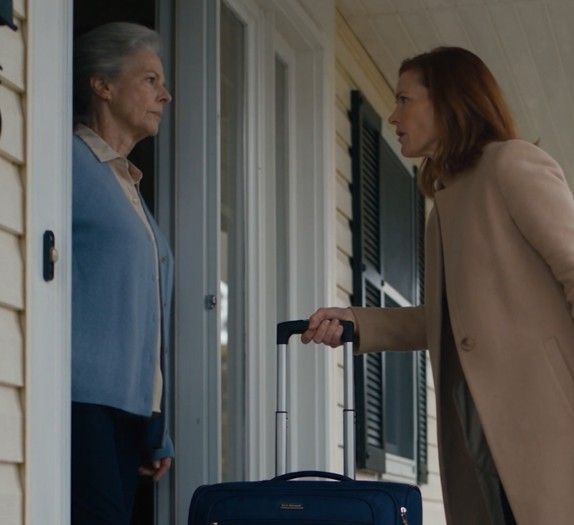
I did not send photographs to every relative. I gave the facts once and asked her not to pass along claims that I had abandoned someone by refusing an uninvited move. She said she understood. Whether she did was beyond my control.
Another relative offered Michael a temporary sofa and then called me for advice about limits. We discussed dates, contributions, and written expectations. I did not warn her against helping him. I wanted help to have a shape that did not swallow the person giving it.
That conversation changed something in me. I had been imagining only two choices: surrender my house or become a woman who never helped again. There were other choices. I could offer a consultation. I could listen at a diner. I could say exactly when a visit ended.
Care did not have to be unlimited to be real.
My sleep returned unevenly. Sometimes the doorbell sounded in a dream and I woke with my cheek hot. I began meeting a counselor who helped me separate a warning in my body from a danger in the room.
We discussed the fear beneath my guilt: that a good mother would never refuse shelter to her child.
She asked whether I believed a child remained a child forever in every practical sense.
“No,” I said.
“Then perhaps love has to change its duties as people grow.”
The thought was painful because it made me responsible for setting limits I had hoped my son would recognize without being told.
I wrote those limits down. Visits required agreement. Amanda would not come inside while the assault matter remained unresolved. No one could use my address for accounts, business registrations, or mail without permission. Requests for money needed clear records and time for independent review.
Ellen helped me phrase them plainly. I sent them to Michael and kept a copy with my household papers.
He did not answer for two days. Then he wrote that he understood.
Understanding was a beginning, not evidence of change. I watched what he did next.
He found a rented room near his work. It was modest and not what he had imagined after selling his home. He made a budget and returned a car he could no longer afford. He stopped calling me every time something felt impossible.
Amanda stayed with a relative. Their marriage entered counseling, then a separation when they could not agree about cooperating with the inquiry into her brother’s company.
Michael told me he still loved her. I said that was his feeling to examine, not mine to overrule. I wanted him safe and honest. I could not choose his marriage for him.
The assault complaint moved through its own process. Amanda was contacted, interviewed, and given opportunities to respond. I provided my statement and the clinic records. Linda gave hers without changing what she had seen to strengthen my case.
There were appointments and long intervals without news. The system did not arrive like a rescuer. It made a record, tested evidence, and moved at a pace that required patience.
Eventually, the matter reached a negotiated resolution involving an admission to the conduct, penalties appropriate to the local process, and conditions intended to prevent further contact at my home. Ellen reviewed what it meant and what it did not guarantee.
I accepted the result because it named the act and established consequences. I did not need a courtroom performance to prove that the sting on my face had been real.
The financial case took longer. Records obtained during the investigation showed that a substantial part of the investors’ money had paid old business debts rather than the projects described. Some had gone toward personal expenses.
That answered the question Ellen had raised while my doorbell rang. The money had not disappeared into the market. It had been diverted after entering the company Amanda’s brother controlled.
Michael received the accounting through his lawyer. He brought the summary to our next meeting but did not ask me to rescue him from reading it.
“I wanted an easy future,” he said.
“So did I, once.”
He looked at me, surprised.
“I thought loving you would be enough to make you careful.”
He bowed his head. “It should have helped.”
“It can help now. It can’t replace your choices.”
The recovery process returned only part of what he had lost. Assets were sold, claims were reviewed, and distributions came after expenses and competing demands. There was no miraculous check for six hundred twenty thousand dollars.
He accepted that the remainder would take years to rebuild, if it could ever be rebuilt at all. He continued cooperating with the investigation instead of bargaining for private promises from Amanda’s brother.
I did not celebrate his hardship. I did stop arranging my life around the fear that hardship might happen to him.
Before we began meeting again, Michael sent a letter rather than another urgent text. He wrote that he had told his relatives he was not my caretaker and had not been supporting me financially. He had allowed that story to grow because it made him look responsible while he made decisions he could not defend.
I read the letter at the kitchen table. It did not ask me to reply by a deadline. It did not end with a request. For once, he had left the burden of making his apology useful on his own shoulders.
I put it away for a week. Then I wrote that I appreciated the correction and would be willing to meet for an hour in a public place.
He answered with three possible times and asked which suited me. Such an ordinary question would once have seemed too small to notice. Now it felt like a repaired hinge: unglamorous, necessary, and capable of changing how a door worked.
I chose Tuesday. When Tuesday came, I did not dress as though I were going to a hearing. I wore my comfortable coat, left the legal folder at home, and told Linda I would be back in the afternoon. I wanted one conversation in which I could be a mother with limits rather than a witness defending what had happened.
Our first meal together took place in a small diner. He arrived before me. When I reached the table, he asked whether he could pull out my chair rather than assuming the gesture would mend everything.
I said yes.
