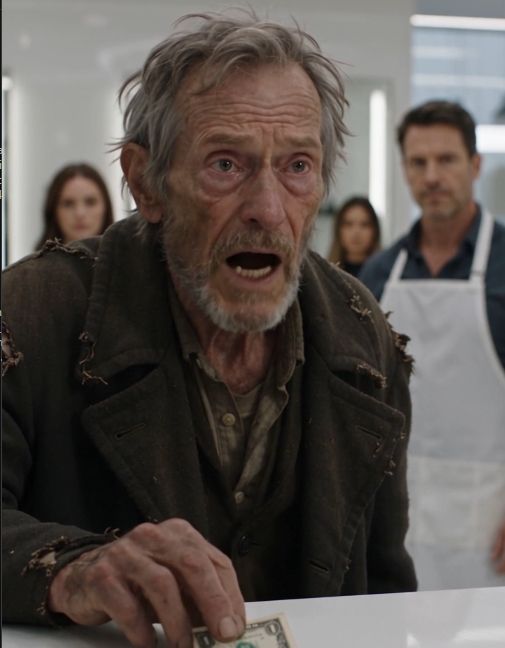
“You old fool,” she said, gripping his hands. “I looked for you. After they said you died, I looked for you. I knew it wasn’t true. I knew it.”
“I’m sorry,” Enzo said. “I’m sorry I disappeared.”
“Don’t you ever do that again,” she said, and the fierceness in her voice made him laugh — a real laugh, the kind that comes from a place so deep it surprises the person making it.
Marco watched from inside the salon, leaning against the doorframe, arms crossed, grinning. He had spent his whole life believing that home was something you had to build from scratch, something you earned through relentless effort and solitude. But watching Enzo shake hands on the sidewalk, watching old Rosa pinch his cheek, watching Priya hand out coffee to the line of people waiting to come inside, Marco understood something he hadn’t before.
Home was not a place. Home was being known. Home was the moment someone looked at you and said, *I see you. You belong here. Stay.*
That evening, after the last guest had gone and the chairs were folded and the floor was swept clean, Enzo and Marco sat together in the quiet salon. The streetlights outside cast warm amber rectangles across the hardwood floor. The mirrors reflected their two figures — one old, one young — sitting side by side in the gentle dark.
“Can I ask you something?” Marco said.
Enzo nodded.
“What are you going to do now? With the salon, I mean. What do you want it to be?”
Enzo was quiet for a long moment. He looked at the mirrors, at the chairs, at the name above the door that he could see in reverse through the glass.
“When Lucia and I opened this place,” he said, “we didn’t just want to cut hair. We wanted to make people feel like they mattered. Every person who sat in that chair left looking better and feeling seen. That was the promise. Not luxury. Not status. Just — dignity. A moment where someone takes care of you.”
He looked at Marco.
“That’s what I want it to be again. Not what they turned it into. Not a place where money walks and human beings are pushed away. A place where anyone can walk through that door and be treated like they belong.”
Marco nodded slowly.
“There’s a shelter on Fifth Street,” he said. “Where I used to stay. A lot of the guys there — they haven’t had a proper haircut in months. Some of them have job interviews. Some of them just need to feel human again.”
Enzo’s eyes softened.
“Then we start there,” he said.
The next morning, Marco brought six men from the shelter to the salon. They came in hesitantly, eyes darting, shoulders hunched, the way people do when they’ve been turned away so many times that expecting kindness feels dangerous.
Enzo greeted each one by name. Marco had written the names on slips of paper and handed them over beforehand, and Enzo had memorized every one, because he understood — better than anyone alive — the power of being called by your name instead of being looked through.
He cut their hair one by one. He talked to them while he worked — not about their circumstances, but about their lives. What music they liked. Where they’d grown up. What they dreamed about when things were quiet. He listened the way he’d listened to every client for forty years, with his whole attention, with genuine curiosity, with the unspoken message: *You are worth my time. You are worth this chair. You are worth this mirror reflecting you back to yourself as someone whole.*
One of the men, a quiet guy named David, looked at himself in the mirror after Enzo finished and touched his own face like he was meeting a stranger.
“I forgot what I looked like,” he said.
Enzo put a hand on his shoulder.
“You’re still in there,” he said. “You were always still in there.”
David nodded. His jaw tightened. He didn’t cry, but his eyes were bright, and when he shook Enzo’s hand, he held on for a long time.
This became the salon’s new tradition. Every Saturday morning, before the regular clients arrived, Enzo and Marco opened the doors to anyone from the shelter, the transitional housing program down the block, or anyone else who needed a haircut and couldn’t afford one. They called it the Lucia Chair, named after Enzo’s wife. A small gold plaque was mounted beside the styling station nearest the window — the same station where Enzo had given his very first haircut in 1963.
The plaque read: *In memory of Lucia Bellini, who believed every person deserves to be seen. This chair is for anyone who needs one.*
Word spread. Other salons in the neighborhood began offering similar mornings. A local business donated shampoo and supplies. Catherine Huang, the lawyer, referred clients who needed professional appearances for court hearings. Priya started a small fundraiser that raised enough to repair the salon’s aging plumbing and replace two of the broken chairs.
And through it all, Enzo was there. Every day, arriving at seven in the morning, unlocking the door with hands that still trembled but no longer shook from fear — only from age, only from the honest work of living a long life. He would turn on the lights, look at the mirrors, touch the counter the way you touch the face of someone you love, and begin.
He never became wealthy again. He didn’t want to. The settlement from Ridgeline had been enough to cover his debts and secure the salon’s future, and he had put the rest into a small trust fund for the shelter’s residents, managed by Catherine, disbursed for job training, housing deposits, and medical needs.
