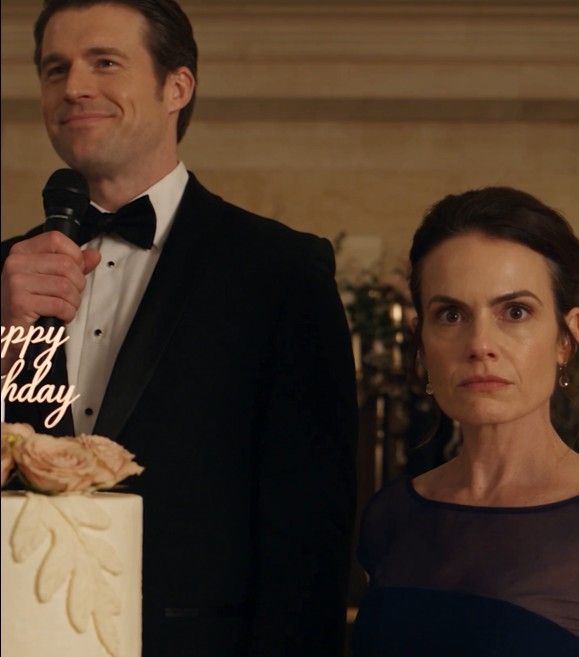
The people at the party were less uniform than I expected. Some apologized for staying silent. Some told me they had thought it was a cruel joke. Others tried to describe both sides without identifying a second side to what they had witnessed. I thanked the people who checked on my safety and stopped answering those who only wanted details.
Martin sent confirmation that the hotel had preserved relevant footage and the incident report. He included the time of Ryan’s instruction to security and the time the necklace was returned. The report mattered because it recorded conduct while memories were fresh, not because a hotel manager could decide our divorce.
Over the following weeks, the financial disclosures began. Ryan had told Jessica I possessed almost nothing independent of him. The actual records showed a more complicated household: assets from before the marriage, joint savings, debts, and money each of us had earned. My mother’s gifts were documented. Some other things would have to be negotiated.
There was no satisfying moment in which everything became mine and Ryan became penniless. There were meetings, valuations, corrected statements, and bills. The truth was less theatrical and more durable. His papers from the party had depended on my panic. Once I could read them with advice, their urgency lost its power.
At mediation, Ryan wore the same tie he had worn on our anniversary. I recognized it immediately and then wondered whether he expected me to. He said he wanted dignity. I answered that dignity required honest records and reasonable terms, not my agreement to pretend the ballroom had never happened.
When the mediator asked what remained important beyond the finances, I said I wanted my belongings accounted for and clear arrangements for communication. Ryan looked surprised. He had expected a demand to destroy him. I wanted a life with fewer reasons to hear his voice.
Jessica was no longer working as his assistant by then. Nora told me after seeing a mutual acquaintance, and I asked her not to bring further reports. Whether they stayed together could not serve as a measure of my worth. I had spent enough time letting Ryan determine what I should feel about myself.
I began seeing a counselor. The first session felt strangely ordinary. There was a clock that ticked too loudly and a box of tissues I resisted using. I spoke about the party, then found myself talking about years before it: the small jokes, the corrections, the way I had apologized when he forgot something I needed.
Recognizing a pattern did not make every good memory false. That was the difficult part. We had laughed. We had helped each other. He had sat beside me in hospital waiting rooms. I could keep those memories without handing him the right to repeat what followed.
The counselor asked what I missed most. I said I missed believing that home was a place where I could lower my guard. Then we talked about how to build that feeling through choices I controlled. Sleep. Food. People who answered questions plainly. A door I could open or leave closed.
I rented a modest apartment while the property arrangements were completed. The first night, I ate toast standing at the counter because I hadn’t bought a table. The quiet frightened me until I recognized that it contained no footsteps I needed to interpret.
Nora helped me choose curtains. We argued cheerfully about a shade of blue, and I cried afterward because a disagreement had ended in laughter rather than punishment. Healing arrived in moments like that, too small to photograph and too important to dismiss.
Before the final mediation, I met one of the guests who had stood near the anniversary cake. Her name was Lydia, and we had known each other through neighborhood fundraisers rather than any close friendship. She asked to buy me lunch, then arrived holding her phone as though it were something she needed to surrender.
“I recorded part of it,” she said. “I thought at first you were going to announce something together.”
She hadn’t shared the recording. She offered the original file, with its date and time intact, if Helen needed it. I thanked her and asked her to send it directly. Then she apologized for remaining still when Ryan called the guards.
“I kept thinking somebody would step in,” she said.
“I kept thinking that too.”
There was nowhere easy for either of us to look. I let the silence remain until she asked what would have helped. I said someone could have stood beside me, asked whether I wanted to leave, or told Ryan to stop. It didn’t require a speech.
She nodded. I didn’t promise her that witnessing humiliation was painless or that I could absolve everyone who watched. But I appreciated that she had come without asking me to make her comfortable. We ordered lunch and talked about her daughter, who was learning to drive.
The recording corroborated the sequence without changing the legal rules. Helen added it to the file. For me, it did something simpler: it made it harder to doubt my memory when Ryan described the event as mutual anger.
I watched it once with the sound low. I saw myself beside the cake, hands held carefully together. I had remembered feeling weak. On the screen, I looked frightened and still standing. Those could coexist. Courage had not felt like certainty; it had felt like not taking the pen.
Afterward, I asked Helen to keep the copy and closed the video. I did not need to rehearse the pain indefinitely to prove it had occurred. I walked outside and called Nora about dinner. She asked whether I wanted soup again. This time I said I wanted something crunchy, something that required actual chewing. We bought tacos and ate them over paper plates, laughing when the filling escaped onto the table.
The divorce took longer than Ryan’s papers had promised. Each delay was frustrating. Each completed document made the future more definite. When the final order came, Helen read it with me and explained the remaining deadlines. I signed the necessary receipt, put down the pen, and waited for a dramatic feeling.
What came instead was hunger. We bought sandwiches. Helen asked about the curtains, and I told her they were blue. We ate in her office with the files pushed aside. The ordinary conversation felt like permission to become someone whose whole life was no longer a case.
I didn’t wear the necklace for months. I could not see it without remembering Jessica’s fingers. Then, on a rainy Sunday, I opened its case while sorting things from my mother’s house. Beneath the velvet insert was a shallow pocket I had never noticed.
Inside lay a photograph of my mother as a young woman wearing the same diamonds over a plain blouse. Beside it was a folded note in her handwriting. It wasn’t the gift letter Helen had copied. This one was shorter, written when she packed the case.
I read it slowly. She said she hoped I would wear the necklace whenever I liked, even to buy bread, and never save every beautiful thing for occasions decided by other people. She had known how often I waited for permission to enjoy what was mine.
I sat with the photograph until the rain stopped. The necklace had not merely been an expensive object to reclaim. It was evidence that someone had once seen me clearly and wanted me to live more freely than I had allowed myself.
The following Saturday, I fastened it myself. The clasp rested slightly off center. I left it that way. Nora and I walked to a neighborhood bakery for coffee, and the woman behind the counter complimented the stones.
“My mother gave them to me,” I said.
I could say it without explaining the ballroom. We carried our cups to a little table by the window. Outside, a child jumped over a puddle and landed directly in it, laughing. Nora laughed too.
I touched the clasp once, then lowered my hand. There was no stage, no audience waiting for a verdict, no man deciding what I had earned. There was warm coffee, sunlight reaching the wet pavement, and an afternoon I could spend exactly as I chose.
