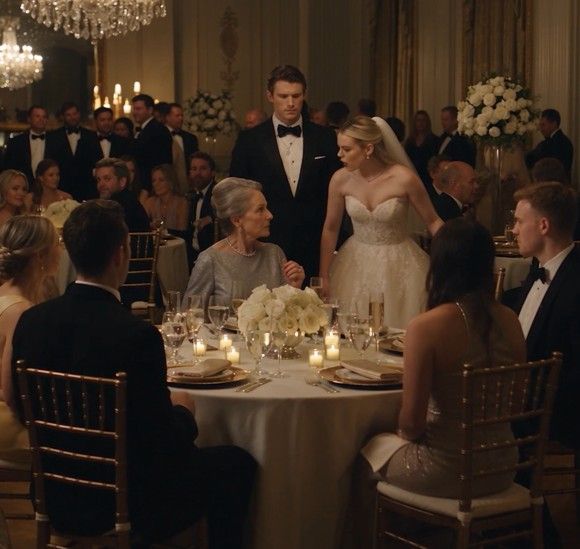
They agreed on practical rules: no further financial requests, no assumptions about future ownership, and invitations that were clear and respectful. Margaret would decide which occasions she attended. They would make their own arrangements if Margaret declined.
After she left, Rebecca asked whether Margaret wanted the invoice copies archived. Margaret said yes. Records belonged in files now. They no longer needed to occupy the center of her dining table or her thoughts every morning.
Spring arrived slowly along the river. Louise persuaded her to join a painting class, and Margaret discovered she was terrible at watercolors in a way that pleased her. Nobody expected her to finance their canvas or solve their composition. They compared their crooked bridges and laughed.
Margaret began having Sunday lunch with Ethan once a month. Sometimes Olivia came. Sometimes she did not. The visits were shorter than before, and Margaret kept the silver pendant until Ethan asked for it without treating its return as a test of whether Margaret loved him.
“Dad’s memory isn’t a reward for behaving,” he said one afternoon. “But I understand why you wouldn’t leave it where it was being disrespected.”
Margaret took the cord from the drawer. He held it carefully and fastened it beneath his shirt. Margaret did not ask him to promise his wife would like it. He was learning that he could love her without surrendering every other attachment.
There were harder afternoons as well. Once, a magazine arrived with a photograph from the wedding: Ethan and Olivia smiling beneath the flowers. Margaret set it on the counter and felt the old ache return. A peaceful life did not prevent a memory from catching her by surprise.
Louise found her looking at it when she came for lunch. She asked whether Margaret wanted to put the magazine away. Margaret said she wanted to keep the picture, but not display it yet.
They placed it in an envelope. That simple choice felt better than tearing it up or forcing herself to admire it. The day had included love, harm, beauty, and a necessary reckoning. Margaret could decide which part she was ready to face on a particular afternoon.
At the painting class, they worked on empty interiors one week. Her first sketch showed a long table and too many chairs. Margaret painted over it with a window looking toward the river. The instructor said the second composition gave the room somewhere to breathe.
Margaret took the painting home and put it in the sewing room. It was lopsided, and the water looked like pale blue glass. Margaret liked it anyway. For most of her adult life, an object had earned its place in her home by being useful to someone else. This one could remain simply because Margaret had made it and it pleased her.
Ethan saw it during his next visit and asked about the class. He listened to the answer without looking at his phone. Small changes were easier to trust when nobody demanded applause for them.
Before he left, he asked about an old photograph in the hallway. It showed his father and Margaret beside the river, younger and windblown, with scaffolding behind them. Ethan had assumed it was a holiday picture.
“It was the week we bought the venue,” Margaret said.
He leaned closer. In the corner, almost hidden by her shoulder, stood a plain wooden chair. Its paint was peeling. His father had carried it from their first house so Margaret could rest while they inspected repairs.
That chair still sat in her kitchen. It was where Margaret read in the morning, where Margaret had opened his apology, where the accountant and Margaret had checked the wedding bills. Her husband had repaired its loose leg three times instead of replacing it.
Ethan smiled faintly. “You kept it all this time.”
Margaret looked at the photograph, remembering the sound of the river and her husband’s hand on the chair’s back. They had bought a building with crystal chandeliers, but the first seat he made sure existed was hers.
“Yes,” Margaret said. “It has always had a place.”
After Ethan left, Margaret carried a cup of tea to that chair. Evening light reached through the window and rested on the worn wood. Margaret sat down, set her feet beneath her, and stayed as long as she wanted.
