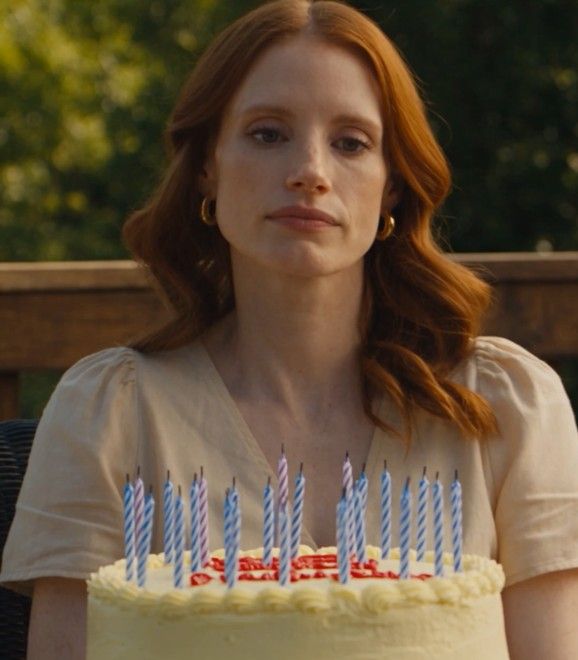
Then I put the letter beside the repayment documents for my lawyer to review. Accountability deserved the same care as boundaries. I no longer wanted any part of my life run by impulses at a fire pit.
I also spoke to my guests. Some had tried to laugh off the cake’s destruction, and I told them how lonely that had made me feel. The neighbor who had changed the subject said he thought discretion would spare embarrassment.
“It spared you,” I answered gently.
He apologized and later helped me replace the broken patio table edge. That quiet repair meant more than a speech about how shocked he had been.
Brenda never complained about the ruined cake, which bothered me eventually. She had spent hours baking, and everyone spoke as though only my birthday had been damaged.
“Your work mattered too,” I told her.
She shrugged. “It was just a cake.”
I gave her the look she had given me at the kitchen table.
She laughed. “All right. It hurt.”
We sat on the patio where I had watched the frosting scatter. She described zesting the lemons, testing the filling, and counting candles twice because sixty-five seemed impossible when she remembered our first meeting.
That had been more than twenty years earlier, when Harrison was still a boy and Brenda lived two houses away. I remembered bringing her a casserole after surgery. She remembered me refusing payment and telling her to send a slice of something sweet whenever she felt better.
“I’ve been paying that debt badly,” she said.
“No,” I answered. “You’ve been paying attention.”
By autumn the financial review had reached its practical conclusions, and the reporting process had proceeded as the evidence permitted. I followed advice, kept the records, and stopped imagining that peace required knowing every private consequence in Harrison and Sloan’s marriage.
I could control access to my home. I could choose what I funded. I could insist on truth. Their work belonged to them.
I began inviting friends for ordinary suppers before I felt ready for another celebration. We ate baked potatoes and soup, meals without a performance attached. I discovered that a person could offer hospitality and still ask a guest to help carry dishes.
Nobody who cared about me treated that request as an insult. Brenda washed, another friend dried, and I stood between them telling a story they had heard before. They let me finish because they enjoyed the way I told it.
Those evenings taught me what the past year had distorted. Belonging was not measured by how much space I surrendered. It was measured by whether I could occupy my own place comfortably among the people I loved.
For my next birthday, I invited six people to lunch. Harrison asked whether he might come, and after thinking carefully, I said yes. Sloan declined through him. I did not interpret that decision as either victory or tragedy.
There would be no fire in the pit that afternoon. The choice was mine, made without drama. I wanted the patio remembered for sunlight and food, not smoke.
Harrison arrived early with plain flowers and helped arrange chairs after asking where I wanted them. When a neighbor made a teasing remark about my age, he looked at me first instead of deciding on my behalf that I should laugh.
I laughed because I wanted to. That distinction was small enough to fit into a breath and large enough to change the entire afternoon.
Brenda carried out a lemon cake on the same serving plate she had used the year before. There was only one candle this time. She waited while I looked at it, then told me she had saved something.
From her handbag she took an old handwritten recipe card. The paper was spotted and softened at the edges. I recognized my own writing before I read the name at the top.
I had given her that recipe after her surgery, tucked into the casserole dish because she had asked what dessert might be easy when she recovered. Over the years she had changed the filling and improved the frosting, but the cake’s beginning had been mine.
“I wanted you to know,” she said, “that what you gave away kindly came back kindly too.”
I touched the card. For a year I had thought generosity itself was the mistake. Here was proof that it had never been the enemy. The mistake was letting people who demanded it decide what it meant.
I blew out the candle, cut the first slice myself, and put it on Brenda’s plate. Nobody reached for my face. Nobody waited for me to swallow an insult.
Around my table, in my garden, people thanked one another for small things. Harrison passed the plates without speaking over me. The afternoon moved gently toward evening, and for once I did not have to disappear to keep it peaceful.
