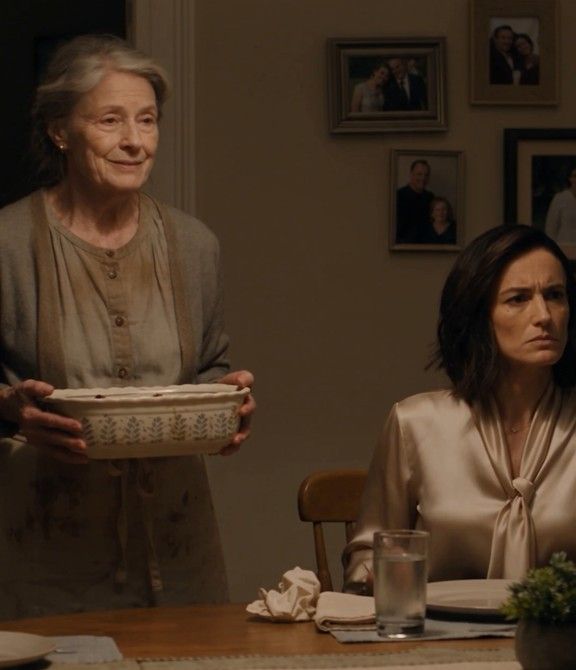
My sister urged me to get professional advice before making decisions about the money I had contributed. I arranged to meet an independent lawyer and a financial adviser. The lawyer was careful: without seeing the purchase documents and any agreements, she could not guarantee repayment or a right to remain indefinitely. She told me to gather bank records, correspondence, and evidence of the original arrangement. She also confirmed the obvious thing I had needed to hear from someone outside our household: a competent adult does not lose the right to choose where to live merely because relatives find her inconvenient.
I asked Ryan for the closing documents and an honest conversation about our arrangement. He delayed twice. When we finally sat together, he admitted that he and Megan had talked about turning my room into an office. They had begun imagining a house organized around their plans rather than my presence. He said he thought a residence would give me friends and organized activities. I asked whether he had researched what I actually enjoyed, whether he knew the name of any of my friends, or whether he had even remembered my birthday. His face reddened. He said nothing.
Megan accused me of using Arthur’s memory to make them feel ashamed. I told her I was not interested in shame as a permanent living arrangement. I wanted clarity. I would no longer cook multiple meals on demand or accept insults in exchange for a bedroom. I asked them to stop directing Leo to treat me as dirty or incapable. And I told them I was reviewing other housing options on my own. Megan’s lips tightened. “Where would you go?” she asked. For the first time, the question felt like a possibility instead of a threat.
I visited three apartments with my sister. The first was too dark. The second sat beside a road where trucks rattled through the night. The third was small and bright, on the second floor of a building with an elevator and a courtyard garden. The kitchen had only four cupboards. The bedroom window faced a pear tree. In the afternoon sunshine I could imagine setting down my cup without someone calling from another room. I stood in the doorway longer than the real estate agent expected. My sister watched me and smiled.
I did not sign a lease in a burst of anger. I reviewed the rent against my retirement income, asked about utilities and maintenance, and discussed the decision with my adviser. We planned a budget that included groceries, healthcare, transportation, and money for small pleasures I had forgotten to count. It fit, though not extravagantly. The thought of paying my own rent did not frighten me. It felt more honest than living somewhere that called itself free while charging me every waking hour.
Before I moved, I had a careful conversation with Leo. His parents had agreed that I could speak to him without turning him into a messenger. We sat with a puzzle on the dining table. He asked whether I was leaving because his hands were cleaner than mine. I said no. I explained that hands become dirty when people cook and garden, and that age does not make a person unworthy of affection. He looked embarrassed. “Mommy said you make a fuss,” he murmured. I answered, “Sometimes grown-ups say hurtful things. They can learn better, and so can we.”
Leo asked why I hadn’t peeled his shrimp. I reminded him I had offered and he had refused. He considered this. “I wanted Mommy,” he said. “That’s all right,” I replied. “You can ask for what you want without insulting somebody else.” He touched my hand and asked whether we could make pancakes at my new apartment. I said we could, sometimes, when we both wanted to. It would be a visit, not a job. He smiled and asked whether he could stir the batter. I told him he could learn.
Moving day came on a clear morning. My sister and two friends helped pack boxes. I took the fleece robe, the recorder, Arthur’s photograph, my recipe notebook, and a chipped yellow mixing bowl that had traveled with us through four homes. I left behind most of the large furniture because it belonged to Ryan’s house. The bedroom looked strangely small when my things were gone. Ryan stood in the hallway, hands in his pockets, and asked whether he should carry anything. “Yes,” I said. “Please carry this box of books.” He did.
Megan stayed downstairs. I couldn’t tell whether she was angry, ashamed, or simply relieved to regain the room. Perhaps all three. I did not ask for a performance of regret to make leaving easier. Our disagreement about my contribution to the home remained a practical matter for counsel to discuss. We agreed in writing that personal property would be returned by a specified date and that any financial claims would be handled separately. There was no miraculous check waiting in the hall. I carried my keys out and felt the weight of a decision I had chosen.
In the new apartment I made tea before unpacking a single plate. I sat by the pear-tree window and listened. Pipes clicked. Someone laughed in the courtyard. The refrigerator made a patient humming noise. No one shouted about breakfast. I cried quietly for Arthur, for the birthday no one remembered, and for the years in which I had considered exhaustion proof that I was useful. Then I stood, hung his photograph beside the bookshelf, and opened a window to let the clean air inside.
The recorder stayed on the table for several days. I wanted to delete the birthday file because hearing it would hurt. But the lawyer had advised me to preserve materials relevant to our discussions, subject to applicable rules about recordings and privacy. I made a secure copy and put the device away. While checking its storage, I found older files dated from Arthur’s final illness. Most were the messages I remembered: instructions about the garden tools, reminders about insurance papers, and his affectionate jokes about my insistence on feeding visitors. One file had a label I had never noticed before. SIXTY.
My fingers hovered over the play button. I had no memory of Arthur making a recording for my sixtieth birthday. At the time he was sick, and I was consumed by appointments and medicines. Perhaps he had guessed he would not be there. Perhaps the file was something entirely different. I made a cup of tea and pressed play. His voice came through the small speaker thin and a little breathless, but unmistakably his. He said he had been trying to decide what gift to leave me when he couldn’t go shopping. Then he laughed softly.
“Helen, if you’re hearing this at sixty, I hope you’re not standing at the stove making everybody else happy while your own coffee goes cold,” he said. I covered my mouth. He had always teased me about forgetting to eat while I served other people. On the recording he paused for breath and added that being needed was not the only reason a person deserved a place in the world. He hoped I would take walks, learn something new, and let Ryan make his own mistakes without taking over the consequences. He said he loved my kindness and wanted some of it to belong to me.
I played the message once more, then switched off the recorder. It was not a legal instruction, and it did not erase the years I had lived after Arthur died. It was a husband’s love surviving in a small digital file, arriving on a day when I finally knew how to hear it. I placed the device beside his photograph. For the first time since leaving Ryan’s house, I slept without feeling I had betrayed my promise to keep the family together. Perhaps keeping a family together also required leaving enough space for each person to stand upright.
Ryan began visiting on Sundays. At first he asked me where I kept the ingredients for dishes he had always expected me to make. Then he stopped asking and began teaching himself. One afternoon he brought a batch of overcooked muffins. We ate them anyway. He apologized for forgetting my birthday, for dismissing the comments at dinner, and for participating in a plan about my future without including me. I told him I heard him. I also told him the apology was a beginning, not a substitute for changed behavior. He nodded and helped wash the mugs.
Megan did not become my closest friend. Our conversations remained brief and careful. She stopped making remarks about my hands in front of Leo and agreed that visits should be arranged rather than assumed. I did not ask for more than she could sincerely offer. The financial questions about my contribution to the house moved forward slowly, with records exchanged and advisers helping us discuss whether a documented settlement was appropriate. I refused to treat a possible settlement as the measure of my worth. My new apartment was already home, regardless of how long the paperwork took.
My sister asked one afternoon whether I regretted the recorder. I said I regretted reaching a point where I needed it to believe my own ears. But I was glad I had not used the recording as revenge. It gave me a private record while I considered my choices and sought advice. The birthday that once seemed like proof nobody wanted me had become the day I stopped measuring myself by how many plates I washed. I did not need an audience to make that change real.
I enrolled in a watercolor class at the community center. My first painting was a terrible pear tree. The second looked slightly more like one. I began having breakfast with a neighbor who loved old movies, and I learned that conversation could continue for an hour without anyone asking me to refill a plate. On some mornings I still woke before dawn out of habit. Instead of hurrying to the kitchen, I watched light gather on the courtyard leaves. Sixty no longer felt like a number announcing what I could no longer do. It felt like an invitation to do something I had not tried.
On a bright Saturday Leo came to make pancakes. He washed his hands, set the bowl on the counter, and asked if I would teach him how to measure flour. When he spilled some, his eyes filled with alarm. I remembered Megan’s voice in the old kitchen and my own instinct to clean the mess before anyone noticed. Instead I handed him a cloth. “We can fix that,” I said. He relaxed and wiped the counter. Then he looked up. “Happy birthday, Grandma,” he said suddenly, even though months had passed.
I asked why he remembered it now. He pulled a folded paper from his pocket. It was a drawing of me standing beside a pear tree, holding a pancake on a plate. Underneath, in awkward letters, he had written: GRANDMA GETS THE FIRST ONE. I laughed until tears came. Arthur had once left me a recording because he knew I gave everyone else the warmest food. Now my grandson had found his own small way to correct the picture. When the first pancake was ready, I placed it on my plate and sat down. Leo sat opposite me, proud of the thing he had made, and I ate it while it was still warm.
