Months later, she pleaded guilty to fraud charges and the assault. Her sentence included prison and restitution. The court ordered available funds applied toward repayment.
Terrence was convicted for his part in the fraud and false notarization. He lost his notary commission and received a prison sentence.
Marcus pleaded guilty to his part in the forged release. His early cooperation mattered, but it did not make him innocent. He received probation, community service, and a restitution obligation, and he lost the finance job that required his employer’s trust.
Their divorce became final before autumn.
I received my thirty-five thousand dollars back through the restitution process. There was no second payment, no profit in having been betrayed.
David helped me return it to my retirement account.
At the bank, I sat in my car afterward with the receipt in my lap.
I had imagined relief would feel larger.
Instead, I watched a sparrow hop beneath the car beside mine, searching for crumbs, and cried until I could safely drive.
CHAPTER 5 – Room at the Table
Marcus did not come home with me after sentencing.
He rented a room near the warehouse where he had found work. He took the bus after selling the SUV. His attorney arranged payment of his remaining obligations, and he kept the probation appointments on a calendar he carried in his pocket.
For several months, our conversations happened in a café halfway between us.
Sometimes we spoke for twenty minutes about nothing more dangerous than weather.
Sometimes I left early.
He learned not to follow me into the parking lot.
One afternoon, he set a folded page on the table.
“I wrote an apology. My counselor said writing might help me stop explaining everything away.”
“Do you want me to read it?”
“Yes. But you don’t have to do it here.”
I opened it at home.
There was no sentence beginning with “but.”
He described the release. The money. His hand against my door. The request that I lie.
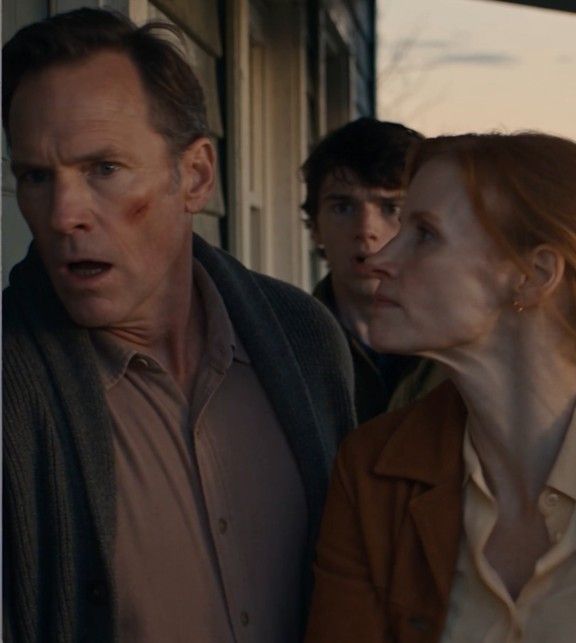
Then I reached the porch.
When she hit you, I thought about what would happen if you called someone. I should have thought about you. You saw that, and I can’t make you unsee it.
I put the letter down.
For months, people had told me he must have been shocked, frightened, confused.
He had finally allowed me to believe what I had seen.
At our next meeting, I asked him to walk with me by the river.
“You frightened me more than she did,” I said.
He stopped beside the railing.
“I know.”
“No. Let me finish.”
He nodded.
“I knew what her hand had done. I didn’t know what you might ask me to believe next.”
He wiped his face with the heel of his hand.
“I kept thinking if I could get through one more day, I could repair everything before you knew.”
“And every day you made someone else pay for that.”
“Yes.”
The river moved brown and cold below us.
I let the silence stay.
Eventually, he asked, “Can I do anything for you now?”
“Keep telling the truth when it costs you something.”
He nodded again.
This time, I believed he understood the size of the request.
Ruth had her own difficult conversation with me.
It happened over soup, when she admitted she had replayed the slap every night for weeks.
“I saw her step toward you. I should have crossed sooner.”
“You dropped the hose.”
“That didn’t help.”
“You came. You stayed. You told the truth.”
She stared into her bowl.
I reached across and took her wrist.
“You don’t have to invent a way you could have stopped it to deserve being forgiven.”
Her face crumpled a little.
Neither of us had realized she was waiting for permission to stop standing on that driveway.
Stephanie came for tea in September, carrying the final accounting for her twelve-thousand-dollar loan. The court had clarified where the remaining payments belonged, and she wanted me to know the boutique’s records had been cleared of suspicion.
“I nearly closed,” she said. “I couldn’t bear people wondering whether I was part of it.”
“Did your customers leave?”
“Some asked questions. Most stayed.”
