“I could act like I was caught between you. But I wanted the house arranged for us. I wanted you to be the difficult one.”
Adelaide sat back on her heels.
“When did I become something you needed to manage?”
He stared at a smear of dirt on his cuff.
“I don’t know.”
“Think about it.”
He nodded.
“I will.”
She had expected another explanation. The absence of one made it possible to stay beside him.
Phillip began counseling. He repaid the household expenses he had let Adelaide carry for him and Melinda, in monthly amounts Adelaide recorded without embarrassment.
Their visits started in public places. Coffee. A walk. Once, lunch where they talked about George without using his memory to demand closeness.
Months passed before Adelaide invited him home.
He paused outside her bedroom when he saw the new reading chair by the window.
“That suits the room,” he said.
“Yes,” she answered.
He did not step inside.
By autumn, Phillip and Melinda had decided to end their marriage. They told Adelaide separately. Neither asked her to arbitrate.
Melinda said their apologies to each other had uncovered how little honesty they had built anything on. Phillip said he was learning that keeping peace and telling the truth were different skills, and he had practiced neither particularly well.
The divorce was quiet.
Adelaide grieved the marriage she had once celebrated, then allowed herself to stop treating its survival as her responsibility.
She kept seeing them separately, when she wished.
At Thanksgiving, Phillip helped Rosie wash dishes in Adelaide’s kitchen. When Rosie told him he had missed a greasy patch, he washed the plate again.
Adelaide watched from the table, then returned to her pie.
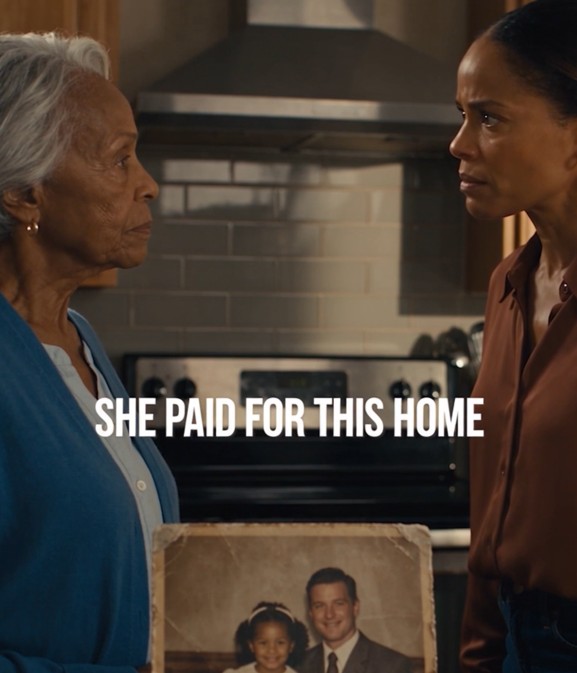
In December, the restored photograph came back.
The conservator had aligned the torn halves and mounted them securely. Under the right light, a fine pale seam remained visible.
Adelaide chose a simple frame.
Before fitting it, she noticed writing on the back that she had not seen in years. She had stored the picture faceup for so long that she had forgotten it was there.
George’s handwriting.
She sat down.
The next Saturday, Melinda arrived for tea carrying oranges and a book Adelaide had mentioned. She stopped when she saw the photograph on the table.
“It looks almost—”
“Yes,” Adelaide said.
Melinda left the sentence unfinished.
Adelaide turned the picture over.
Across the back, George had written a date and a single line.
First shift back. Two people learning to stay.
Melinda read it silently.
“What does that mean?”
Adelaide looked toward the window.
She had told this story to Rosie. To George, while he was alive. Never to Phillip, who had been a boy at the time, and never to the woman sitting across from her.
