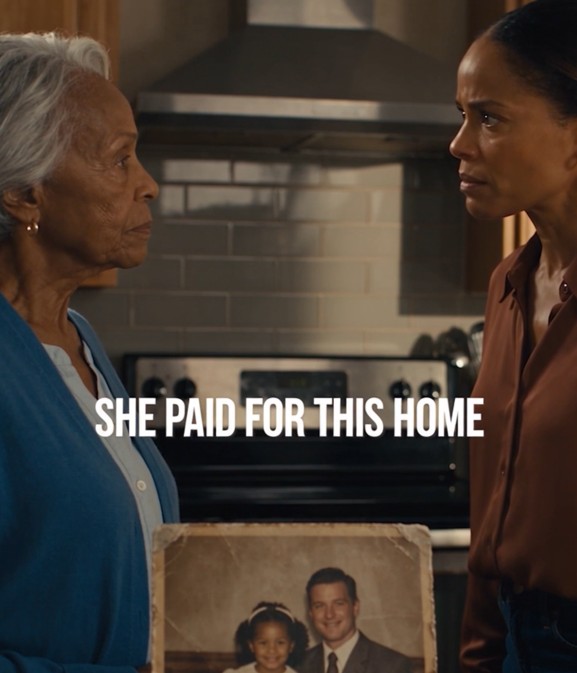
On the telephone, she spoke slowly.
“No, my son does not speak for me.”
Rosie watched her afterward without offering a bright remark.
Adelaide folded the appointment card in half.
“I raised him.”
“Yes,” Rosie said.
“I keep thinking that should explain something.”
“Maybe today you don’t have to explain him.”
Adelaide began crying then, with the frustration of someone whose body had waited until there was nothing useful left to do.
Rosie moved the breakfast foil aside and sat close enough for their shoulders to touch.
At home, the weeks that followed were awkward and practical.
Boxes appeared. Cupboards opened and closed. Adelaide took back access to her accounts and changed the permissions she had once granted Phillip for convenience.
Melinda made no further demands. Her absence from the center of every room was startling. She asked before moving dishes. She knocked on Adelaide’s bedroom door and accepted silence as an answer.
None of it restored the photograph.
Phillip tried twice to turn the moving arrangements into a discussion about Adelaide’s forgiveness.
The second time, she stopped labeling a storage box.
“Forgiveness will not give you my bedroom.”
He looked down.
“I know.”
“I need to know you understand more than that.”
He had no answer yet.
Melinda found a modest apartment she could afford on her own. When Phillip assumed they would move together, she told him they needed separate places for a while.
“You’re blaming me for everything?”
“No. I’m trying to stop using you as an excuse for what I did.”
Their marriage entered a separation neither had planned. Phillip rented a room near work. The home they had treated as theirs slipped out of their reach through the arrangements they signed and the keys they eventually surrendered.
On moving day, Melinda left her key on the table beside a plain envelope.
Inside was the cost of repairing the photograph, estimated by a conservator. There was no request attached.
Adelaide kept the money. She was finished protecting other people from the expense of hurting her.
When the last box was gone, she stood in her bedroom doorway.
The curtains were open.
Her room was still her room.
That evening she ate scrambled eggs on toast while Rosie sat across from her, talking about a leaking faucet as though ordinary things were worth talking about.
Adelaide slept badly anyway.
Freedom from the daily humiliation did not silence every remembered word. Sometimes she heard useless while reaching for a cup. Sometimes she stood in a doorway and forgot what she had wanted.
She began seeing a counselor. She disliked the first appointment, resented the second, and cried during the third when asked what she wanted her mornings to feel like.
“Unhurried,” she said finally. “I don’t want to listen before I come out of my room.”
The counselor let that answer remain in the air.
Six weeks after the move, Melinda wrote.
The letter named what she had done without mentioning the hospital until the final paragraph. She had torn the photograph. She had called Adelaide useless. She had tried to take a home that was not hers.
Then came one request.
