They were warm from his briefcase, but they felt like home.
“I thought I’d never see them again,” I whispered.
“Albert told me to watch the jewelry,” Henry said, smiling through tears now. “He said, ‘If anyone ever touches Clarice’s pearls, you call the police yourself.’ I should have watched closer. I’m sorry, Catherine. I should have checked on you sooner.”
“You came,” I said, covering his hands with mine. “You came when it mattered.”
We sat there a long time, the March light coming through the tall windows, dust motes dancing in the sun.
Then Henry said, almost hesitantly, “There is one more thing. Albert left you something else. Something I wasn’t supposed to tell you until you were ready to hear it. I think you’re ready now.”
He took out a single key, old and brass, with a faded blue plastic diamond on top.
I knew that key.
I had turned it every day for forty-two years.
It was the key to our apartment in Queens.
The one I thought I had sold.
My hand flew to my mouth.
“David told me the buyer was a development company,” I whispered. “He said they paid cash, that it was all done—”
“David listed it,” Henry said. “And I bought it. The day it hit the market. Through a holding company. Albert asked me to, a month before he died. He said, ‘Henry, Catherine will give that boy everything if he asks. Make sure she always has a home to go back to, no matter what he does.’ I have kept it for three years, Catherine. I paid the maintenance. I kept your sewing machine by the window, just as you left it. I kept the curtains you made. No one has lived there. It’s yours. It has always been yours.”
The shock of it was so complete I couldn’t speak.
I just stared at the key in my palm, the blue diamond chipped at the edge where Alice had once dropped it when she was four.
Then I started to laugh through my tears, a small, incredulous, broken laugh.
“He knew,” I said. “Albert knew.”
“He loved you more than he trusted his own son,” Henry said. “And he was right to.”
Two weeks later, on a bright, cold morning at the end of March, I stood in the kitchen of the house on Maple Avenue and watched the movers carry out the last of David and Emily’s boxes.
Emily didn’t look at me.
She walked past with her head down, holding Alice’s hand tightly.
Alice, who was ten now, broke free and ran to me.
She threw her arms around my waist.
“Grandma, will you still make pancakes when we visit?” she whispered, her face pressed into my coat.
Tears pricked my eyes again.
“Whenever you want, sweetheart,” I whispered back, kneeling to her height. “Any time you want. This will always be your grandma’s house. You can come any time.”
Peter, who was thirteen and trying very hard to be stoic like his father, stood by the doorway holding his backpack.
He looked at me, then at the floor.
“Grandma, I’m sorry we didn’t say anything,” he blurted, his voice cracking. “We heard Mom on the phone. We knew about the bracelet. We didn’t know what to do.”
I went to him and cupped his face in my hands, the way I did when he was little.
“You did nothing wrong,” I told him, my voice firm. “You are good boys. Both of you. And you’re brave for telling me now.”
He hugged me then, fierce and tight, and I held him until his shoulders stopped shaking.
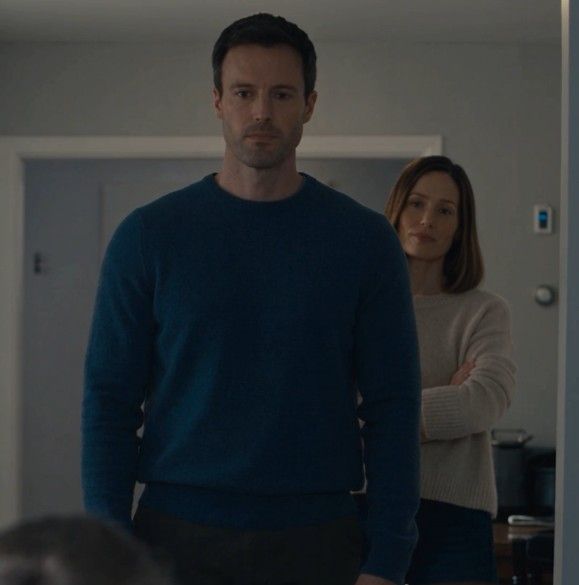
David was last.
He carried a single box of his father’s old books.
He set it down in the hallway and looked around the empty living room, at the bare walls where Emily’s perfect photos had hung, at the staircase runner still pristine because I had never been allowed to walk on it in my shoes.
He looked older.
Quieter.
“I found an apartment,” he said. “Two bedrooms. Near Peter’s school. Emily’s mother is lending us the restitution money. We’ll pay her back. We’ll pay you back.”
I nodded.
“You will,” I said. “Not because I need it. But because you need to.”
He swallowed.
“Will you ever forgive me?”
I thought about the three years of silence, the missing jewelry, the word *arrangement*, the way he hadn’t flinched when he told me to leave.
And I thought about the boy who used to bring me dandelions in a chipped mug and call them my wedding bouquet.
“I already have,” I said. “But forgiveness doesn’t mean we go back to how it was. It means we go forward differently. If you want to be my son again, you will have to earn it. Slowly. Honestly. One day at a time.”
He nodded, tears in his eyes, and for the first time in a long time, I believed he understood.
After they left, the house was so quiet I could hear the refrigerator humming.
I walked slowly from room to room, touching the walls I had paid for, now truly mine again.
In the narrow bedroom at the back, I sat on the bed and looked out the small window at the bare maple branches.
