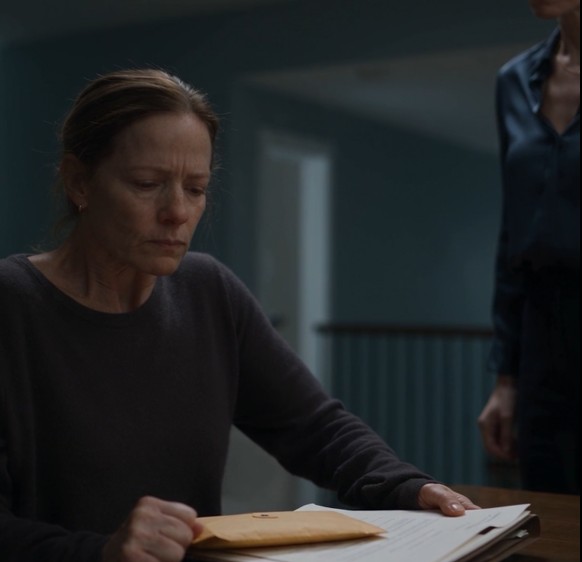
“I didn’t understand why Dad left that money for the house,” he said. “I thought it was about owning something.”
“What do you think now?”
He glanced at Mara, then back at me.
“I think he knew I might need a way back.”
My throat tightened.
There was the final truth.
Not a miracle that erased what had happened.
Not a secret fortune that made pain disappear.
A father, gone for decades, had left his son a path home. A mother and son who had nearly lost each other had found their way across it. And the house that had once been meant to trap Jacob had become the thing that freed him.
Jacob came around the table.
He bent down and wrapped his arms around me.
I held him close.
For a moment, I smelled flour on his shirt and rain in his hair, and I saw every version of him at once: the quiet boy with skinned knees, the grieving teenager, the frightened man upstairs, the son sitting beside me now with his arms around my shoulders.
“I love you,” he said.
“I love you too.”
“I’m going to keep coming downstairs,” he whispered.
I closed my eyes.
“I know.”
Mara stood across the room, one hand resting against the framed letter. Her eyes were wet, but she was smiling.
The rain kept falling.
The soup cooled on the stove.
The repaired table held the remains of our meal, the candles, the crumbs, the evidence of ordinary life.
And in that small warm apartment, with nothing left to hide and nowhere left to run, we sat together until the night became gentle.
