The brokerage began its own investigation.
The fake email account had been used to approve listing paperwork and communicate around the electronic signatures. The contact number connected to the account traced back to a phone under Lauren’s control. The photographs had been scheduled during the afternoon she sent me to lunch with my sister.
When confronted with those records, Lauren changed her story.
First, she said she believed David had authorized everything.
David denied it.
Then she said I had verbally agreed to downsize months earlier.
I denied it.
Finally, she admitted she had created the email and applied my signature electronically because she believed I would refuse until a real offer forced me to see reason.
That admission ended the fantasy that she had been misunderstood.
She had not expected consent.
She had planned to manufacture momentum strong enough to make my consent irrelevant.
I filed a report about the slap as well.
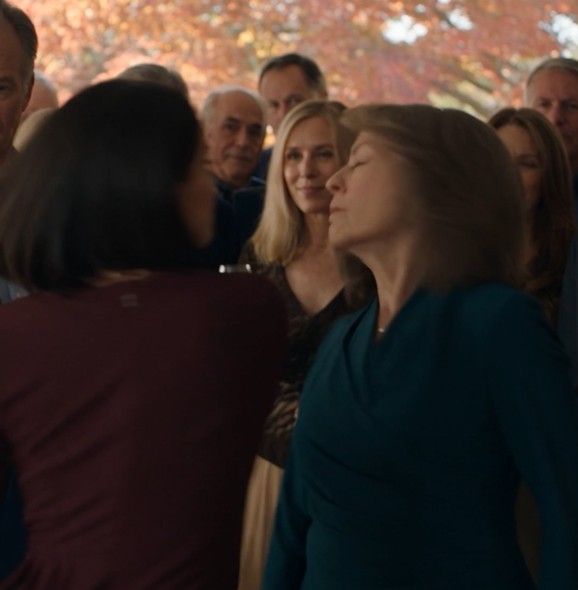
Thirty-two relatives meant I did not have to wonder whether anyone would believe me. Several had seen Lauren hit me. Richard had seen it. David had seen it.
The legal process was slow and less theatrical than the family expected. The false real-estate documents were reviewed separately from the physical assault. I did not dictate the charges or demand a spectacular punishment. I provided records and statements and let the process move.
Lauren ultimately accepted legal responsibility rather than keep denying conduct documented by the electronic trail and witnesses. The consequences included court supervision and restrictions that made clear she could not approach me or my property as though nothing had happened.
The brokerage also faced its own review for how the listing had reached pending status without direct verification from the homeowner. The agent apologized to me in writing. I accepted the apology without pretending the failure had been harmless.
The buyers recovered the money they could under the canceled transaction and eventually purchased another home.
I was relieved when I heard that.
They had been used too.
David and Lauren separated within weeks.
I never asked him to leave her.
He told me he could not remain married to someone who had forged his mother’s signature and then tried to use his casual concern about stairs as proof he approved the plan.
Their divorce became final the following year.
That was not a victory I celebrated.
It was a consequence I understood.
The family had to change too. The relatives who had been in the living room carried their own discomfort from that afternoon. Some had laughed at Lauren’s earlier jokes about the house. Others had agreed casually that a condo might be easier for me. None of those comments caused the forged contract, but after the truth came out, people began noticing how often older relatives were discussed as problems to be managed rather than adults to be asked.
My sister apologized for going to lunch the day the photographs were taken.
“You had no way to know,” I told her.
“I know. I still hate that she used me to get you out of the house.”
That was the first time anyone named that detail correctly. Lauren had not simply photographed rooms. She had arranged my absence. The lunch invitation had become part of the mechanism.
