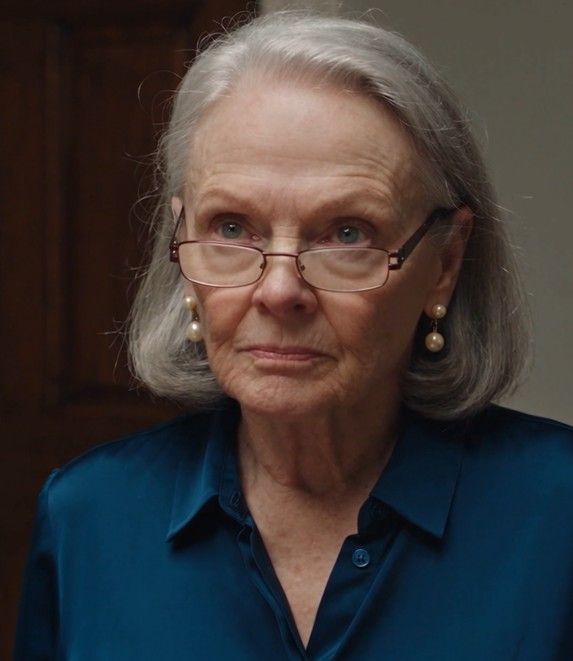
“You should have died years ago, Grandma. You’re only in the way.” My granddaughter screamed those words across my seventieth birthday table while twenty-three guests sat frozen in their expensive clothes. Then Valerie crossed the room and struck me across the face. My glasses flew off, my shoulder hit the mahogany sideboard, and I went down in front of everyone I had invited into my home. The worst part was not the pain. It was the silence afterward. Valerie’s husband, Richard, stayed in his chair. The Sullivan relatives stared at their plates. No one rushed forward. For several terrible seconds, I understood exactly how alone a woman could feel in a crowded room. Looking up at Valerie, I did not see the furious thirty-eight-year-old standing over me. I saw an eight-year-old girl clutching a stuffed rabbit outside her mother’s hospital room after my only daughter, Lucy, died of cancer. That terrified child had wrapped herself around me and whispered, “Don’t leave me too, Grandma.” I promised I never would. For thirty years, I believed keeping that promise meant protecting her from almost everything. I paid for private schools, ballet, NYU, graduate school in London, her wedding, and the down payment on the Greenwich house she shared with Richard. When she wanted her own literary agency, I invested one million dollars because she told me she needed one achievement that belonged to her. I never kept score. Every time I looked at Valerie, part of me still saw Lucy. Somewhere along the way, however, gifts became expectations. Valerie began speaking about my Beacon Hill brownstone as if it were already hers, pointing out paintings and furniture she expected to inherit “eventually.” She said I had too many rooms. She said Whitmore Publishing needed younger leadership. I kept making excuses because love is very good at disguising warning signs. On my birthday, she arrived forty minutes late without flowers, a card, or even a happy birthday. Then I discovered she had moved my place card away from the head of the table and taken my chair. I told myself it was only a chair. Halfway through dinner, Valerie stood with a glass of wine and announced that Whitmore Publishing needed “fresh leadership.” I had built that company from a rented Boston office over forty years, yet she spoke as though gray hair had erased my ability to understand a market. Then, without any board vote or authorization, she announced that starting Monday, she would be taking over as CEO. “This is neither the time nor the place,” I told her quietly. Valerie smiled. “Everyone is tired of pretending you’re still necessary.” Then she came closer. “While you’re alive, I’ll never be anyone.” Moments later, I was on the floor. When I finally stood, Richard suggested everyone calm down and discuss things tomorrow. “You watched your wife hit me,” I said. “And you never left your chair.” Then I told all twenty-three guests to get out. Twenty minutes later, the house was empty. The birthday cake remained untouched. Seventy candles stood in perfect rows, never lit. Upstairs, I cleaned my face, changed my blouse, and entered the study where a photograph of Lucy holding baby Valerie had watched over my desk for years. That picture had always reminded me why I forgave my granddaughter. That night, it reminded me how often I had confused forgiveness with removing consequences. I turned it facedown and unlocked the bottom drawer. Inside were company bylaws, trust documents, property agreements, banking authorizations, and contracts Valerie had signed but apparently never understood. She had always assumed that because I gave her things, they became hers forever. She had never asked who controlled Whitmore’s voting shares, who legally owned the Greenwich property, or what protections were attached to my investment in her agency. At 11:47 p.m., I called my attorney. “Prepare everything connected to Valerie. I want the changes effective before sunrise.” He went silent. “Are you absolutely sure?” I looked at my shattered glasses on the desk and thought about the little girl I had promised never to abandon—and the woman who had just wished me dead because she believed my life stood between her and everything she wanted. “Yes,” I said. Valerie still had no idea what those documents actually allowed me to change. 👇
My attorney did not ask me to explain the slap again. He had known me long enough to hear the difference between anger and decision in my voice.
“All right,” he said. “We can revoke the banking authorizations tonight. We can notify company counsel and the trustees before morning. Some property steps will require formal notice and process. I want to be precise.”
“Be precise.”
I looked at the photograph of Lucy lying facedown on my desk.
“And do not protect Valerie from the consequences by making anything vague.”
For the next two hours, we went document by document.
The first was Whitmore Publishing.
Valerie had spent years talking as though my age turned succession into a calendar event. It did not. Whitmore had two classes of shares. Most economic interests were spread through family trusts and long-term planning vehicles, but the voting shares that controlled major leadership decisions remained under a structure I controlled while I was alive and competent. Valerie owned an interest in the family’s wealth. She did not own my vote.
She also did not have authority to appoint herself CEO.
No board resolution existed. No employment agreement named her successor. Monday had been a date she announced at my birthday table, not a corporate decision.
My attorney prepared formal notice to company counsel, the board secretary, and the trustees confirming that I had authorized no leadership change and that any representation otherwise was false.
Then we moved to banking.
Over the years, I had given Valerie limited access to several family accounts for convenience—event expenses, travel bookings, household purchases when I was away. Those authorizations ended before 2:00 a.m.
The next file concerned the Greenwich house.
That one made me sit back.
When Valerie and Richard wanted the property, their financing had not covered the structure they wanted. I had agreed to help, but on my attorney’s advice the home had been purchased through a family property trust rather than transferred outright to Valerie. They had a long-term right to occupy it under an agreement they both signed. They paid certain expenses. They did not hold the title they had allowed themselves to believe they held.
I had never used that fact as leverage.
Until that night, I had barely thought about it.
The agreement included a process for ending occupancy under specified circumstances. It could not happen by a midnight phone call. It required notice and time.
“Start the process in the morning,” I said.
My attorney was quiet.
“This is a significant step.”
“So was what happened tonight.”
He nodded.
The last file was Valerie’s literary agency.
The million dollars had never been a birthday gift. It was an investment from one of my holding entities. Valerie had insisted she wanted the agency to be a real business, not something Grandma bought for her, so my advisers had structured it as real capital. She remained the creative force and day-to-day leader, but the investment agreement gave my entity protective rights over major financing decisions and a board seat. Additional funding was discretionary, not guaranteed.
I did not own her talent.
I did not own every part of her company.
But I could stop pretending my money was an endless extension cord she was entitled to plug into.
