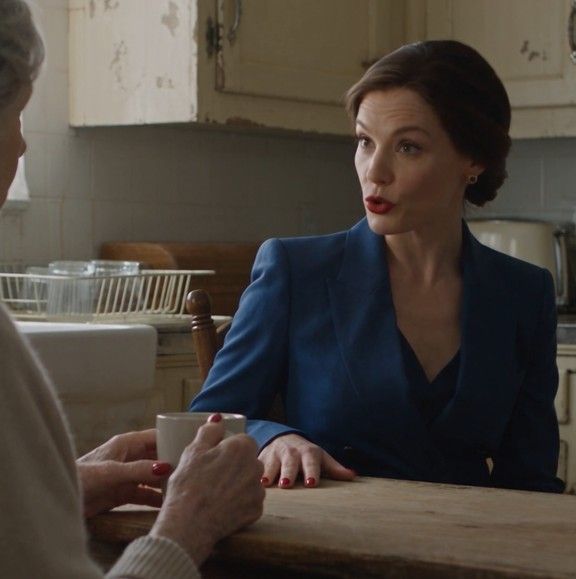
“I don’t know.”
“Then you have some time to think.”
Over the next week, Kevin sent practical messages.
He asked where Margaret usually ordered the turkeys.
She gave him the butcher’s name.
He asked how many potatoes fed twenty-five people.
She suggested he consult the person preparing them.
Finally, he called.
“Tiffany says you’ll settle down.”
Margaret closed the book she was reading.
“Do you believe that?”
“I told her you meant it.”
“Good.”
“But she’s very upset.”
“So am I.”
The silence afterward hurt more than an argument.
“I don’t know how to fix this,” Kevin admitted.
“You could start by believing me without waiting for me to cry.”
Two days before Christmas, Margaret bought a small chicken, carrots, and enough potatoes for two people. Ruth would bring apple cake. They planned to eat early and take a walk if the pavement wasn’t icy.
For the first time in years, the holiday required one grocery bag.
Then, on Christmas Eve, Margaret’s phone rang.
The caller introduced herself as Elaine, Tiffany’s mother.
“I’m sorry to bother you,” Elaine said. “Tiffany isn’t answering. Should we bring folding chairs tomorrow, or has Kevin rented enough?”
Margaret stood very still beside the refrigerator.
“There’s no dinner here tomorrow.”
Elaine didn’t speak.
“I told Tiffany and Kevin that more than two weeks ago.”
“But Tiffany sent the final arrangements yesterday.”
“Would you forward them to me?”
The message arrived while they were still on the phone.
Beneath a photograph of Margaret’s dining room, Tiffany had written that dinner would begin at two. Margaret was delighted to cook, but everyone should give her room in the kitchen because she could be particular.
Margaret read the sentence twice.
Then she saw the next one.
No need to bring food. We’re taking care of everything.
“Margaret?” Elaine said.
“I’m here.”
“I’m so sorry. We were told you insisted.”
Margaret looked at the single grocery bag on the counter.
“I didn’t.”
Elaine exhaled.
