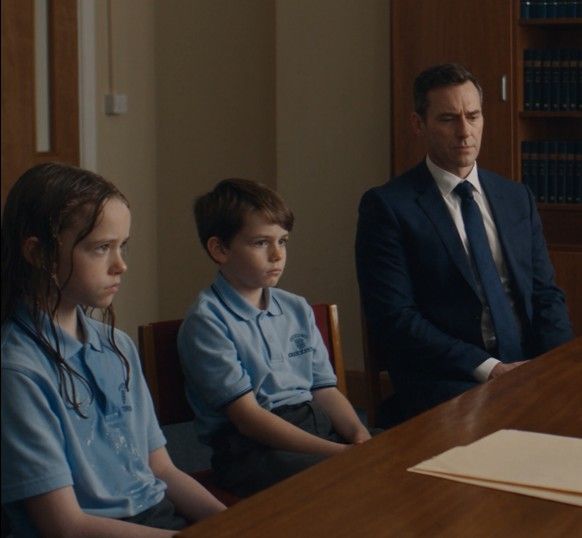
At school, the principal also apologized. He called Ava and Laura into his office after the bullying review concluded. The school had found that staff had treated repeated incidents as separate conflicts even though Ava had reported enough pieces to suggest a pattern. Teachers had documented missing belongings, teasing, and arguments but had not connected them.
“We kept asking what happened today,” the principal said. “We should have asked what keeps happening.”
Ava looked at the same chair where she had once sat alone across from Ryan and his father. “Would you have believed me if I told you everything the first time?”
The principal hesitated.
It was not the answer she wanted, but it was honest. “I hope so,” he said. “But the fact that you are asking means we had not earned your confidence.”
The school changed its reporting process so repeated complaints could be reviewed together. Keira laughed when Ava told her the adults had finally discovered that “pieces” mattered.
“I told you,” she said.
“You are going to be unbearable about this forever, aren’t you?”
“Absolutely.”
That friendship became one of the places where Ava did not have to be the girl whose father was in prison or the girl connected to a court case. She could be the girl who hated algebra, loved spicy chips, and could never remember which day orchestra practice moved to the library. Ordinary details rebuilt something Ryan had damaged: the right to be known for more than the most vulnerable fact about her family.
Ava also began writing to Daniel differently. Before, her letters were careful. School was fine. Grades were fine. Everything was fine. After the office confrontation, she wrote about the milk. She wrote about Ryan. She wrote that she was angry Daniel had let her grow up with so many blanks.
His reply was six pages. He did not defend the decision. He admitted that he and Laura had believed silence would protect her from shame, and that they had underestimated how silence could become a space where someone else wrote the story.
One sentence stayed with Ava: You were never supposed to protect me from what people thought of me. I was supposed to protect you, and I confused protection with secrecy.
She folded that page into her desk drawer. Later, when classmates whispered after news of Mercer’s investigation spread, Ava repeated the sentence to herself. Her father’s case was not an assignment she had to solve socially. She did not owe anyone a defense argument between second and third period.
When the court finally vacated Daniel’s conviction, Laura received the call while Ava was doing homework. She sat down so abruptly that Ava thought something terrible had happened.
“Mom?”
Laura covered her face, crying and laughing at once. “The conviction is vacated.”
Ava understood the words but not the limits. “So Dad comes home today?”
“No. There are still steps.”
A year earlier that answer would have felt like another adult delay. Now Ava knew enough to hear the truth inside it: something enormous had changed, and the ending still had to be earned.
They ordered pizza and called Daniel’s attorney. They did not throw a victory party. They let hope be specific.
Daniel came home fourteen months after the milk incident, after the prosecution dismissed the remaining charges against him. Ava had imagined running toward him. Instead she froze in the apartment doorway. He looked older than she remembered from visits. Thinner. Nervous.
He did not rush her.
“Hi, Av.”
She started crying. “Why did you not tell me?”
Daniel’s face broke. “Because I thought a good father kept his child out of his worst problem.”
“It got in anyway.”
“I know.”
He crouched but did not touch her until she stepped forward. “I am sorry you had to hear pieces from someone trying to hurt you.”
Ava wrapped her arms around him.
