She had been noticing those absences without knowing how they fitted together.
Now she could stop questioning whether she had simply misplaced everything.
The neighbor gave her time.
Mrs. Hart appreciated not being hurried into a response, not being told to calm down before anyone would continue.
She could stand in the unit, hold something familiar, and decide what to do next while the people helping her waited for her answer.
Mrs. Hart stood among the boxes, recognizing objects she had chosen and used for years.
Each familiar thing made the planning harder to absorb.
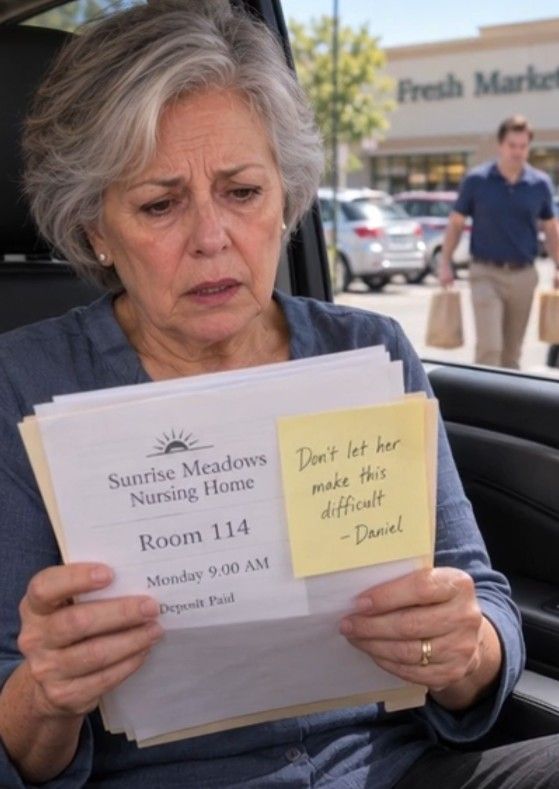
Her son had expected her to arrive at Monday with fewer belongings, fewer choices, and no chance to object until the work was done.
She preserved the records and recovered the documents she needed to regain control of her money and home.
When she confronted Daniel, she used dates and actions rather than arguing about whether he meant well.
He called it preparation and tried to describe the arrangement as help.
She returned to the same fact: she had never agreed.
Daniel’s explanation kept returning to how much planning he had done.
Mrs. Hart heard the effort he wanted recognized, but effort did not answer the question of consent.
He had arranged a room, paid a deposit, moved possessions, and written instructions about how to handle her resistance.
She went through those actions in order.
When he tried to shift the discussion toward her reaction, she returned to the paperwork.
She was not going to spend the conversation proving that she could remain pleasant while learning what had been decided for her.
His concern, if that was what he wished to call it, could have begun with a question.
It had instead produced a schedule she was expected to enter.
Saying that aloud was difficult.
Daniel was still her son, still someone whose distress could pull her toward compromise before she had considered the cost.
She wanted to believe the relationship might survive the confrontation.
But a compromise that left him able to complete the same plan later would not resolve anything.
The neighbor and manager’s involvement meant the discovery no longer existed only between mother and son.
There were records other people had seen.
Mrs. Hart could hold to those records when the conversation became emotional, and she did not have to make a final decision about forgiveness before protecting her home.
The admission was canceled.
His access to her accounts was revoked, and her belongings were returned.
The written plan was shared with people who could see it for themselves.
