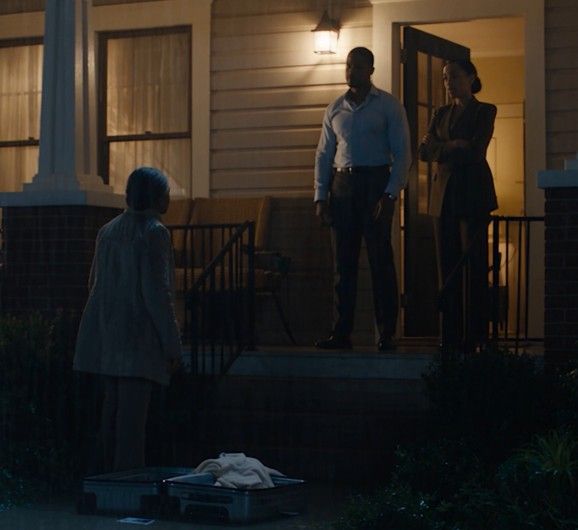
He also gave me a second envelope.
“This was not included in the letters,” he said. “Your aunt asked me to deliver it only after you were back inside.”
My name appeared again.
Inside was a photograph.
It showed Aunt Evelyn standing in the kitchen of this house, younger by at least twenty years, holding a baby.
The baby was me.
Behind her, my mother was laughing near the stove.
On the back, Evelyn had written:
The first night your mother brought you home, she said you would grow up believing you had to earn every safe place. I promised her I would spend the rest of my life proving her wrong.
Beneath that was another sentence.
You did not fail to protect your son, Margaret. You protected him so completely that he confused protection with permission.
I sat at the kitchen table and covered my face.
The beautiful twist was not that the house belonged to me.
I had always known, somewhere beneath my fear, that it did.
The gift was that my aunt had understood my deepest wound before I had named it.
She had not been protecting bricks and a deed.
She had been protecting the part of me that had spent a lifetime apologizing for needing a door that locked from the inside.
The following weeks were difficult in ways the documents could not fix.
Daniel’s business lender withdrew the claim after Leonard submitted the recorded records. Daniel had to sell equipment, close the office, and enter a repayment agreement for the money he had borrowed.
No police came to my house.
No dramatic courtroom scene unfolded.
The consequences were quieter.
He lost the future he had built on a lie.
The lender no longer trusted him.
Several friends stopped returning his calls after learning he had tried to use his mother’s property as collateral.
Vanessa filed for separation.
She found a small apartment near her sister and took a job managing a medical office. She sent me one letter. It contained no excuses, only an account of every time she had dismissed me and every time Daniel had told her I was temporary.
I answered three months later.
I wrote that I had received the letter.
I did not promise forgiveness.
I did not close the door.
Some wounds healed better when they were allowed to remain honest.
Daniel came to the house every Saturday for six months.
At first, he sat in his car for ten minutes before approaching the door.
The first time he entered, he stood in the foyer with both hands visible, as if asking permission without words.
“You can come in,” I said.
He looked at me.
“I know.”
“No,” I said. “You don’t.”
He took the correction quietly.
