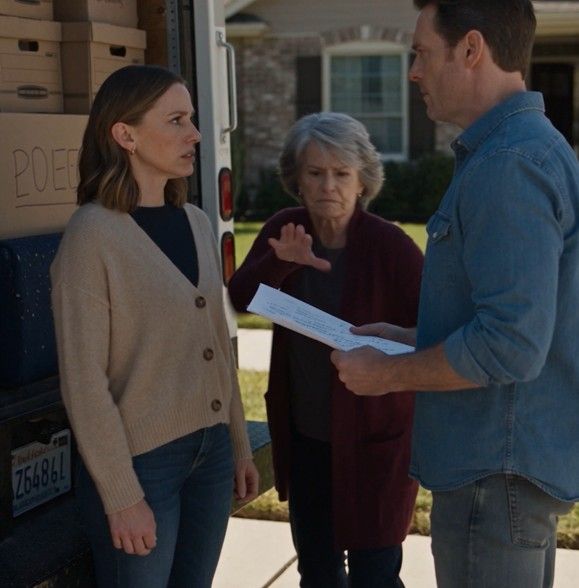
“I loved you before this,” I said. “I love you now. Those facts do not erase each other.”
His face crumpled.
“I thought you would never want to see me again.”
“I wanted to. I was afraid I would only see the person who stood beside the truck.”
“I was afraid of that person too.”
I let the silence remain.
He began to cry without making a sound. His shoulders shook, but he kept his hands in his lap.
After a minute, I moved my hand closer.
He placed his fingers over mine.
It was not forgiveness.
It was contact.
For that day, it was enough.
CHAPTER 5 – Morning Windows
The trial took four months.
Sandra pleaded guilty to fraud, attempted theft, forgery, and conspiracy. Evan accepted a sentence after turning over the company records. Dr. Voss lost his license permanently and received a longer sentence because he had used his medical credentials to falsify the death declaration.
Sandra never apologized.
At sentencing, she said the money had been promised to her, that James had treated her like an outsider, and that I had turned Tommy against her.
The judge asked whether she understood the charges.
Sandra said yes.
The judge asked whether she understood that the house, money, and trust had never belonged to her.
Sandra looked toward me.
“They were supposed to,” she said.
That was the last thing she ever said to me.
Tommy testified for the prosecution. He did not minimize what he had done. He told the court when he had lied, when he had moved the furniture, and when he had seen the forged papers.
He also told the court that fear was not an excuse.
When he stepped down, he did not look at Sandra.
Outside, rain had started falling. Tommy stood beside the courthouse steps while the reporters moved away.
“You did the right thing,” I said.
He shook his head.
“I did what I should have done before.”
“That matters too.”
He looked toward the gray sky.
“I keep thinking Dad would be disappointed.”
“He would be.”
Tommy closed his eyes.
Then I touched his arm.
“He would also notice that you finally stopped lying.”
Tommy breathed out, unsteady.
“That sounds like him.”
“It does.”
The community fund opened in spring.
Ruth named it the James Mercer Home Protection Fund, though I told her James would have complained about having his name on anything.
“He would have complained for ten minutes,” she said. “Then he would have checked the books.”
The fund helped people review property documents, resist coercive transfers, and find legal support before signing anything they did not understand.
I attended the first meeting in the sunroom.
James had been right about the windows.
In the morning, light came through all three sides and touched the wooden floor in long golden shapes. We placed a round table in the center and filled the walls with shelves. The old cedar chest stood beneath one window, its broken latch repaired but still visible.
Tommy built the shelves.
He came every Saturday. At first, he worked quietly and left before lunch. Later, he stayed for coffee. Eventually, he began helping people organize their records.
One woman brought him a stack of unpaid notices. He showed her how to separate a real bill from a threatening letter.
An elderly man arrived with a deed he had nearly signed over to his nephew. Tommy read every page, then called Ruth.
I watched him learn patience.
Not the patience of someone waiting to be trusted again, but the patience of someone who understood that trust was built in ordinary moments.
Sandra’s letters stopped after the first year.
The final one arrived without a return address. Tommy read it on the porch, folded it once, and placed it in the trash.
“Did she say anything important?” I asked.
“No.”
“Do you want me to ask?”
“No.”
That answer sounded complete.
