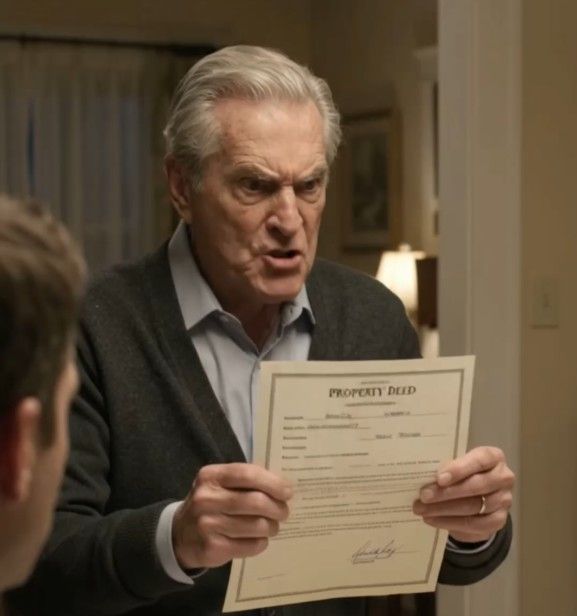
“She wrote this before she died.”
He sat very still.
The letter continued.
You will think the house belongs to you because you built it. That is only partly true. It belongs to every person who has been safe inside it. It belongs to the children who draw on the placemats, to the neighbors who borrow tools, and to the people who will need a room when life becomes difficult.
I had no idea what she meant.
The next lines were written more hurriedly.
I spoke with Michael last spring. He thinks you do not know, but you do. He asked me whether the house could become something more when we are gone. I told him you would resist because you love it too much. He said that was exactly why you might understand.
My chest tightened.
Michael looked at me.
“I never told you that.”
“You told her?”
“Not exactly.”
He took out the second envelope.
It was addressed to him.
He opened it with trembling fingers.
Michael,
Your father believes a home is a thing with walls. He is wrong, but he will have to discover that on his own. You believe a home is something you receive when you are worthy. You are wrong too.
If you ever need to ask your father for help, ask plainly. If he says no, let him say no. Do not confuse his answer with a judgment of your worth.
Michael stopped reading.
I reached for the page.
Below the letter, my wife had written a name: The Oak House Fund.
The third envelope contained legal papers.
My wife had established a small charitable trust six months before her death. The documents transferred a portion of her savings into a fund intended to support temporary housing for local families. She had named me trustee.
At the bottom was a handwritten note.
The house is not part of the fund. Do not let anyone pressure you into giving it away. But when you are ready, use its rooms well.
I read the sentence twice.
The house was still mine.
But the meaning of it had changed.
Michael’s face had gone pale.
“She knew.”
