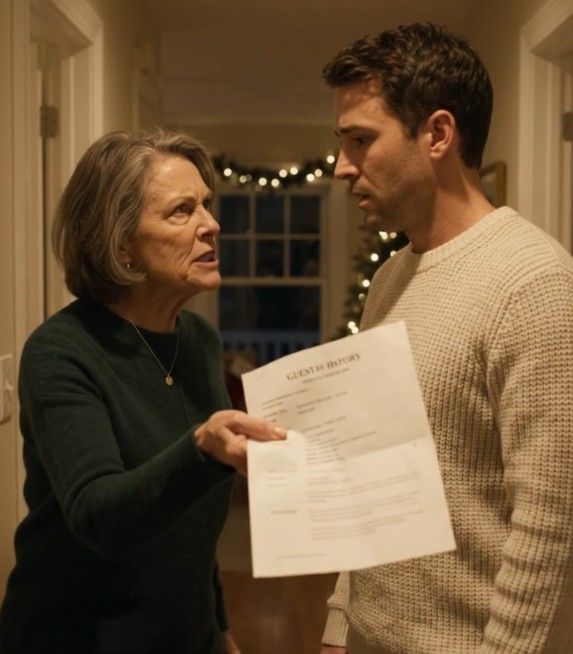
Julian moved into an apartment near the harbor after he and Vanessa separated. He found regular work and arranged payments toward the costs his choices had caused. The first time he came to the cottage after the orders were in place, he waited outside until I opened the door. He looked at the replaced lock. “I guess I earned that,” he said. “It isn’t a punishment,” I told him. “It’s how I know the people coming in are invited.” He sat at the table and looked at the old calendar, now wiped clean of my copied appointments. “I thought you needed us to make decisions for you,” he said. “No,” I answered. “I needed a son who would ask.”
He did not defend Vanessa or himself that afternoon. He asked what I had felt when I discovered the rental guests standing in the hall. I told him I had been frightened for them, furious for myself, and sick with the thought that my private medical appointments had become booking opportunities. He listened. When he began to cry, I kept speaking. I told him about the first winter after Peter died and how much courage it had taken to sleep here alone. “You made me feel like the person who was trespassing,” I said. Julian looked at me in disbelief, not because he doubted me but because he had never imagined himself through my eyes. “I’m sorry,” he said. It was the first apology that did not end in a request.
Spring thawed the dunes slowly. I repaired the scrape in the hall where contractors had dragged in the smart-lock boxes, returned the furniture to its old positions, and asked a neighbor to help test the handrail on the porch. Owen volunteered to replace the cracked lantern by the door. I paid him for materials, and we spent an afternoon talking about Peter’s habit of saving every screw in labeled tins. In one of those tins we found a small brass plate engraved with our family initials. Owen remembered Peter ordering it years ago but never finding the right place for it. “Maybe he meant it for the sled,” he said. We carried the plate inside and stood looking at the battered red runners.
Beneath the sled’s seat was a shallow wooden compartment I had never noticed. The screws were stiff from age. Owen helped loosen them, and inside we found a folded canvas pouch containing an old emergency whistle, a map of safe winter paths, and a letter in Peter’s handwriting. My hands trembled as I unfolded it. The date was from the winter after Julian left for college, long before anyone considered the house an investment. Peter had written instructions for what to do if storms blocked the access road: who to call, which neighbors needed help, and where the extra blankets were kept. At the end was a note addressed to me. “Eleanor has the final say about opening this house,” it read. “She always knows when a welcome is real.”
I sat on the floor beside the sled, the letter resting across my knees. All winter I had imagined Peter watching in sorrow as our son treated the cottage like inventory. Now his words reminded me of something more important than sorrow. He had trusted my judgment without needing a list of conditions. The house had never been his gift to control from beyond the grave. It had been our shared life, and he had left room for mine to continue. Owen looked away while I cried. When I could speak, I thanked him for staying. He tapped the sled’s worn handle. “Peter would have said you helped him more times than any neighbor,” he answered. I believed that too.
That summer I made a choice no one had suggested to me. With Rebecca’s help, I drafted a simple emergency plan for the cottage and shared it with neighbors, making clear that it was a private home, not a rental or an automatic shelter. I kept winter safety supplies ready and offered assistance through the local volunteer network when I was able. There were no bookings, no photographs on glossy websites, and no one else’s bank account attached to the door. Once a month in summer I invited friends and relatives for supper, always by choice. Graham’s family came for an afternoon visit; his daughter recognized the red sled and begged to hear how Peter had used it. I told her the story while sunlight poured across the floor.
Julian was invited to one of those suppers. He arrived early and asked whether he could help carry chairs. I said yes. He carried them where I directed and kept his phone away during dinner. At the end he stayed to wash dishes, and I told him how Peter had once hauled groceries through a storm. Julian laughed through sudden tears. He remembered riding on the sled as a boy, wrapped in a blanket and convinced his father could pull anything. “I wanted to be like him,” he said. I turned off the tap. “Then learn what he was strong enough to do,” I told him. “He could help people without taking their choices away.” Julian nodded slowly, as if he wanted to remember the words exactly.
In autumn a letter arrived from the family that had first appeared in my doorway. Graham enclosed a photograph of his daughter holding the shell from Christmas. She had written beneath it, “Thank you for keeping us safe when the road wasn’t.” I pinned the picture beside Peter’s storm map. It made me feel less ashamed of the terrible holiday. The first thing I had done when the guests appeared was ask them to leave safely, not because they were unwelcome as people but because the arrangement was dishonest and dangerous. Their gratitude helped me accept that a firm boundary can be the most generous thing in a room.
The next Christmas Eve brought snow but no unfamiliar footsteps. Owen came to light the new porch lantern. Julian arrived with a loaf of bread and a careful question about whether he should stay for supper. I told him he was welcome. We watched the first flakes catch on the red sled, now cleaned and standing beside the door where Peter used to leave it. I had attached the brass plate to its handle. Under the family initials I added one small line of my own: “By invitation, with love.” Julian read it silently and placed his hand against the worn wood. We did not pretend the years between us had been repaired in a single season. We stood together anyway.
Later, when the dishes were done, I walked through the cottage turning off lights. My photographs were back on the walls. The family calendar hung empty of anyone else’s plans. The bedroom doors were mine to open, close, or leave undisturbed. From the window I saw the lantern cast a warm circle over the snow, bright enough to guide a neighbor along the path but not a promise that anyone could enter without asking. Peter’s letter lay in a frame beside the fireplace. I touched its edge and felt the long ache of missing him soften into gratitude. Then I heard Julian knock lightly at the kitchen door. He had forgotten his scarf. I opened it, laughing, and the winter air came in carrying nothing I needed to fear.
