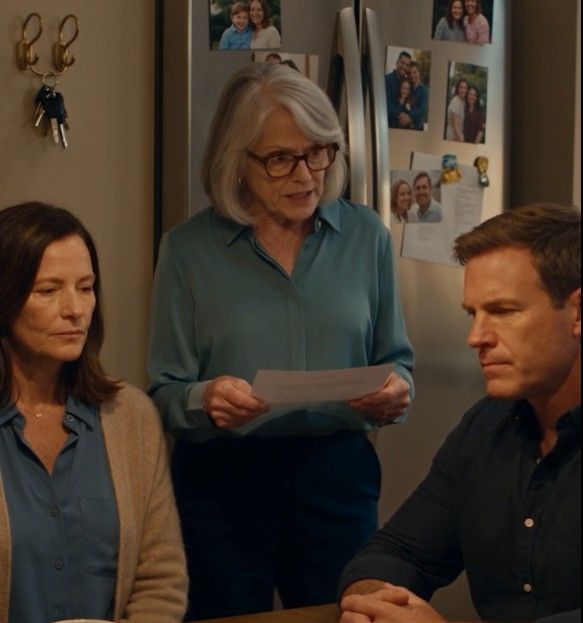
Beside that photograph was a new one. It showed me standing in the backyard in gardening gloves, laughing because one of the tomato stakes had fallen sideways. My hair was windblown. There was dirt on my cheek. I looked older than I did in most photographs I liked.
I also looked alive.
That picture had been taken by Margaret on the first afternoon I planted the garden again.
For years, the refrigerator had been covered almost entirely with photographs of the people I loved. I had thought that was what a family home was supposed to look like: proof that everyone else belonged there.
I had never noticed that I was missing from nearly all of them.
Now my own face was in the center.
Before bed that night, I checked the doors once, not three times. I set my reading glasses on the kitchen table beside a book. Then I reached for the brass hook near the door and touched the car keys Daniel had once taken from me in the name of keeping me safe.
They made a small, bright sound against the wall.
I left them there.
The house was paid for. The deed carried only the ownership I had chosen. The locks answered to my keys. And when I turned off the kitchen light, I understood that safety was not being managed by someone who claimed to know what was best for me.
Safety was being believed when I said no—and believing myself enough to mean it.
