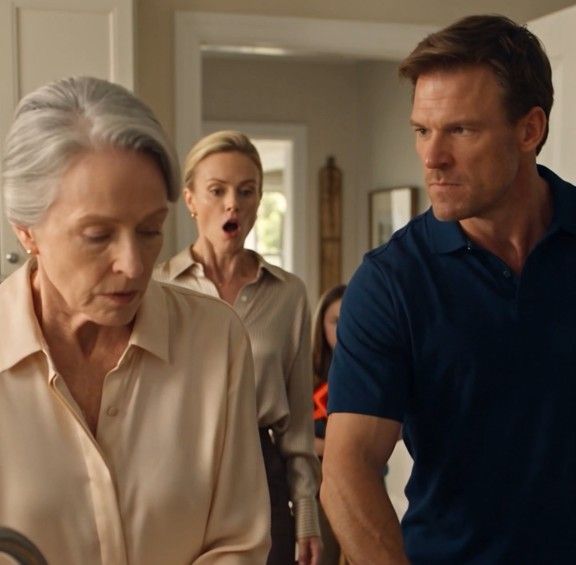
“Then you were not protecting me.”
“No.”
She began to cry.
I did not comfort her immediately.
She needed to feel the full shape of that word.
“No.”
Daniel and Melissa stayed married. They also stayed in counseling long after the move, partly because Daniel finally admitted that he had used my support to postpone decisions about work, debt, and spending. Melissa admitted that she had turned fear about money into control over a woman whose property seemed like the solution.
I did not attend those sessions.
Ruth also updated my estate plan at my request. I did not disinherit Daniel, but I removed every clause that assumed he would manage my finances simply because he was my son. A neutral fiduciary would step in if I ever truly lost capacity, and any future decision about care would require medical evidence rather than a family vote around my kitchen table. Signing those papers did not feel like punishment. It felt like making sure love would never again be confused with legal authority.
Their repair was not my job.
My repair was learning to live in my own house without listening for someone else’s permission.
I changed the locks after the move, then gave no spare key to anyone for six months.
I planted tomatoes in the side bed Melissa had wanted paved for extra parking. I joined a Wednesday walking group. I missed two appointments in one year and rescheduled both without treating either mistake as evidence against my independence.
Most importantly, I learned to ask for help without surrendering control.
When my knee hurt, I asked Daniel to drive me to the clinic.
He came.
He did not ask to speak for me at the desk.
He sat beside me and waited until I asked for his arm on the way back to the car.
That small restraint meant more than any speech he could have made.
A year after the brochure appeared on my table, Lily and Noah spent a weekend with me while Daniel and Melissa attended a wedding.
Noah was thirteen months older and suddenly embarrassed by toys he had once carried everywhere.
At dinner, he noticed the red truck still sitting on the kitchen windowsill.
“You kept that?” he asked.
“You left it.”
“I thought Dad packed it.”
“No.”
He picked it up and rolled the wheels across his palm.
Lily smiled. “Grandma kept your junk.”
“It is not junk,” I said. “It is evidence.”
Both children looked at me suspiciously.
“Of what?” Noah asked.
“That people can move out without being erased.”
He did not fully understand, but Lily did.
Later that night, she helped me make up the guest room. I had changed it since their move. Two simple beds stood against opposite walls. One shelf held books, another held a few games, and there were no permanent drawers full of their parents’ belongings.
“This room is for us?” she asked.
“For whoever I invite.”
She grinned. “So us.”
“Frequently.”
Before bed, Noah placed the red truck on the shelf between the two beds instead of taking it home.
“You forgot this again,” I told him the next morning.
He shook his head.
“No. It lives here.”
I looked at the small red truck, then at my grandson.
A year earlier, he had held it against his chest while his parents tried to convince me that the house, the kitchen, the account, and even the next chapter of my life belonged to a family decision I had not made.
Now the toy sat in a room that existed because I had chosen to make space.
That difference was everything.
Daniel arrived Sunday afternoon and knocked even though he knew I was expecting him.
When I opened the door, he stayed on the porch until I stepped aside.
“Come in,” I said.
He smiled.
