Derek had created the event company as a cover. He had used the money to repay earlier debts and to keep his false success visible.
His downfall came quickly after that.
The lender froze the loan. The county invalidated every fraudulent filing. The state charged him with forgery, fraud, identity theft, and attempted grand larceny. Because the evidence included the locksmith’s authorization, the dinner guests’ statements, the dead notary’s records, and the documents recovered from his apartment, there was no version of events in which he could claim confusion.
He pleaded guilty before trial.
The judge ordered restitution to the victims, though everyone understood that money could not restore what had been taken from them. Derek received a lengthy sentence and lost control of every company attached to his name.
His downfall was not loud. There were no reporters outside my house, no dramatic confession, no moment when he stood before the town and admitted what he had done.
It happened through signatures, bank records, and locked evidence boxes.
That suited him.
He had built his life on paper.
Paper finally told the truth.
Vanessa left the house three days later. She had returned every document she possessed and given Rebecca the passwords to the company accounts.
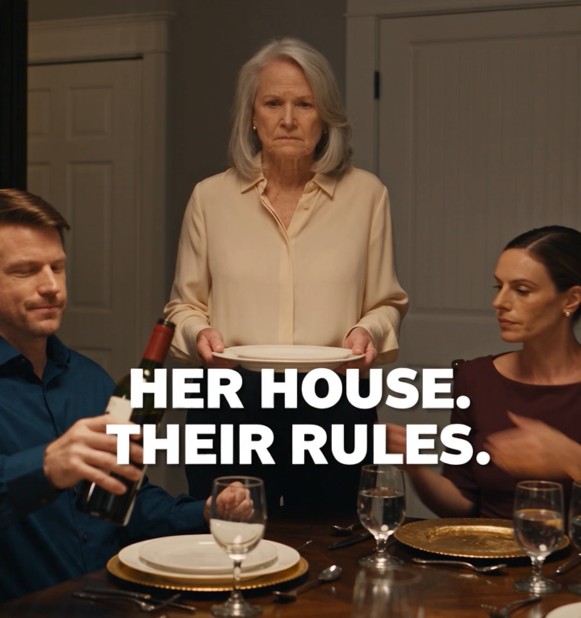
At the door, she held out my plate.
She had washed it until the porcelain shone.
“I should have handed it back that night,” she said.
I accepted it.
“Yes.”
She nodded, absorbing the answer without defending herself.
“I’m going to stay with my sister,” she said. “I ended the engagement.”
“I’m sorry.”
“So am I.”
She looked into the dining room.
“Do you want me to apologize for believing him?”
“I want you to understand why you did.”
Her face tightened.
“That’s harder.”
“It should be.”
She took a breath. “I wanted to be chosen. He knew that. He made me think obedience was proof of love.”
I thought of my own years with Derek. The excuses. The emergencies. The times he had called me only when he needed money, then made me feel guilty for noticing.
“He learned that from somewhere,” I said.
Vanessa looked at me.
I touched the edge of the plate.
“I taught him that love meant rescuing him.”
She shook her head. “You taught him that love meant showing up.”
“Sometimes those become the same thing.”
“Not anymore.”
She left with tears in her eyes, but she walked toward her car without looking back.
For two months, I slept badly.
Every creak in the hallway woke me. Every time a car slowed outside, my heart began racing. I kept the old blue folder beside my bed and checked the locks twice before turning off the light.
The house was safe, but safety was not the same as feeling safe.
I began meeting with a counselor named Dr. Patel, who asked questions I did not know how to answer.
“What do you miss?” she asked during our fourth appointment.
“My son.”
“Which version?”
I looked at the window.
“The boy who used to bring me dandelions.”
“Do you miss the man he became?”
“No.”
The answer came quickly.
That frightened me.
Dr. Patel leaned forward. “Grief does not require you to deny the harm.”
“I feel guilty for loving him.”
“Love is not an acquittal.”
The phrase stayed with me.
I wrote it on a card and placed it in the kitchen drawer.
Love is not an acquittal.
It became the sentence I repeated when Derek called from prison.
The first time, I did not answer.
The second time, I listened to the message.
“Mom, I’m sorry.”
His voice sounded thinner than I remembered.
