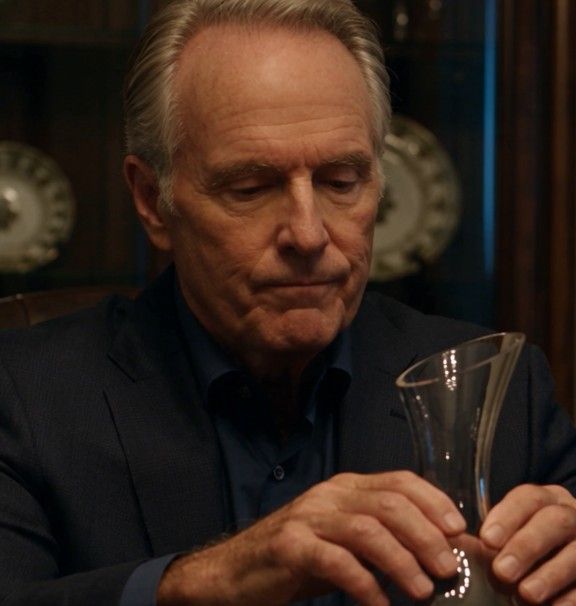
Brandon read the first page and shook his head.
“I nearly destroyed my life over something you had already solved.”
Diane smiled. “That is an expensive way to learn to ask questions.”
He laughed softly.
Then he looked at me.
“Thanks for not signing.”
I raised my glass.
“That part was easy.”
It had not been.
But years later, surrounded by the children I loved, the woman I had chosen, and a life no longer organized around fear of abandonment, I understood the real decision had never been whether to transfer property.
It had been whether I would keep confusing rescue with fatherhood.
The evening light faded across the yard. Diane slipped her hand into mine beneath the table.
This time, nobody was asking me to prove love by giving something away.
I simply held on.
The properties themselves changed meaning after that. For years, I had thought of them as proof that sacrifice had paid off: six addresses, six sets of keys, six pieces of evidence that a man abandoned by his wife could still build something permanent for his children. After Brandon’s case, I stopped needing them to carry that emotional weight.
I sold one commercial building whose management had become more trouble than it was worth. I donated a portion of the gain to a nonprofit that taught financial literacy and employment skills to families recovering from fraud and debt. Brandon heard about the donation and wrote me a note.
Ironic, he wrote.
Underneath, in smaller handwriting: Also right.
Chelsea eventually married. Before the ceremony, she asked Diane and me to sit together in the front row. No one discussed what that would mean for inheritance. No one needed to. The old fear had lost its authority.
At the reception, Chelsea found me alone for a moment near the garden wall.
“Dad, do you remember that night?”
“I try not to schedule it recreationally.”
She smiled.
“I used to think Brandon was the one who ruined dinner.”
“He certainly contributed.”
“I did too.”
I looked at her.
She had apologized before, but this sounded different.
“I made your happiness sound like a threat to me,” she said. “I’m sorry.”
I kissed her forehead.
“Thank you.”
She glanced across the lawn toward Diane, who was helping an elderly aunt find her table.
“I’m glad you married her.”
“So am I.”
That was the sentence I once thought I would never hear from either of my children.
Later, when Brandon completed his supervised release, he came to my office carrying a bottle of wine. Not an expensive vintage. Just a decent Cabernet from a grocery store.
“For the dinner we never finished,” he said.
I looked at the label, then at him.
“No paperwork?”
He held up both hands. “Not a deed in sight.”
We opened it that evening with Diane and Chelsea. The wine was ordinary. The food was simple. Nobody had staged the meal around an announcement.
At the end of the night, Brandon rinsed the glasses while Chelsea dried them. Diane leaned against the counter beside me.
“You look happy,” she said.
I watched my children argue quietly about where the clean towels belonged.
“I am.”
The fortune I had spent decades building still existed, but it no longer sat at the center of the family like a silent third parent. We had finally learned that security was not the same as possession, and love was not measured by what could be transferred with a signature.
When Brandon left, he paused by the front door and handed me the empty bottle.
“Keep it,” he said. “This one has a better story.”
I placed it on a shelf in my study the next morning, not as a trophy and not as a warning, but as a reminder that the dinner which nearly ended our family had eventually taught us how to sit at the same table without trying to own one another.
