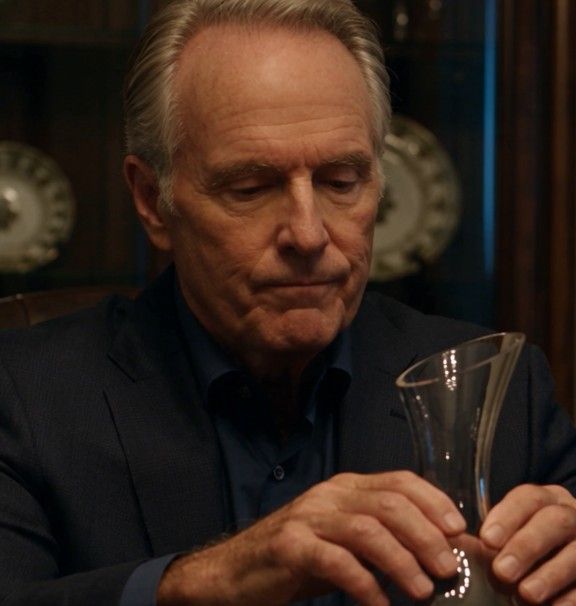
“I was going to tell you last night after dinner. Before your brother put quitclaim deeds on the table.”
She covered her mouth.
That was the first beautiful truth to emerge from the disaster: the thing Brandon claimed to be preventing had already been prevented, voluntarily, by the woman he called an opportunist.
But the criminal case still had to be understood.
Over the next several weeks, prosecutors laid out what they believed had happened.
Brandon had been a managing partner in a private investment vehicle that acquired distressed commercial properties. According to the government, he and two partners had diverted investor funds through related companies, disguised losses, and used new money to cover old obligations. When an internal accountant discovered discrepancies, Brandon authorized wire transfers designed to make the accounts appear whole before an audit.
The missing amount had grown to roughly eight million dollars.
His partners had begun blaming one another.
The audit was days away.
Brandon needed collateral fast.
My six properties were not part of his business. They were clean, valuable, and mostly unencumbered.
If I transferred them to him, he could borrow against them, inject cash into the investment vehicle, and make the missing money temporarily disappear from view.
The proposed quitclaim deeds were not about inheritance planning.
They were an emergency patch over a financial crime.
I learned that from the flash drive seized from his briefcase.
It contained draft loan applications using my properties as collateral.
Some listed Brandon as anticipated owner.
One had a note in the margin: TITLE TRANSFER 9/14 — FUNDING 9/15.
My dinner had been scheduled for September 14.
The precision of it hurt more than I expected.
He had not simply panicked during an argument.
He had planned the evening around a deadline.
Chelsea broke down when she saw the timeline.
“He used me,” she said.
“Yes.”
“I thought we were protecting you.”
“He needed you to help pressure me.”
Her face crumpled.
I wanted to tell her none of it was her fault.
That would have been too easy.
“You were manipulated,” I said. “But you also chose not to ask me whether what he said was true.”
She nodded through tears.
“I know.”
That distinction became the beginning of her repair.
Brandon remained in custody until a judge imposed strict release conditions. He was prohibited from moving assets, contacting certain business associates, or accessing company accounts. He moved into a small rental and surrendered his passport.
He asked to meet me.
I waited three weeks.
When we finally sat across from each other in his attorney’s conference room, he looked exhausted.
“Why didn’t you tell me?” he asked.
“About the prenup?”
“Yes.”
“I was going to.”
“If I’d known—”
“You would not have needed my properties?”
He looked away.
That was the wrong answer and he knew it.
“If you had known Diane wasn’t taking your inheritance, would you suddenly have found eight million dollars somewhere else?” I asked.
“No.”
“So this was never really about her.”
He stared at the table.
