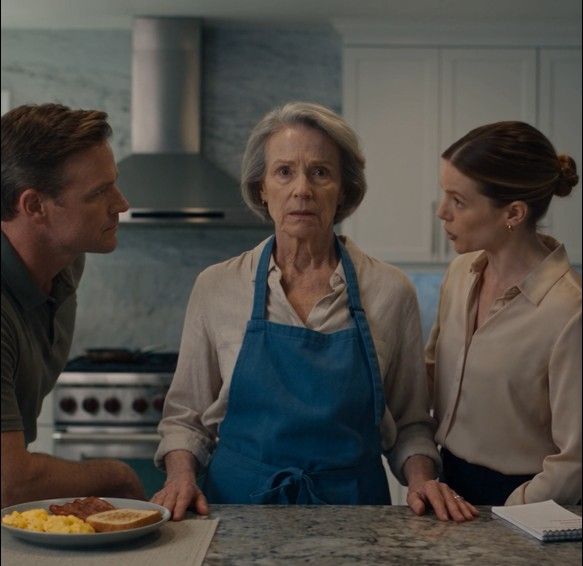
Thomas’s old apron had once represented the work I did gladly for people I loved. Then, for a while, it had become tangled with the morning my care was turned into an obligation and my home into leverage. Now my son had given me a place to hang it that asked nothing from me.
The next day, I mounted the hook beside the kitchen door.
Months later, when David came by for coffee, he found me wearing the apron while I kneaded bread for Thursday dinner. He hesitated in the doorway.
“Need help?” he asked.
I glanced at the sink, then at him.
“You can wash those bowls.”
He grinned and rolled up his sleeves.
I watched him turn on the water, and I felt something settle inside me—not the old arrangement returning, but a new one taking shape. He was not helping because I was his mother and therefore required to serve him. I was not cooking because I needed to earn a chair at anyone’s table.
We were simply two people in my kitchen, choosing to care for each other.
That night, after everyone had gone, I stood by the window with a cup of tea. The apartment was quiet except for the refrigerator humming and rain tapping softly against the glass. Thomas’s photograph caught the warm light from the lamp.
I touched the blue apron hanging on its new hook.
For years, I had believed keeping a family together meant making myself useful enough that no one could complain. Losing my place in David’s house taught me something gentler and harder: a home is not the room someone allows you to sleep in. It is the place where your dignity does not have to be negotiated.
I turned off the kitchen light and left one small lamp glowing beside Thomas’s photograph.
The dark blue suitcase was still in my closet, but I no longer thought of it as the bag I had packed when I lost my home. It was the suitcase I carried when I finally stopped asking permission to have one.
