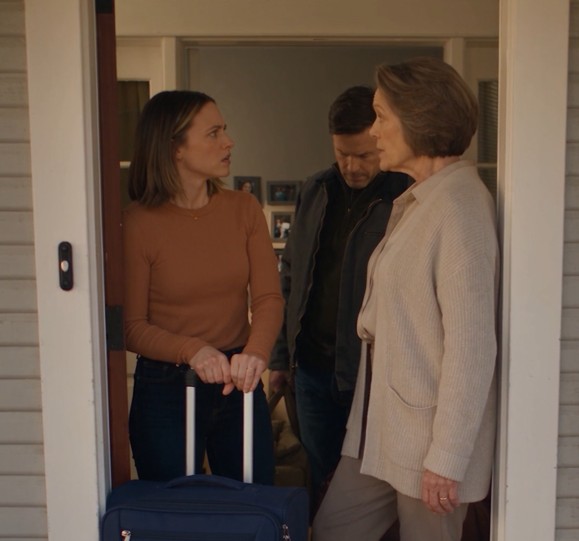
Michael met with a counselor the following week.
He did not tell Amanda at first. Then he decided secrecy was another version of the life he no longer wanted and told her directly.
Her reaction was immediate.
She accused Dorothy of poisoning him against her.
Michael said no.
She told him therapy was for weak people.
He went anyway.
She demanded access to his session notes.
He refused.
Each refusal exposed how much of their marriage depended on him not having one.
The housing question became a separate battlefield.
Amanda wanted to buy quickly. Michael wanted a six-month rental so they could stabilize their finances and decide what they were doing.
For the first time, he opened the accounts himself.
That was when he learned they could easily afford a modest rental.
The “nowhere else to go” story had never been true.
Amanda had wanted Dorothy’s house because it allowed them to preserve every dollar for the next purchase and because she assumed Dorothy would yield.
Michael told her he would not ask his mother again.
Amanda left the hotel two days later and stayed with her sister.
Michael moved into a small furnished apartment by himself.
Their separation was not dramatic.
No police. No screaming in the street. No single event that made every earlier problem obvious.
Just one adult finally deciding fear was enough information.
Dorothy saw him once a week at first.
He looked embarrassed by the apartment.
“Stop apologizing for the furniture,” she told him.
“The couch is terrible.”
“It is yours to hate.”
He laughed.
That sound had been missing longer than she realized.
The separation also forced Dorothy to examine the role she had played around the edges of Michael’s marriage. She had never caused Amanda’s behavior, but she had noticed warning signs and repeatedly converted them into harmless explanations because naming them felt intrusive. At Thanksgiving, Amanda had corrected the way Michael told a story until he stopped talking. At Easter brunch, she had taken his phone from the table and answered a message for him. During a summer cookout, Michael had started to tell Dorothy he was worried about money, and one look from Amanda had ended the sentence. Dorothy had gone home after each occasion telling herself that married people had private systems outsiders did not understand. That was partly true. It had also become a convenient way not to risk a difficult conversation.
She began attending a family support group recommended by Michael’s counselor. The first meeting made her uncomfortable. She expected instructions about how to rescue someone. Instead, the facilitator talked about the danger of turning concern into control. Dorothy recognized herself in that warning too. Her instinct was to offer Michael money, a room, legal names, plans, schedules, and opinions until there was no empty space left for him to choose. The facilitator said, “Support should increase someone’s agency, not replace it.” Dorothy wrote that sentence down. The next time Michael called after an argument with Amanda, she asked, “What do you think you need tonight?” instead of telling him what to do. He was silent for so long she wondered whether the call had dropped. Then he said, “I think I need to sleep before making a decision.” Dorothy replied, “That sounds reasonable.” It felt almost absurdly small. It was also the first time she could remember trusting him to manage discomfort without carrying it for him.
Michael’s financial discoveries became part of his recovery as well. Amanda had not stolen from him, but she had controlled access in ways he had normalized. Most bills came to her email. She maintained the passwords. She decided which expenses counted as necessary and which of his purchases needed discussion. When their house sale collapsed, Michael had believed her claim that paying rent would “destroy their future” because he had not actually reviewed the numbers. With help from a financial counselor, he reconstructed the accounts and discovered something both relieving and humiliating: they were not in crisis. They were inconvenienced. They could afford six months of rent and still retain most of their down-payment fund. “I let urgency replace math,” he told Dorothy. She answered, “Urgency is useful when the house is on fire. Less useful when someone wants you to stop asking questions.”
Amanda, meanwhile, had to live without Michael’s immediate compliance. Her sister allowed her to stay for two weeks, then told her she needed a longer-term plan. Amanda called Michael and demanded that he cover a hotel. He said he would pay his agreed share of temporary expenses but would not fund whatever option she chose without discussing it. She hung up on him. Ten minutes later she called back and asked what he thought was fair. That second call became important later in counseling because it was the first time she remembered changing course after anger did not produce surrender.
Their counselor eventually asked Amanda what she believed would happen if Michael disagreed with her. At first she said, “Nothing.” Then she became defensive. Then quiet. Finally she admitted that disagreement felt like abandonment. Her father had left when she was young after years of unpredictable conflict, and she had grown up watching her mother survive by planning everything before anyone else could upset it. None of that made it acceptable to control Michael. The counselor was clear about that. But the history helped Amanda understand why she treated uncertainty like an emergency and other people’s boundaries like threats. “I thought if I could make the plan perfect, nobody could leave,” she told Michael. He answered, “But you made me disappear inside the plan.” Dorothy heard that sentence months later from him and had to sit down.
The porch became a strange symbol during that year. Michael joked about it once, calling it “the border crossing.” Dorothy corrected him. “It is not a border. It is a door.” A door could open. A door could close. What mattered was that the person inside chose. She replaced the worn threshold strip in spring, sanding the wood herself on a mild Saturday morning. The old scrape from Amanda’s suitcase wheel was still visible near one corner. Dorothy considered refinishing it, then decided not to. Not every mark needed removal. Some only needed to stop being active damage.
When Michael began visiting with Amanda again, Dorothy set one rule: they would ask before coming. The first few invitations felt formal. Then normal. Amanda once texted, We are nearby. Is now okay? Dorothy was gardening and wanted to finish. She typed, Not today. How about Sunday? Her hand hovered over the send button because an old part of her expected retaliation. Amanda replied, Sunday works. That was all. Dorothy stood beside the tomato plants laughing at herself. A safe no was such an ordinary thing. She had forgotten ordinary things could feel miraculous when they returned.
There were setbacks. During one counseling break, Amanda accused Michael of “running to his mother” after he told Dorothy they had argued. Michael did not respond by cutting contact with Dorothy, and he also did not report every marital detail to her afterward. He found a middle ground that belonged to him. Amanda disliked it, then learned it. Dorothy learned it too. She stopped asking questions designed to pull him closer when she was anxious. Their relationship became less fused and, strangely, more intimate. Michael called because he wanted to talk, not because he needed someone to solve the next emergency.
By the time Amanda finally came to apologize on the porch, Dorothy had already decided that forgiveness would not mean forgetting the structure that made the incident possible. She could welcome Amanda without giving up the right to close the door. She could love Michael without offering her house as insurance against every hard season of his marriage. Those truths were not punishments. They were the architecture of a healthier family.
Amanda and Michael entered couples counseling later, but only after Michael’s individual counselor helped him establish conditions. No yelling through doors. No access to his private messages. No financial control. No threats to isolate him from family.
Amanda agreed because she wanted the marriage to continue.
Agreement did not mean change arrived immediately.
She broke the rules twice in the first month.
Michael left the conversation both times instead of surrendering.
The third time, she caught herself.
Progress, Dorothy learned, was often repetitive and unimpressive.
The marriage eventually survived, but not in the form Amanda had controlled before.
They rented a townhouse instead of rushing into another purchase.
Both names went on the lease.
Both had access to the accounts.
Michael chose his own passwords.
Amanda apologized to Dorothy six months after the porch confrontation.
She came alone.
Dorothy kept the conversation on the porch.
That was deliberate.
“I thought you hated me,” Amanda said.
Dorothy considered it.
“I hated what you tried to do.”
Amanda looked toward the doorway.
“I really did plan to take the upstairs room.”
“I know.”
