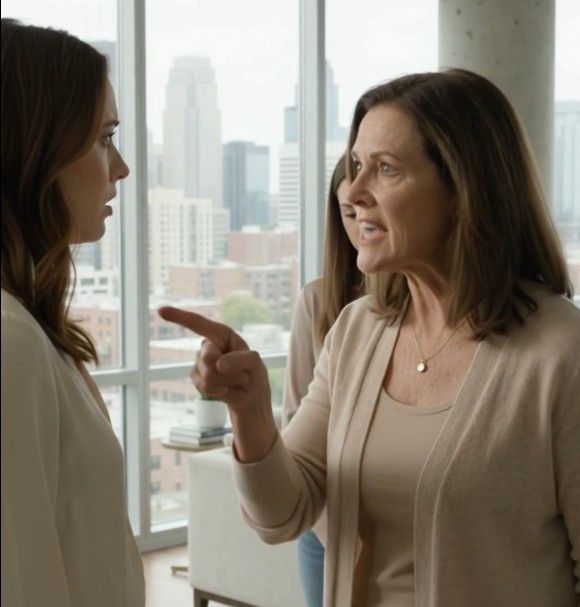
“Some of them might. You still need a paycheck.”
She laughed despite herself. “You sound like Dad used to.”
“Before he decided my extra bedroom was a community asset?”
The joke came out sharper than intended. Paige didn’t laugh again.
“I’m sorry,” she said. “I let them do that because I wanted out.”
It was not a complete apology, but it was the first one that did not include a request.
Three months after the visit, Paige asked if I would come to Ohio for a meeting with our parents. I said I would join by video. Traveling nine hours in reverse would not make my answer more legitimate.
Before the call, she sent me a one-page plan. It listed her income, basic expenses, the status of each debt, and steps she had agreed to take. At the bottom she had written, No contribution expected from my sister.
I read that sentence several times.
Mom appeared on screen seated in the dining room. Dad adjusted the camera while Paige put copies of the plan in front of them. I could see the china cabinet behind her, the same one reflected in the mirror during every childhood birthday.
“I can’t fix this in a month,” Paige began. “I can stop making it bigger.”
Mom glanced at the page. “If we all pull together—”
“We’re not talking about her condo.” Paige’s voice shook. “We’re talking about my debts.”
Dad put on his reading glasses. He asked a practical question about the storage unit. Paige said it had been emptied and closed. Mom asked about the SUV. Paige explained the cost of ending the lease and how it was being handled, without pretending the vehicle could simply be dropped off and forgotten.
Then Mom turned toward the camera.
“You could have made this easier.”
I felt my shoulders rise. Before I could answer, Dad took off his glasses.
“For whom?” he asked.
Mom looked at him.
“It would have made it easier for us,” he said. “We wouldn’t have had to admit we couldn’t keep paying. That’s not the same thing.”
He looked toward me. “I shouldn’t have said you didn’t need your home.”
I swallowed. “Thank you.”
“I thought being single meant you had fewer responsibilities. I didn’t think about you having nobody else’s income to rely on.”
“Even if I did, it would still be my home.”
He nodded. “Yes.”
Mom began straightening papers that were already straight. “We were frightened.”
“I know,” I said. “You frightened me too.”
She stopped moving the papers.
I told them what the visit had felt like: opening my door expecting family and discovering that my future was something they had discussed in a car without me. I told them I had wanted them to be proud of me, not because pride was owed in exchange for a condo, but because they were my parents.
Mom’s face changed at that. For a moment, I thought she would defend herself again.
