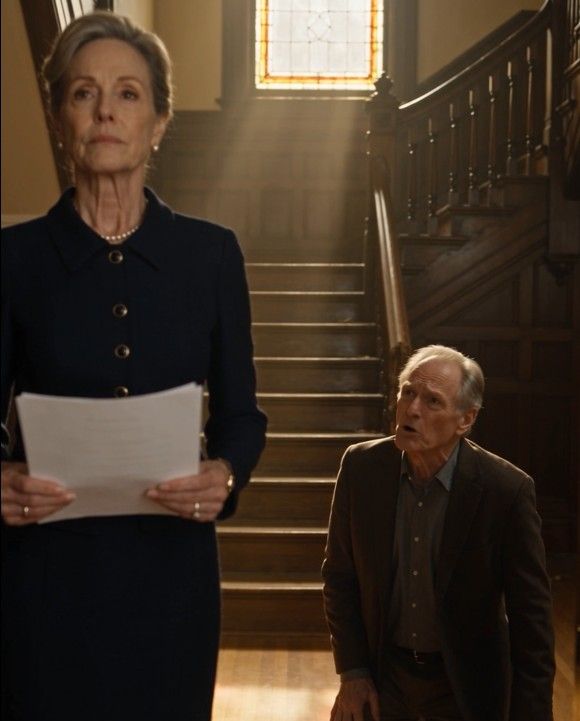
“I still love you.”
“Maybe you do. But love does not become more trustworthy because your alternative failed.”
He began to cry again.
This time, I did not feel satisfaction.
I remembered a younger Arthur sleeping on a hospital chair when our daughter had pneumonia. I remembered him driving six hours through snow to retrieve me after my car broke down. I remembered forty-eight years containing more than the worst decision at the end.
That was what made the moment difficult.
He was not a cartoon villain kneeling in my foyer.
He was a man who had betrayed me, discarded our shared life, and now wanted the consequences reversed because they hurt.
Compassion did not require me to reverse them.
“I will give you the name of an attorney,” I said. “And I will pay for one week at a hotel so you have somewhere to sleep while you make a plan.”
His head lifted.
“One week?”
“Yes.”
“I was your husband for almost fifty years.”
“And I was your wife. That is why I am offering help. Not a home. Not my money. Not myself.”
He sat very still.
Then, slowly, he nodded.
The next morning, Arthur met with the attorney I recommended. The situation with Tiffany turned out to be ugly but not mysterious. He had signed too much. Given away too much authority. Some transfers appeared unauthorized; others were simply reckless gifts he regretted. His lawyer pursued the transactions that could legally be challenged and told him the rest would have to be treated as the price of his choices.
For once, Arthur could not negotiate reality into a better offer.
He recovered a portion of the money through civil settlement. Not most of it. Enough to rent a modest apartment and live carefully if he stopped pretending his old lifestyle was still available.
Tiffany disappeared from his social circle before the case was resolved. Her wellness studio never opened. The leased car was repossessed. Their condo was sold as part of the settlement.
Arthur’s irreversible consequence was not poverty.
It was scale.
He had spent decades expanding everything—companies, houses, expectations, ego. Now his life fit inside an apartment with one bedroom, a used sedan, and a monthly budget.
At first, he hated it.
Then, unexpectedly, he began learning.
I know because he wrote me letters.
Not messages asking to come back.
Letters.
The first apologized for calling the house a rotting eyesore. The second apologized for calling me old. The third was the first one that mattered.
