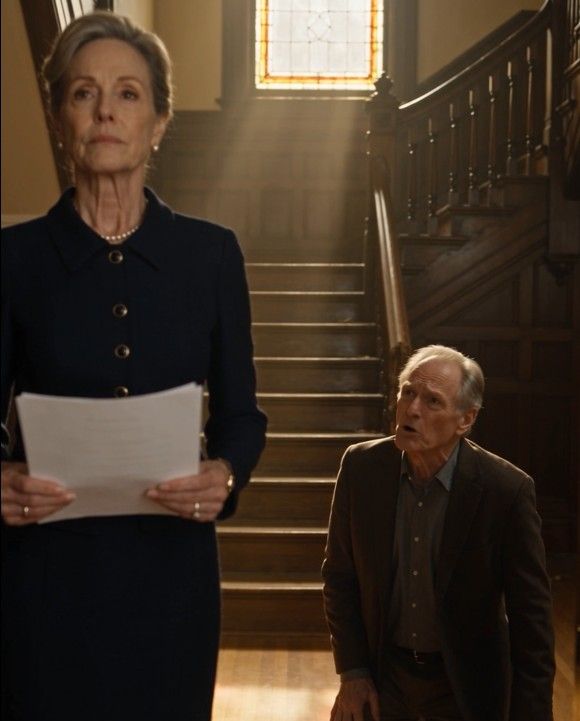
“Fine? I just told you my life is gone.”
I turned toward him.
“No, Arthur. Your money is gone. Those are not the same thing.”
He flinched.
For decades, he had been the one who knew what to do when something broke. Businesses, investments, contracts, negotiations. He had been decisive, impatient, certain. The man in front of me looked smaller because certainty had finally failed him.
“Tiffany emptied the accounts,” he said. “She transferred everything while I was traveling. The condo is in her name. The car is leased through her company. I have maybe nine thousand dollars left.”
“Then nine thousand dollars is what you have.”
“You don’t understand.”
“I understand perfectly. Two years ago, you left me a leaking roof, a mortgage, and your half of a house you called worthless.”
His mouth opened.
I raised one hand.
“I am not saying that to humiliate you. I am saying it because you survived having less before. So did I.”
He stared at the restored staircase.
“You made all this happen.”
“Yes.”
“I didn’t know.”
“No. You didn’t want to know.”
That was harder for him to hear.
Peter and the others moved quietly into the library to give us privacy. Through the doorway, I could see the architectural plans spreading across a table that Arthur once insisted was too old to repair.
He followed my eyes.
“What happens to the house?”
“The foundation will preserve it. They want to use the upper floor for visiting scholars and the first floor for public lectures on architecture and local history.”
His face changed again.
“Architecture.”
“My field.”
“I remember.”
“Do you?”
He looked down.
For forty-eight years, Arthur had known that I trained as an architectural historian before our marriage consumed the shape of my career. He knew I once wrote articles about preservation and lectured at universities. He also knew I had given most of it up when his businesses needed travel, bookkeeping, introductions, rescue money, and someone at home who could keep the rest of life from falling apart.
He had not forgotten those facts.
